

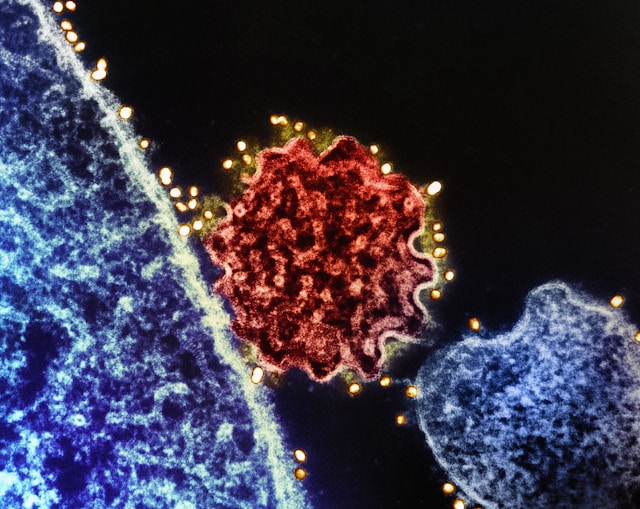
Mary E. Brunkow, Fred Ramsdell and Shimon Sakaguchi won the 2025 Nobel Prize for discoveries involving regulatory T cells and FOXP3, opening new possibilities for treating autoimmune disease and other conditions.
Sometimes the biggest medical breakthroughs begin with a deceptively simple question: How does the human body know what to attack—and what to leave alone?
That question has driven decades of research into the immune system, and in 2025 it earned three scientists the Nobel Prize in Physiology or Medicine.
Mary E. Brunkow, Fred Ramsdell and Shimon Sakaguchi were honored for discoveries concerning peripheral immune tolerance—the biological mechanisms that prevent the immune system from attacking the body’s own tissues.
Their work helped establish the importance of regulatory T cells, or Tregs, and the FOXP3 gene in maintaining that delicate balance.
For patients living with autoimmune diseases, the discovery offers something enormously valuable: a deeper understanding of why the immune system sometimes turns against the very body it is supposed to protect.
The Body’s Immune “Brakes”
The immune system has an extraordinary job.
It must recognize viruses, bacteria and other threats while avoiding attacks on healthy cells. That requires an intricate system of checks and balances.
Regulatory T cells are an important part of that system.
Rather than directly attacking invading organisms, Tregs help control other immune cells and prevent excessive or inappropriate immune responses. They effectively act as one of the body’s biological braking systems.
Sakaguchi’s research was central to establishing the importance of these specialized cells.
Brunkow and Ramsdell later helped identify FOXP3 as a critical gene involved in the development and function of regulatory T cells. Their work connected genetic changes affecting FOXP3 with severe autoimmune disease, helping researchers understand the molecular machinery behind immune tolerance.
The Nobel Assembly described these discoveries as fundamental to understanding how the immune system avoids attacking the body’s own organs and tissues.
That may sound like basic biology.
But basic biology can eventually become the foundation for entirely new medical treatments.
Why FOXP3 Matters
The FOXP3 gene is particularly important because it helps regulate the development and activity of Tregs.
When that system fails, the consequences can be devastating.
Researchers have linked defects in FOXP3 to serious immune disorders. Understanding that relationship has given scientists a clearer target for investigating ways to restore or strengthen immune tolerance.
The potential applications are broad.
Autoimmune diseases occur when the immune system mistakenly attacks the body’s own tissues. Conditions such as type 1 diabetes, rheumatoid arthritis, lupus and multiple sclerosis involve complicated immune processes, and researchers continue to investigate how immune tolerance could be restored more precisely.
The hope is not simply to suppress the immune system.
It is to understand how the body’s natural regulatory mechanisms might be harnessed to correct an immune response that has gone wrong.
From Discovery to Treatment Is a Long Road
That distinction is important.
The Nobel Prize recognizes a scientific discovery, not a finished cure.
Researchers are actively investigating therapies involving regulatory T cells and immune tolerance, but translating laboratory discoveries into safe, effective treatments for large numbers of patients can take years.
Scientists must determine how to manipulate these cells reliably, where they should act, how long their effects should last and how to avoid suppressing useful immune responses.
The immune system is interconnected. A therapy powerful enough to stop an autoimmune reaction must also preserve the body’s ability to fight infections and abnormal cells.
That is one reason the FOXP3 discovery is so important: it gives researchers a much more precise understanding of the machinery they are trying to influence.
A Potential New Chapter in Cancer Research
The same biological “brakes” that protect healthy tissue can sometimes create challenges in cancer.
Tumors can exist in an environment where immune activity is suppressed. Regulatory T cells are among the immune cells researchers study in this context.
Scientists are therefore investigating whether controlling Treg activity in and around tumors could improve the body’s ability to attack cancer.
The goal is not simply to eliminate regulatory cells throughout the body. Doing so could create dangerous autoimmune reactions.
Instead, researchers are exploring whether the immune response can be manipulated with greater precision—strengthening immune activity where it is needed while preserving tolerance elsewhere.
That balance is one of the central challenges of modern immunology.
Hope for Transplant Medicine
The discovery may also have implications for organ transplantation.
Patients who receive transplanted organs normally require medications to prevent their immune systems from rejecting the new tissue. Those drugs can be highly effective, but long-term immune suppression carries risks.
Scientists are investigating whether regulatory T cells could eventually help encourage immune tolerance toward transplanted organs.
If that approach proves safe and effective, it could potentially reduce the need for lifelong broad immunosuppression in some patients.
But again, the research remains an area of investigation rather than an established replacement for today’s transplant medicines.
American Science and Global Collaboration
The story behind the Nobel Prize also illustrates how modern medical breakthroughs rarely belong to one country or one institution.
Sakaguchi’s foundational work was conducted in Japan, while Brunkow and Ramsdell made major contributions through American research and biotechnology institutions.
Their combined discoveries show the power of scientific collaboration across borders.
For Americans, it is also a reminder of the enormous strength of the country’s biomedical research ecosystem, where universities, laboratories, biotechnology companies and independent researchers can turn fundamental discoveries into potential therapies.
The next stage will depend on that same combination of scientific curiosity, investment and careful clinical research.
A Discovery With a Long Future Ahead
The 2025 Nobel Prize does not mean that scientists have solved autoimmune disease.
It means something more fundamental: researchers now understand an important part of the immune system far better than they did before.
That knowledge can become the starting point for new therapies.
For families affected by autoimmune disease, cancer or organ failure, that distinction still offers genuine reason for hope.
The most important breakthroughs in medicine are not always the ones that arrive as a finished treatment.
Sometimes they are the discoveries that reveal a previously hidden mechanism inside the human body.
The work of Brunkow, Ramsdell and Sakaguchi did exactly that.
Their research has given scientists a clearer view of the immune system’s internal brakes—and potentially a new path toward treatments that work with the body’s own biology rather than simply fighting against it.
The road from Nobel-winning discovery to everyday medicine may be long.
But the journey has already begun.
Photo by National Institute of Allergy and Infectious Diseases on Unsplash