

For someone who has lived through years of depression, chronic stress, or emotional exhaustion, the idea of the brain “healing itself” can sound almost too good to be true.
Yet that is precisely what has captured the attention of neuroscientists studying psilocybin, a psychedelic compound being investigated as a possible treatment for certain difficult-to-treat mental health conditions.
The excitement isn’t simply about the unusual experiences associated with psychedelics. Researchers are interested in something much more fundamental: whether psilocybin can temporarily change the way brain cells communicate and make the brain more capable of forming new connections.
That possibility becomes particularly interesting as we get older.
Aging naturally changes the brain. Connections can become less flexible, processing speed may decline, and conditions such as depression can become more complicated by loneliness, chronic illness, sleep problems, medication changes, and major life transitions.
So could a treatment that appears to promote neuroplasticity—the brain’s ability to adapt and reorganize—eventually become part of modern brain-health care?
The answer isn’t known yet. But researchers are taking the question increasingly seriously.
The Brain Isn’t a Fixed Machine
For a long time, scientists viewed the adult brain as relatively fixed.
We now know that isn’t quite right.
The brain continually adjusts its connections in response to learning, experience, environment and injury. This ability is called neuroplasticity.
Think of it as the brain’s capacity to remodel its internal road system.
Some pathways become stronger through repeated use. Others become less active. New connections can develop while older ones weaken.
Stress and depression can interfere with this flexibility. Research suggests prolonged stress can affect regions involved in memory, emotion and decision-making, including the hippocampus and prefrontal cortex.
This doesn’t mean that depression literally “destroys” the brain in every person, nor does it mean that brain changes are necessarily permanent.
It does mean that researchers are looking beyond the traditional idea that depression is simply a problem of neurotransmitter levels.
Where Psilocybin Enters the Picture
Psilocybin is converted by the body into psilocin, which interacts with serotonin receptors in the brain, particularly the 5-HT2A receptor.
This interaction can temporarily produce substantial changes in perception, emotion and patterns of brain activity.
But scientists are interested in what happens after the immediate psychedelic effects have passed.
Laboratory and clinical research suggests psychedelic compounds may influence pathways involved in neural plasticity. Some preclinical studies have reported changes in dendritic growth and synaptic connections following psychedelic exposure.
That is intriguing because healthy aging depends partly on the brain’s ability to remain adaptable.
But there’s an important distinction:
Evidence that psilocybin can influence plasticity is not the same as proof that it can reverse age-related brain deterioration.
That second claim would require much stronger long-term human evidence.
Why Depression in Later Life Deserves More Attention
Depression isn’t an inevitable part of getting older.
Nevertheless, older adults can face circumstances that increase vulnerability to depression: retirement, bereavement, social isolation, chronic pain, reduced mobility, financial concerns, or caring for a spouse or family member.
Depression can also look different in later life.
Instead of describing sadness, someone may complain primarily about fatigue, poor sleep, memory difficulties, loss of interest, or physical symptoms.
This can make the condition easy to mistake for ordinary aging.
And that matters because untreated depression can affect quality of life, relationships, physical activity and the ability to manage other health conditions.
For people who don’t respond adequately to conventional treatments, researchers are therefore searching for new approaches.
Psilocybin-assisted therapy is one of the most closely watched.
It’s Not Simply About Taking a Mushroom
This is perhaps the most important point for readers to understand.
The research isn’t based on the idea of casually taking psychedelic mushrooms at home and hoping for a therapeutic effect.
Clinical studies use carefully selected participants, controlled doses, preparation, supervision and psychological support.
The experience itself can be intense and unpredictable. Researchers are also studying who should not receive psychedelic treatment because certain psychiatric and medical histories may increase risks.
That distinction is especially important for older adults, who may take several medications or have multiple health conditions.
A treatment that looks promising in a clinical trial cannot automatically be assumed to be safe for everyone.
The Mystery Scientists Are Still Trying to Solve
One of the most fascinating questions isn’t simply whether psilocybin works.
It’s why some people experience lasting improvements while others don’t.
Researchers are investigating several possibilities.
Psilocybin appears to temporarily alter communication between brain networks. It may also create a period in which the brain becomes more responsive to learning and environmental input.
This has led scientists to explore the idea of a temporary “window of plasticity.”
In theory, therapy and meaningful behavioral changes during this period could help reinforce healthier patterns.
That could explain why psychedelic treatment is increasingly being studied alongside psychotherapy rather than as a stand-alone chemical intervention.
The drug may open the door.
What happens after that may depend heavily on the person’s environment, therapy, relationships and continued habits.
What About Memory and Dementia?
This is where headlines can easily get ahead of the evidence.
There is currently not enough evidence to say that psilocybin prevents Alzheimer’s disease, reverses dementia, or generally restores an aging brain.
Those are much bigger claims than current research supports.
For older adults worried about memory, established strategies remain far more important: controlling blood pressure and diabetes, staying physically active, getting adequate sleep, maintaining social connections, addressing hearing or vision problems, and discussing persistent cognitive changes with a healthcare professional.
Psilocybin research is interesting because it may eventually teach scientists more about brain plasticity and psychiatric illness.
It should not yet be marketed as a proven anti-aging treatment.
A More Hopeful View of Brain Aging
Perhaps the most encouraging lesson from this research is broader than psilocybin itself.
The adult brain isn’t simply a machine that deteriorates in one direction.
It remains responsive to experience.
Learning a new skill, exercising, maintaining relationships, treating depression, sleeping well and staying intellectually engaged can all provide forms of stimulation that support healthy brain function.
Psilocybin research adds another intriguing possibility: perhaps certain carefully controlled treatments can temporarily make neural networks more flexible, giving established therapies a better opportunity to work.
But science still has important questions to answer.
How long do structural changes last? Which patients benefit most? What are the long-term risks? Can benefits be reproduced in older adults with multiple medical conditions? And, most importantly, can improved neuroplasticity translate into meaningful improvements in everyday life?
Those answers will require larger and longer human studies.
For now, psilocybin is best understood not as a miracle cure, but as one of the most intriguing experiments in modern neuroscience.
And perhaps the bigger discovery is the question it raises about aging itself:
What if an older brain has more capacity to change than we once believed?
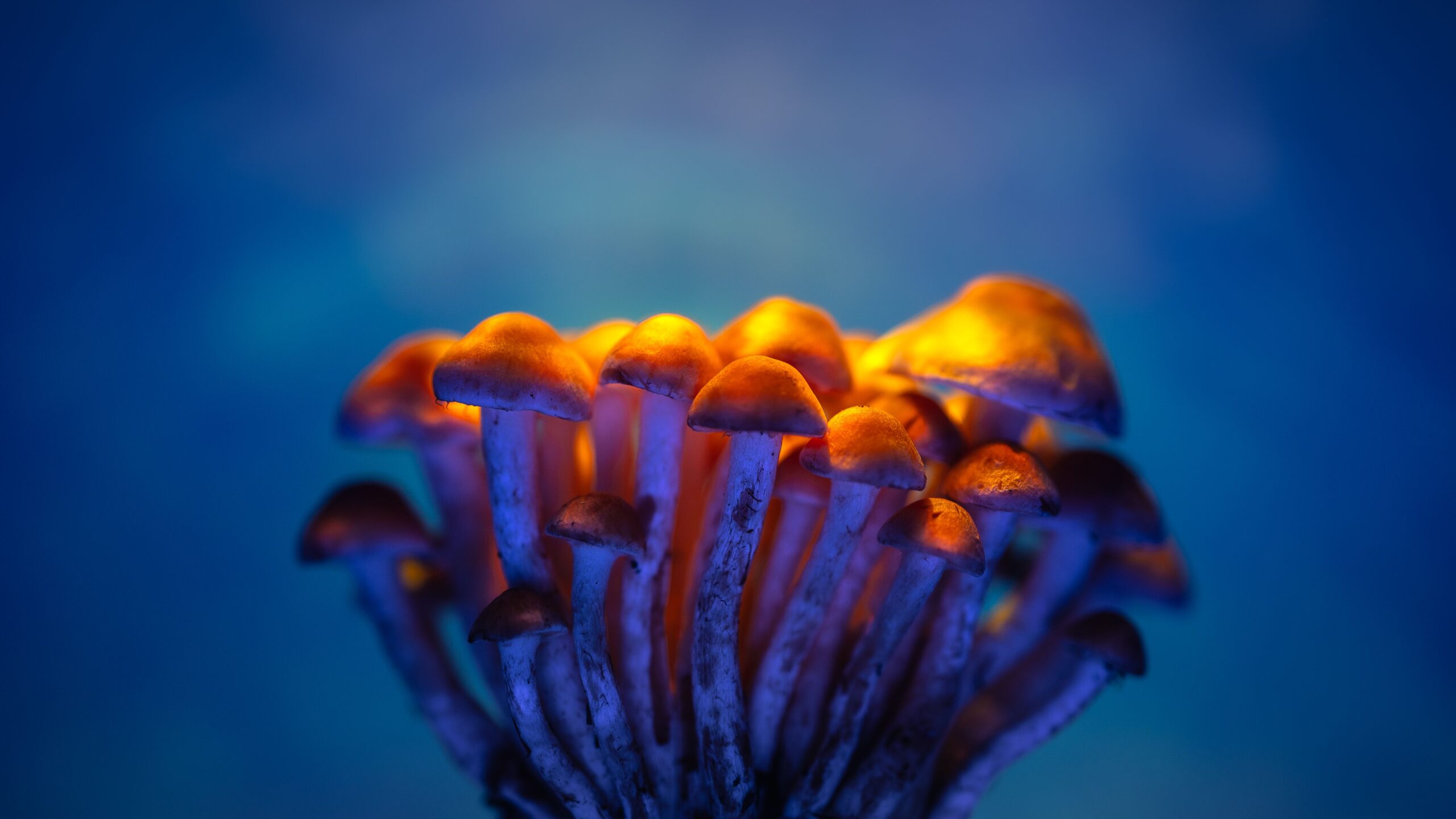
Photo by Marek Piwnicki: https://www.pexels.com/photo/brown-mushrooms-in-close-up-photography-13695329/