

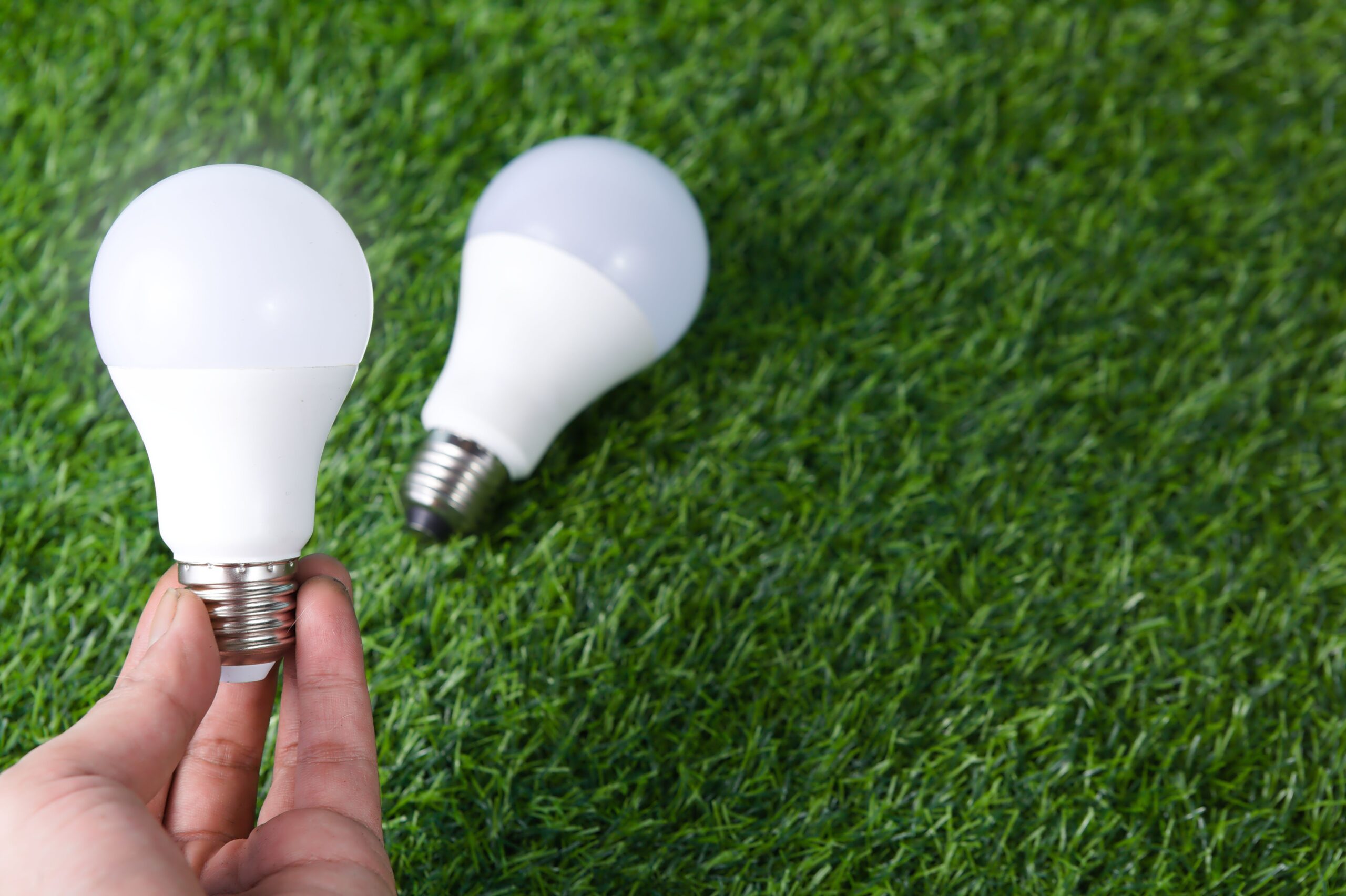
For many older adults, changing a light bulb seems like one of the least important health decisions imaginable.
LEDs have become the default choice because they use little electricity, last for years and provide bright illumination. But scientists are increasingly looking beyond how much light we use and asking a different question: what kind of light are we exposing our bodies to—and when?
That question matters particularly as we age.
Older eyes transmit less light to the retina, daily outdoor activity may decrease, and sleep and circadian rhythms often become more fragile. Research in recent years has therefore begun examining whether the spectrum, intensity and timing of indoor light can influence sleep, alertness and other aspects of health.
At the same time, researchers are investigating whether red and near-infrared wavelengths have biological effects of their own.
The science is intriguing—but it is important not to confuse promising research with proof that ordinary LED bulbs are damaging our mitochondria.
Why Light Is More Than Something We See
Light does more than allow us to read a newspaper or find our way around the kitchen.
Specialized cells in the eye send information about environmental light to the brain’s circadian system, helping regulate the body’s internal timing of sleep and wakefulness.
This becomes especially important later in life.
Older adults commonly experience changes in sleep timing, more nighttime awakenings and weaker circadian rhythms. Researchers studying light and aging have consequently become interested in how daytime and evening illumination can be adjusted to support healthier sleep patterns.
The timing is crucial.
Bright, appropriately timed daytime light can help reinforce the body’s biological clock. Bright light late in the evening, on the other hand, can make it harder for some people to fall asleep.
A 2025 study involving older adults found that greater morning exposure to blue-enriched light was associated with more stable rest-activity rhythms, while evening exposure was associated with longer sleep latency and lower sleep efficiency.
That finding gives us a much more useful message than simply declaring blue light “bad.”
Blue-rich light during the day and blue-rich light immediately before bed are not biologically equivalent.
The Red-Light Mystery
Here is where the story becomes particularly interesting.
Researchers studying photobiomodulation, sometimes called low-level light therapy, are investigating how specific red and near-infrared wavelengths interact with biological tissues.
A 2025 Scientific Reports study by Glen Jeffery, Edward Barrett and colleagues investigated longer wavelengths found in sunlight and reported potential effects on mitochondrial function and visual performance.
Mitochondria are the structures inside cells that help produce ATP, the energy currency used to power cellular activity.
Laboratory and clinical research suggests that certain red and near-infrared wavelengths may influence mitochondrial and cellular signaling. Reviews published recently have examined potential applications ranging from tissue repair to neurological and metabolic conditions.
But there is an important distinction:
This does not establish that sitting under a conventional LED light damages mitochondria.
Nor does it prove that replacing every LED in a home with red or infrared lighting will prevent diabetes, Alzheimer’s disease, macular degeneration or aging.
Those conclusions go considerably beyond the evidence currently available.
What About the New LED Research?
A 2026 Scientific Reports paper has intensified the debate by examining restricted-spectrum LED lighting and visual performance. The authors argue that conventional narrow-spectrum LEDs may not reproduce the broad spectrum of natural daylight and investigate whether adding longer wavelengths changes physiological responses.
This is an interesting research direction, particularly because modern people spend substantial amounts of time indoors.
But one study does not establish that everyday LED lighting is causing a population-wide metabolic crisis.
That distinction matters enormously when discussing health.
Science often begins with an intriguing biological observation. Researchers then need replication, carefully controlled human trials and long-term evidence before a sweeping health recommendation can be justified.
The Issue Older Adults Should Probably Pay More Attention To
For older adults, the most practical concern may not be mitochondrial “starvation” at all.
It may be poorly timed light.
A dim home during the daytime can leave someone insufficiently exposed to the strong environmental cues that help regulate the circadian clock. Then bright television screens, phones, tablets or overhead lighting late at night can provide the opposite signal at exactly the wrong time.
Research has repeatedly shown that light has powerful effects on circadian rhythms and sleep, and this is particularly relevant as sleep patterns change with age.
There is also a safety consideration.
Older adults are more vulnerable to falls, so making a bedroom completely dark should not mean stumbling through the house at night. The National Heart, Lung, and Blood Institute notes that a small warm-colored night-light can provide visibility while limiting unnecessary nighttime light exposure.
A Simpler Way to Think About Your Home Lighting
Instead of worrying that every LED bulb is secretly harming your cells, think about creating a day-and-night lighting pattern.
During the day
Open the curtains and spend time outdoors when possible.
Natural daylight is substantially brighter than typical indoor illumination and provides the broad environmental signal that helps regulate circadian timing.
For older adults who spend much of the day indoors, making daytime rooms brighter can be particularly worthwhile.
In the evening
As bedtime approaches, reduce unnecessary brightness.
Warm-colored, lower-intensity lighting can make the transition toward nighttime more natural. Avoid having extremely bright screens or lamps directly in your eyes shortly before sleep.
At night
Keep the bedroom as dark as practical.
If you need illumination for a bathroom trip, a dim warm or amber light can provide enough visibility without turning the room into daytime.
Don’t sacrifice safety for darkness
This is especially important for older adults.
A dark staircase, hallway or bathroom can create a fall hazard. Good lighting should help you see obstacles without unnecessarily flooding the entire home with bright light throughout the night.
And What About Red-Light Therapy?
Red and near-infrared light therapy remains an active area of research.
A recent international expert consensus concluded that photobiomodulation appears safe for several adult clinical applications and may have therapeutic value for conditions including certain wounds, peripheral neuropathy and pain associated with diabetic foot ulcers.
Other recent research has investigated possible effects on sleep and glucose regulation, but the evidence remains limited for many proposed applications. A 2026 systematic review of photobiomodulation and diabetes, for example, found potentially favorable changes in several glucose measures but rated the certainty of evidence as very low to low.
That is promising—not definitive.
Anyone considering light therapy for a medical condition should therefore discuss it with a healthcare professional rather than treating a consumer light device as a substitute for established treatment.
The Bigger Lesson Hidden Inside the LED Debate
Perhaps the most useful discovery isn’t that LEDs are dangerous.
It is that light is biologically active.
The human body evolved with powerful daytime light, darkness at night and predictable daily changes in illumination. Modern life has changed that pattern dramatically.
For older adults especially, something as ordinary as opening the curtains in the morning, taking a daytime walk and dimming unnecessary lights before bed may have more practical value than chasing the latest “mitochondrial” wellness trend.
The fascinating red-light research deserves attention. But it also deserves patience.
We don’t need to fear every LED bulb.
We need to learn how to use light more intelligently—bright and natural when we’re awake, comfortable and appropriately dim as bedtime approaches, and safe enough to move around without falling.
That may be the most sensible way to bring modern lighting and human biology back onto the same wavelength.
Photo by Riki Risnandar: https://www.pexels.com/photo/person-holding-white-light-bulb-3946161/