

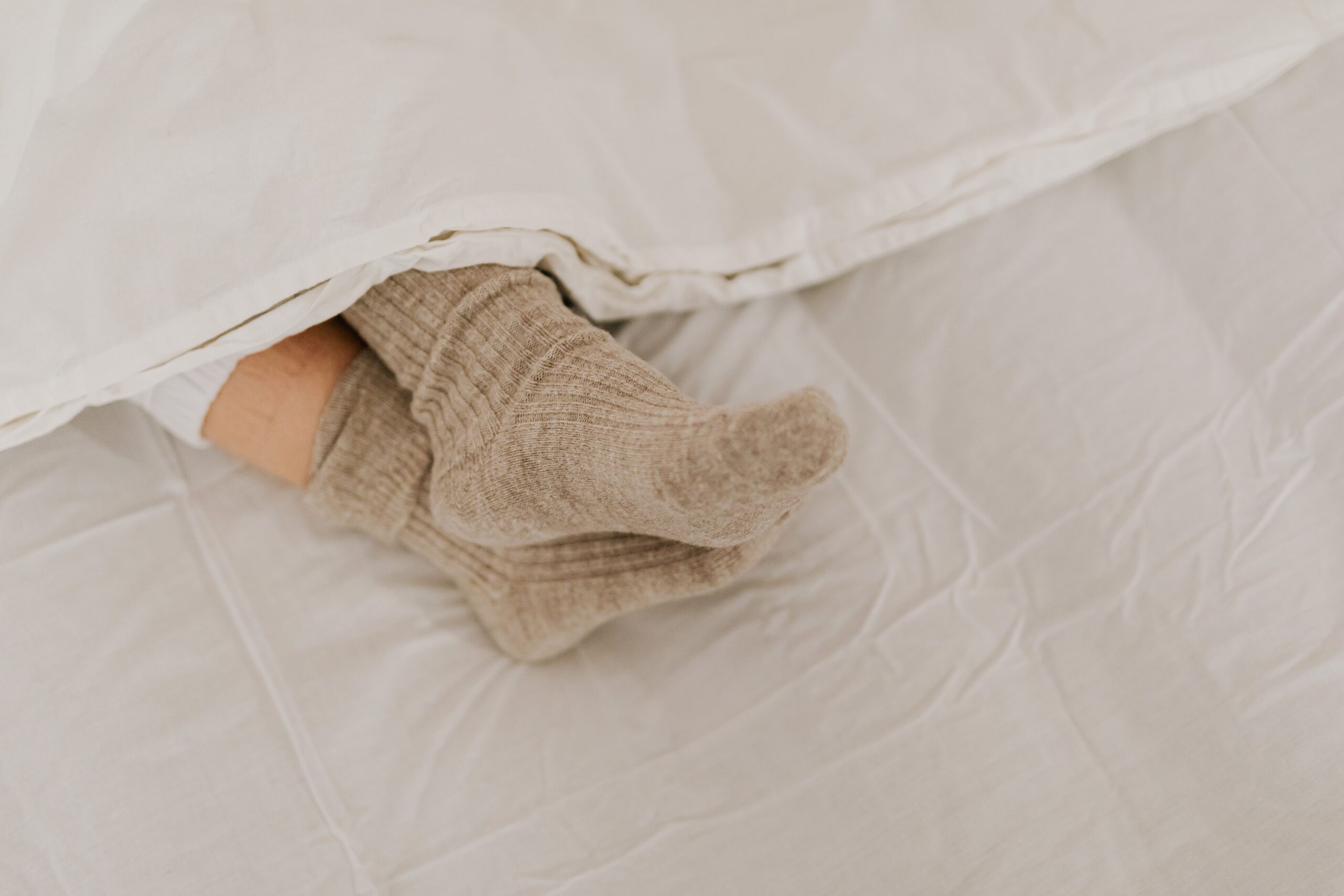
For many older adults, getting a good night’s sleep becomes less predictable with age. You may fall asleep later than you once did, wake several times during the night, or find yourself wide awake simply because your feet are cold.
That last problem sounds almost too ordinary to matter. Yet temperature plays an important role in the body’s preparation for sleep.
One small sleep study has drawn attention to a surprisingly simple idea: warming your feet before bed may help you fall asleep more quickly and stay asleep longer.
The research does not mean everyone needs to sleep in socks, and it certainly does not replace treatment for persistent insomnia. But it offers an interesting reminder that some sleep difficulties may be influenced by something as basic as body temperature.
Why Your Body Cools Down Before Sleep
Sleep is closely connected to the body’s internal temperature rhythm.
During the evening, core body temperature naturally begins to fall. This process is coordinated by the brain’s circadian system and is part of the body’s preparation for sleep.
As bedtime approaches, blood vessels in the hands and feet can widen, allowing more heat to move from the body’s core toward the skin. Heat can then dissipate into the surrounding environment.
This is one reason a cool bedroom is generally more comfortable for sleeping than an overheated one.
But there is an interesting catch.
If your feet are very cold, the blood vessels near the skin can constrict. That can make the feet uncomfortable and may interfere with the body’s normal transition toward sleep.
Warming the feet may encourage peripheral blood flow and make it easier for the body to release heat.
The Surprisingly Simple Sock Effect
A frequently cited study in the Journal of Physiological Anthropology examined whether wearing socks could influence sleep.
The experiment was small, involving only six young men in a controlled laboratory environment. Participants slept under different conditions, including wearing bed socks.
Researchers reported that the sock condition was associated with faster sleep onset, longer total sleep time and fewer awakenings.
Those findings are interesting—but they need to be put into perspective.
Six participants cannot tell us that socks will improve everyone’s sleep.
The study was performed under carefully controlled conditions and involved young adults, not older people with multiple health conditions, medications or sleep disorders.
Still, the physiological explanation is plausible enough to make foot warming a reasonable, low-risk experiment for people who find cold feet uncomfortable at night.
Why Older Adults May Notice Temperature Changes More
Sleep itself changes with age.
Older adults often experience lighter sleep, earlier waking and shifts in their circadian rhythm. At the same time, circulation, skin sensitivity and the body’s ability to regulate temperature can change over the years.
That can make seemingly minor nighttime discomforts more noticeable.
Cold feet may be particularly irritating when someone is already struggling with fragmented sleep.
Rather than viewing socks as a “sleep cure,” it is more useful to think of them as a comfort and temperature-management tool.
If warming your feet helps you feel comfortable and relaxed, it may make the transition into sleep easier.
The Science Behind Warm Feet and Sleep
The key idea is called distal vasodilation.
Your hands and feet contain blood vessels that can change their diameter in response to temperature and nervous-system signals.
When these peripheral vessels widen, more warm blood reaches the skin. Heat can then move from the body to the surrounding air.
This supports the normal evening decline in core temperature associated with sleep preparation.
The relationship can be thought of simply:
Warm feet → greater peripheral blood flow → increased heat loss from the skin → easier transition toward sleep
This does not mean socks directly “trigger” melatonin or guarantee deeper sleep. Sleep is controlled by a much more complicated interaction between circadian rhythms, sleep pressure, light exposure, hormones, environment and behavior.
But temperature is one important piece of that puzzle.
Could Socks Help With Nighttime Waking?
This is where expectations should remain realistic.
The small laboratory study found fewer awakenings when participants wore socks, but that does not establish that socks prevent insomnia.
Older adults may wake for many different reasons, including:
- Needing to use the bathroom
- Pain or arthritis
- Medication effects
- Sleep apnea
- Restless legs symptoms
- Anxiety or stress
- Hot flashes or temperature changes
- An uncomfortable sleep environment
If you are waking repeatedly every night, especially if the problem has lasted for weeks, it is worth discussing with a healthcare professional rather than assuming cold feet are responsible.
How to Try It Safely
If cold feet are part of your bedtime problem, you don’t need an expensive product.
Try a clean, comfortable pair of loose-fitting socks before bed.
Cotton or other breathable materials can work well. The socks should not feel tight around the ankles or toes.
Avoid wearing anything that leaves deep marks or makes your feet sweaty and overheated.
For people with circulation problems, diabetes, reduced sensation in the feet or significant swelling, it is sensible to ask a healthcare professional what type of nighttime footwear is appropriate.
And remember: warm does not mean hot.
A very hot bedroom or excessive heating can make sleep less comfortable rather than improving it.
A Warm Foot Bath May Be Another Option
Some people prefer warming their feet before getting into bed rather than sleeping in socks.
A short warm—not scalding—foot bath can be relaxing and may temporarily increase blood flow to the feet.
If you try this approach, dry your feet thoroughly afterward, particularly between the toes.
Older adults should also be careful with water temperature because reduced sensation can make it harder to recognize excessive heat.
When the Sock Trick Isn’t Enough
There is a difference between an occasional bad night’s sleep and persistent sleep problems.
If you regularly struggle to fall asleep, wake repeatedly, snore loudly, wake gasping, experience unusual nighttime movements, or feel excessively sleepy during the day, the underlying problem deserves attention.
Sleep problems can sometimes be linked to treatable medical conditions.
For older adults in particular, good sleep is not simply about feeling rested the next morning. Consistently poor sleep can affect daytime concentration, mood, balance and overall quality of life.
That makes identifying the real cause more important than finding a quick trick.
Sometimes Better Sleep Starts With Something Simple
Modern sleep advice can make getting a good night’s rest seem complicated. Special mattresses, tracking devices, supplements and elaborate routines can all compete for attention.
But sometimes the most useful place to start is much simpler.
If your feet are cold when you get into bed, warming them may help you become more comfortable as your body naturally prepares for sleep.
The evidence is promising but limited, and the famous sock study was far too small to make sweeping claims.
Still, there is little mystery in trying a clean, loose pair of socks if cold feet are keeping you uncomfortable.
After all, better sleep does not always begin with a new gadget.
Sometimes, it begins with simply feeling warm enough to relax.
Photo by https://kaboompics.com/: https://www.pexels.com/photo/person-wearing-beige-socks-on-white-textile-6661038/