

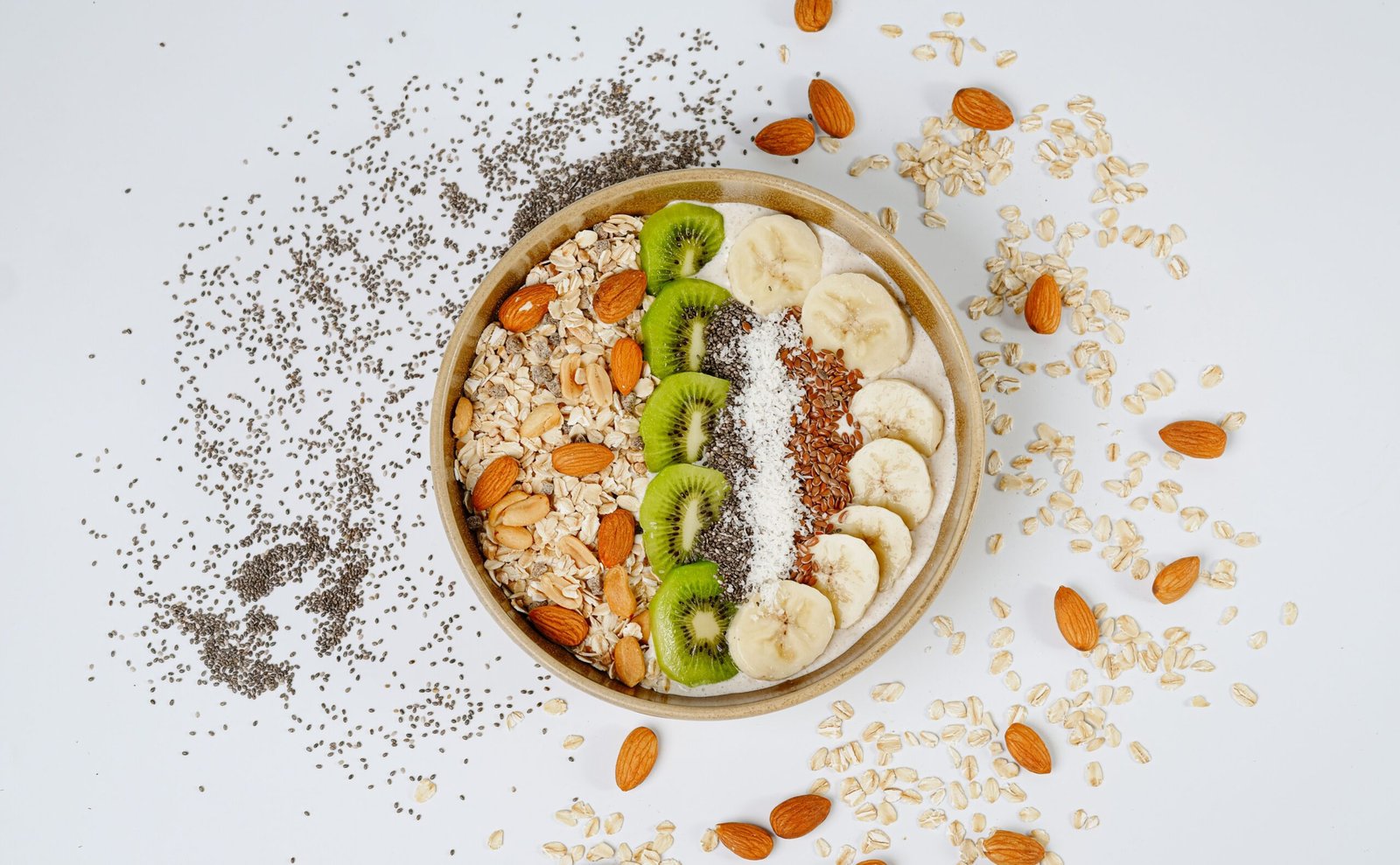
Gut health has become a major topic online, with countless products promising better digestion, less bloating and a healthier microbiome. But supporting the digestive system does not necessarily require expensive supplements or a complete change in eating habits.
Gastroenterologist Dr Will Bulsiewicz, known as Dr B, often highlights a simpler approach: eat a wider variety of plant foods, include fibre-rich ingredients and consider fermented foods as part of a balanced diet.
Five foods frequently discussed in this approach are kiwi, broccoli sprouts, chia seeds, kefir and chickpeas. Each offers something different, although none is a magic solution for digestive problems.
1. Kiwi: A fruit that may help with constipation
Kiwi is rich in fibre and vitamin C, making it a useful addition to a balanced diet. Research has also examined its role in improving bowel regularity.
A randomised crossover trial published in the American Journal of Gastroenterology found that eating two green kiwifruits daily improved complete spontaneous bowel movements in people with constipation and irritable bowel syndrome with constipation. The researchers compared kiwi with psyllium, a commonly used fibre supplement. <Cite refs={[“turn218091search9″,”turn218091search8”]}/>
Kiwi may be worth trying if you want to increase your fruit and fibre intake. However, individual responses vary, and persistent constipation deserves medical advice rather than relying on one food alone.
Easy idea: Add sliced kiwi to porridge, yoghurt or a fruit bowl.
2. Broccoli sprouts: Small greens with interesting plant compounds
Broccoli sprouts are young broccoli plants that contain glucosinolates, including glucoraphanin, which can be converted into sulforaphane. Scientists are studying sulforaphane for its effects on cellular defence and other biological processes.
These findings make broccoli sprouts an interesting research subject, but they do not prove that eating sprouts prevents cancer or treats disease. Mature broccoli and other vegetables remain nutritious choices, too.
There is also an important food-safety consideration. Raw sprouts can harbour harmful bacteria because they grow in warm, moist conditions. In September 2026, US authorities investigated a Salmonella outbreak linked to specific broccoli sprouts and issued recall advice. <Cite refs={[“turn218091search3″,”turn218091search2”]}/>
Easy idea: Choose cooked broccoli as a dependable everyday option. If buying sprouts, check current food-safety alerts and follow local handling guidance. People at higher risk of foodborne illness should avoid raw or lightly cooked sprouts.
3. Chia seeds: A small source of fibre
Chia seeds may be tiny, but they provide fibre and plant-based omega-3 fat called alpha-linolenic acid (ALA). When mixed with liquid, they form a gel that changes their texture and can contribute to stool softness as part of a fibre-rich diet.
You do not need to grind chia seeds to benefit from their fibre. Grinding may make some nutrients more accessible, but whole seeds can still contribute to overall fibre intake.
If you are not used to eating much fibre, start with a small amount and increase gradually. Chia seeds absorb liquid, so mix them with sufficient fluid rather than swallowing a large quantity dry.
Easy idea: Stir chia seeds into overnight oats, yoghurt or a pudding and allow them to absorb the liquid.
4. Kefir: A fermented food worth considering
Kefir is a fermented drink usually made from milk. Depending on how it is produced, it can contain live microorganisms, and it also provides nutrients such as protein and calcium.
Some research suggests that fermented foods may influence the gut microbiome. However, the effects depend on the food, its microorganisms and the person consuming it. More strains do not automatically mean greater health benefits, and kefir is not a guaranteed treatment for bloating or other digestive symptoms.
People who are lactose intolerant may tolerate some fermented dairy products better than milk, but tolerance varies. Dairy-free alternatives may be suitable for others, although their cultures and nutritional content differ.
Easy idea: Try plain kefir with breakfast or blend it with fruit. Check the label for added sugar and choose a product that suits your dietary needs.
5. Chickpeas: Affordable fuel for gut bacteria
Chickpeas are one of the easiest ways to add fibre and plant protein to everyday meals. Their fibre and resistant starch can reach the large intestine, where gut microbes ferment some of these substances and produce compounds such as short-chain fatty acids.
These compounds are involved in normal gut function, although eating chickpeas does not guarantee a specific change in inflammation or prevent a particular disease.
Beans and chickpeas can cause gas, especially when you first increase your intake. Start with smaller servings, increase gradually and rinse canned chickpeas before use. If you have a digestive condition that makes legumes difficult to tolerate, a personalised approach may help.
Easy idea: Add chickpeas to soups, salads, curries or grain bowls.
Is there a magic number of plants to eat each week?
The American Gut Project found an association between greater plant diversity and a more diverse gut microbiome. Its findings helped popularise the goal of eating around 30 different plant types per week. However, this is a helpful target, not a strict medical requirement or a guarantee of better health. <Cite refs={[“turn846099search2″,”turn846099search7”]}/>
Plant variety can include vegetables, fruit, beans, lentils, whole grains, nuts, seeds, herbs and spices. You can build variety gradually using familiar foods rather than purchasing specialist products.
The takeaway: Keep gut health simple
Kiwi, broccoli, chia seeds, kefir and chickpeas offer different nutrients and can fit into a balanced eating pattern. The biggest lesson is not to copy a doctor’s exact menu, but to build habits you can maintain.
Eat a range of fibre-rich foods, drink enough fluids, increase fibre gradually and pay attention to how your body responds. If digestive symptoms are persistent, severe or unexplained, consult a healthcare professional.
A healthier gut does not require a perfect plate. Consistent, varied and enjoyable meals are a much more practical place to start.
Photo by ufuk iseloglu: https://www.pexels.com/photo/healthy-breakfast-bowl-with-fruits-and-oats-29481840/