
For many people, recovering from an infection feels like the end of the story. The fever settles, the cough disappears and everyday life gradually returns to normal.
But some viruses behave differently. Instead of being completely eliminated after the initial infection, they can remain inside the body in a dormant or latent state. Epstein-Barr virus (EBV) and cytomegalovirus (CMV), for example, can persist for life and are usually kept under control by the immune system.
That has raised an important question during the COVID-19 era: Can an intense SARS-CoV-2 infection disturb these normally quiet viruses?
Growing evidence suggests that it can.
A major study involving 1,154 hospitalized COVID-19 patients found evidence of reactivation involving several chronic viral families, including herpesviruses and anelloviruses. Reactivation was associated with markers of inflammation and with several measures of illness severity. The researchers also found that persistent anellovirus activity during recovery was associated with post-COVID symptoms, particularly fatigue and reduced physical function.
But there is an important distinction: the findings show an association, not proof that viral reactivation causes Long COVID.
What Does “Viral Reactivation” Actually Mean?
A latent virus is not necessarily completely inactive in every sense. Some viruses remain inside particular cells or tissues while replication is tightly controlled.
The immune system continually monitors these infections.
When the body experiences a major illness, however, that balance can change. Severe infection, inflammation, changes in immune-cell activity and some medical treatments can create conditions in which a previously controlled virus becomes detectable again or begins replicating more actively.
This phenomenon isn’t unique to COVID-19. Viral reactivation has also been observed during other serious illnesses, particularly when immune defenses are weakened.
COVID-19 has simply given researchers a large-scale opportunity to study the process.
EBV and CMV Are Not New Invaders
Two of the most discussed viruses in this research are EBV and CMV.
EBV is extremely common and is best known for causing infectious mononucleosis. After the initial infection, it remains in the body in a latent state.
CMV belongs to the same broad herpesvirus family and also commonly persists for life. In healthy people, it generally remains under effective immune control, although it can cause significant illness in people with severely weakened immune systems.
That means finding evidence of EBV or CMV activity after COVID-19 does not automatically mean a person has developed a new infection.
Instead, researchers are interested in whether SARS-CoV-2 temporarily changes the immune environment enough to allow these existing viruses to become more active.
What the Large Study Found
The recent multi-omic investigation is particularly interesting because researchers did not look at just one virus.
They examined multiple chronic viral families in more than 1,000 hospitalized patients and combined viral measurements with immune, metabolic and molecular data.
They found evidence of increased activity involving Herpesviridae, Enteroviridae and Anelloviridae during acute COVID-19. These changes occurred alongside distinctive immune responses and were associated with clinical outcomes, including disease severity and mortality.
The anellovirus finding is especially intriguing.
Anelloviruses are widespread in humans, but their exact health significance remains poorly understood. In the study, persistent anellovirus reactivation during recovery was associated with post-COVID symptoms involving fatigue and physical function.
That does not mean anelloviruses have been proven to be the cause of Long COVID. Instead, they may potentially serve as biological markers of ongoing immune disturbance.
That distinction is crucial.
Could This Help Explain Long COVID?
Long COVID remains one of the most complicated consequences of the pandemic.
People can experience persistent fatigue, problems with concentration, sleep disturbances, changes in exercise tolerance and a wide range of other symptoms after the initial infection has resolved.
Researchers are investigating several possible mechanisms, including persistent SARS-CoV-2 material, immune dysregulation, inflammation, vascular changes and viral reactivation.
Some earlier research found an association between evidence of recent EBV reactivation and Long COVID symptoms, particularly fatigue.
But other studies have not found evidence that EBV reactivation explains Long COVID in people with mild or asymptomatic SARS-CoV-2 infections.
More recent population research has also failed to find a clear increase in EBV reactivation among people with persistent post-COVID symptoms.
So the emerging picture is not a simple “COVID wakes EBV, which causes Long COVID” chain.
It is much more complicated.
Why the Immune System Matters
One possible explanation is that severe COVID-19 temporarily disrupts the immune system’s normal surveillance mechanisms.
During serious infection, immune cells become highly activated while others may become depleted or function differently. Inflammatory signals also change dramatically.
This altered environment may allow some latent or persistent viruses to become more detectable.
Importantly, researchers are still investigating whether viral reactivation contributes directly to illness or is instead a consequence of the severe immune disturbance caused by COVID-19.
It may even be both, depending on the virus and the individual.
What This Means for Patients
For now, this research does not mean that everyone recovering from COVID-19 needs testing for EBV, CMV or other latent viruses.
It also does not establish a standard antiviral treatment for Long COVID based on viral-reactivation findings.
Instead, the research provides scientists with another potential window into why some people experience prolonged symptoms after infection.
The long-term goal is to identify reliable biomarkers that can help researchers divide Long COVID into biologically meaningful subgroups rather than treating it as one uniform condition.
That could eventually lead to more personalized research and treatment strategies.
The Bigger Picture
Perhaps the most important lesson is that an infection is not always a simple battle between one virus and the human immune system.
The body contains a complex history of previous infections, immune memories and persistent microbes. A major illness can temporarily change that internal balance.
COVID-19 has given scientists an unprecedented opportunity to watch those changes in real time.
The evidence so far suggests that viral reactivation is a genuine biological feature of at least some acute COVID-19 cases, particularly among hospitalized patients.
What remains unanswered is the most important question: Does waking these viruses actually drive some Long COVID symptoms, or are they simply a sign that the immune system has been disrupted?
Scientists do not have a definitive answer yet.
And that uncertainty is not a weakness in the research. It is exactly why further studies are needed before intriguing laboratory findings become clinical treatments.
For now, the “sleeping giant” story is best understood not as evidence of a hidden virus causing every lingering symptom, but as another important clue in the still-unfolding biology of COVID-19 and Long COVID.
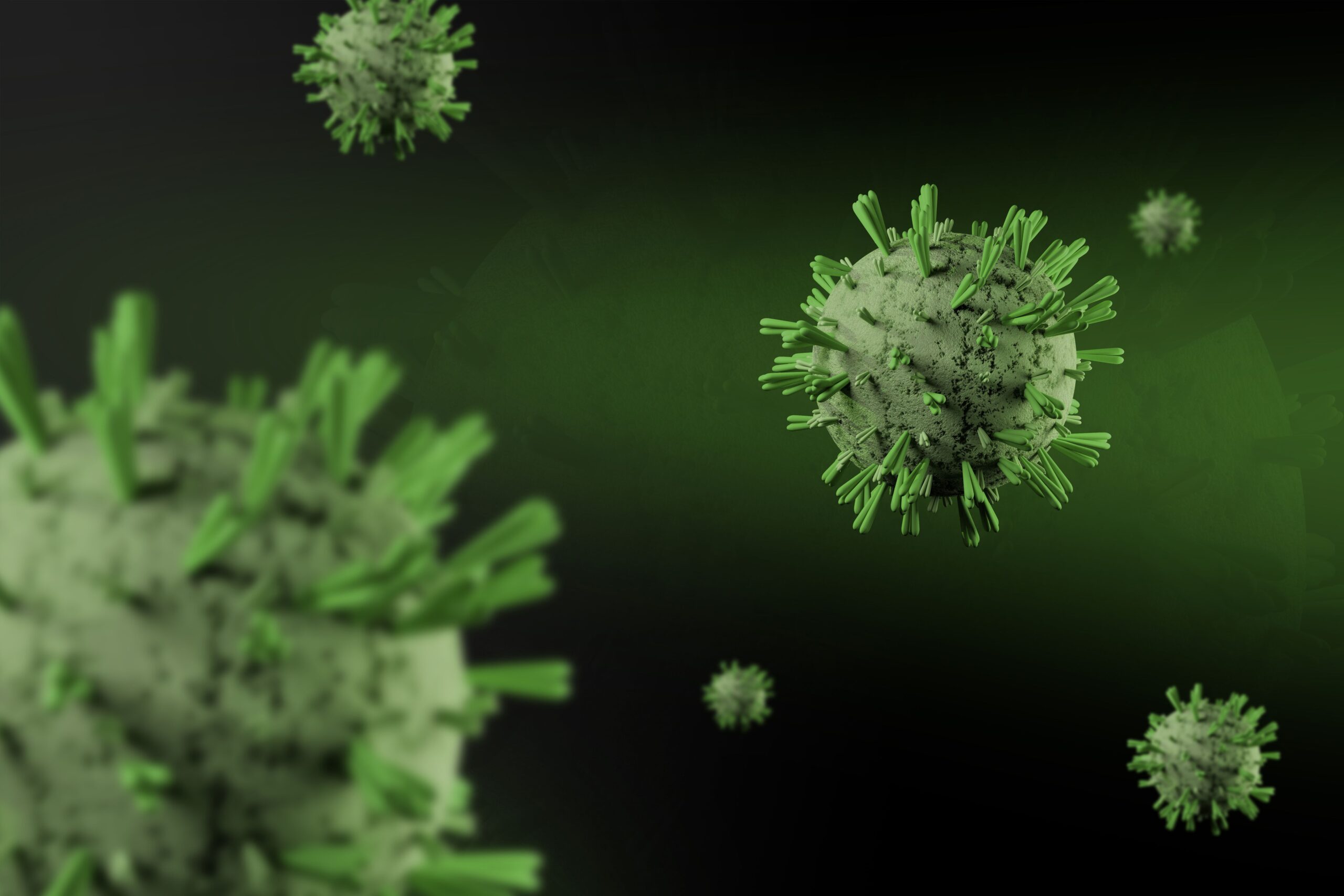
Photo by Daniel Dan: https://www.pexels.com/photo/close-up-photo-of-a-corona-virus-7542650/