

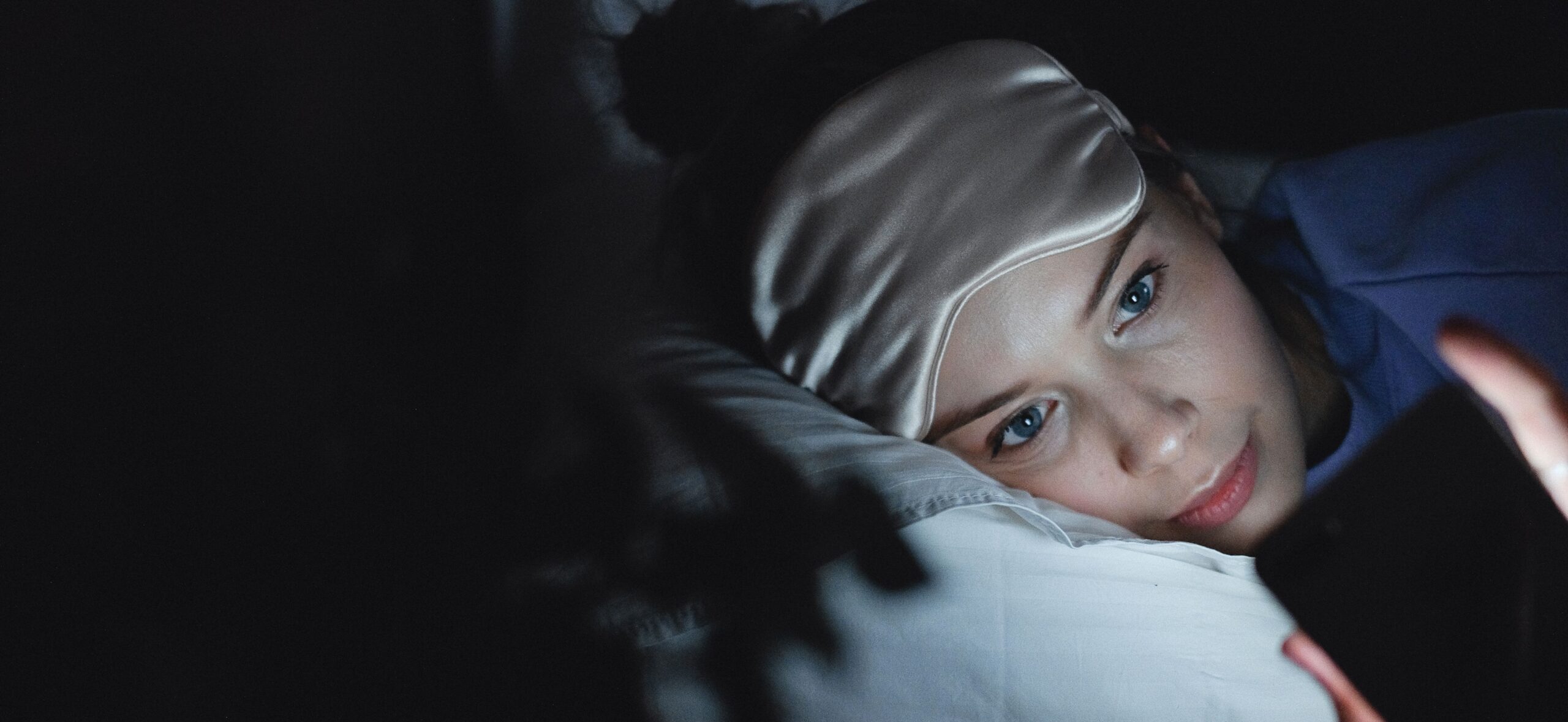
You may barely notice it.
A streetlight shines through the curtains. A television leaves a tiny red glow across the room. An alarm clock stays illuminated beside the bed. Perhaps a phone or charging device adds another little point of light.
None seems bright enough to matter.
But new cardiovascular research is raising an intriguing question: could the light surrounding us while we sleep be affecting the heart as well as our sleep?
A study published in the European Heart Journal in September 2026 examined nighttime light exposure and cardiac structure in more than 11,000 UK Biobank participants who had worn light-sensing devices and later underwent detailed cardiac MRI scans. The results were striking—but they need to be interpreted carefully.
What researchers actually found
Participants exposed to higher nighttime light levels had several measurable differences in heart structure and function.
Compared with people exposed to no nighttime light above the study’s threshold, those in the high-exposure group had:
- about 2.4% greater left-ventricular mass
- about 1.5% greater average wall thickness
- about 1.9% lower myocardial contraction fraction
- changes in measures of heart muscle deformation and the size and function of other heart chambers.
The researchers also examined cardiovascular outcomes over roughly eight to 10 years. Higher nighttime light exposure was associated with increased risks of heart failure, atrial fibrillation, heart attack, stroke and cardiovascular death.
Those numbers sound alarming.
But there is an important distinction: an association is not proof that the light itself caused the disease.
This was an observational study. Researchers measured participants’ real-world light exposure and followed their health; they did not randomly assign people to sleep in bright or dark rooms for years.
That means other factors may contribute to the results.
Why might nighttime light matter?
One possible explanation involves the body’s circadian system—the internal timing system that helps coordinate sleep, hormones, metabolism and other biological processes.
Light entering the eyes can influence this system, including the suprachiasmatic nucleus, the brain’s central circadian clock. Nighttime light can also suppress melatonin, a hormone involved in regulating the sleep-wake cycle.
The new study found that shorter sleep statistically accounted for part of the relationship between nighttime light and the cardiac changes, with mediation estimates ranging from about 24% to 49% for the reported associations.
That does not mean light directly damages the heart every time someone sleeps with a lamp on.
It suggests that sleep disruption and circadian effects may be part of a much larger pathway connecting nighttime light with cardiovascular health.
Older adults may have another reason to pay attention
This question is particularly interesting for older adults.
Previous research involving adults aged 63 to 84 found that habitual light exposure at night was associated with a higher prevalence of obesity, diabetes and hypertension. The researchers emphasized that further research was needed to understand the long-term effects.
Other research in older adults has linked light exposure during sleep with less regular sleep timing. In a study of nearly 2,000 participants, greater light exposure during sleep was associated with greater variability in when people fell asleep.
This matters because sleep often becomes more fragmented with age. Medical conditions, medications, nighttime bathroom trips and changes in circadian rhythms can all make maintaining consistent sleep more difficult.
A bedroom that is unnecessarily bright may be one more disturbance.
It is not just about the heart
Nighttime light is part of a broader health conversation.
Researchers have been studying artificial light at night in relation to sleep, metabolic health, blood pressure and cardiovascular disease.
A 2025 JAMA Network Open cohort study followed nearly 89,000 adults over 40 and found that people exposed to the brightest nighttime light levels had higher risks of coronary artery disease, heart attack, heart failure, atrial fibrillation and stroke than those with darker nighttime exposure. Again, the study was observational, so it cannot establish that nighttime light directly caused those outcomes.
The consistency of findings across different studies is interesting, but it does not turn an association into proof of causation.
Your bedroom does not need to become a cave
The good news is that reducing unnecessary nighttime light is relatively simple.
You do not need expensive equipment or a complicated health routine.
Start with the obvious sources.
Turn off unnecessary lamps. Dim electronic displays. Close curtains or blinds if outdoor lighting shines directly into the bedroom. If a small night-light helps prevent falls during nighttime bathroom trips, use the lowest practical level of illumination rather than leaving a bright overhead light on all night.
And there is an important older-adult consideration here: fall prevention comes first.
A completely dark bedroom may not be appropriate for someone who gets up frequently during the night or has balance, vision or mobility difficulties. A dim pathway light can be safer than stumbling through an unfamiliar dark room.
The goal is not perfect darkness at any cost.
It is to avoid unnecessary brightness while maintaining a safe environment.
What about television and phones?
Electronic devices can create two problems at bedtime.
The first is light exposure.
The second is that the content itself can keep the brain engaged when it should be winding down.
A late-night news program, social-media feed or stimulating television show may keep someone awake even after the screen is dimmed.
For older adults struggling with sleep, reducing evening screen use may therefore be useful for more than one reason.
The bigger lesson from the new study
The most interesting finding is not that one glowing LED is secretly damaging your heart.
It is that cardiovascular health may be influenced by many small environmental factors that accumulate over time.
Blood pressure, physical activity, diet, smoking, air pollution, sleep and stress all interact with cardiovascular risk. Nighttime light may be another piece of that complicated picture.
The new European Heart Journal research adds something particularly valuable: researchers were able to connect objectively measured nighttime light exposure with detailed MRI measurements of the heart, rather than relying solely on people’s reports of how bright their bedrooms were.
But science has not yet established that making a bedroom darker will prevent heart attacks, heart failure or stroke.
That question will require further research.
For now, the practical message is much simpler.
If a bright bedroom is not necessary for your safety, there is little reason to keep it bright all night.
Close the curtains. Turn off unnecessary displays. Keep nighttime lighting low and warm. And if you need a small light to move safely around your home, keep it.
Your heart does not need a perfectly dark bedroom to survive.
But your body evolved to recognize night as a different biological state—and giving that rhythm a little more respect may be one of the simplest changes worth considering as we get older.
Photo by SHVETS production: https://www.pexels.com/photo/woman-lying-on-bed-using-a-smartphone-8036684/