

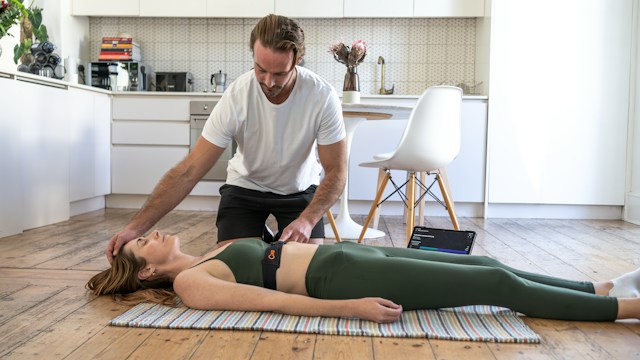
If you spend long hours sitting, commuting, or managing stress, your body often stores tension in hidden places. While stiff shoulders and neck pain get most of the attention, millions silently struggle with pelvic tightness, low back aches, and deep pressure in the pelvic floor.
Why Stress Targets the Pelvic Floor
The pelvic floor is a muscular hammock supporting your bladder, bowel, and internal organs. When stress or poor posture keeps your nervous system on high alert, these muscles brace and tighten. Over time, this can lead to:
- Lower back stiffness and hip tightness
- Pelvic heaviness or pressure, especially late in the day
- Prolapse discomfort from organ weight pressing downward
- Pelvic pain or bladder irritability caused by spasms rather than weakness
Instead of more “Kegels,” which can worsen hypertonic muscles, the solution is often the opposite: release, lengthen, and relax.
🌿 The 3-Step Pelvic Floor Release Routine
This restorative sequence takes just three minutes and requires only a yoga block, bolster, or firm pillow.
Step 1: Supported Pelvic Elevation (Sacral Sink)
- Lie on your back, knees bent, feet flat.
- Lift hips slightly and slide a block under your sacrum (not your lower back).
- Let your weight sink into the block, breathing deeply into your belly.
- Gravity shifts organ weight upward, instantly easing pelvic pressure.
Step 2: Weightless Legs (Gentle Inversion)
- From the supported position, lift legs loosely toward the ceiling.
- Keep knees soft—no need for straight legs.
- This effortless inversion promotes circulation, drains lymphatic fluid, and calms the nervous system.
- Optional: gently rock knees side-to-side for added release.
Step 3: Inner Thigh & Pelvic Floor Opening
- Allow knees to fall outward into a wide, relaxed position.
- Inner thigh muscles connect directly to the pelvic floor; releasing them eases contraction.
- Support thighs with hands if needed.
- Rest here for 1–2 minutes, breathing deeply into the pelvic bowl.
🌙 Reintegration & Daily Benefits
After finishing, bring knees together, lower feet, lift hips to remove the block, and rest flat for a moment. Practicing this short sequence daily—especially in the late afternoon—acts as a reset button. It:
- Relieves pelvic and back tension
- Restores circulation and lymphatic flow
- Prepares the body for restful sleep
Consistency, not duration, is the secret. Just three minutes a day builds resilience, comfort, and long-term pelvic health.
Photo by Angelina Sarycheva on Unsplash