

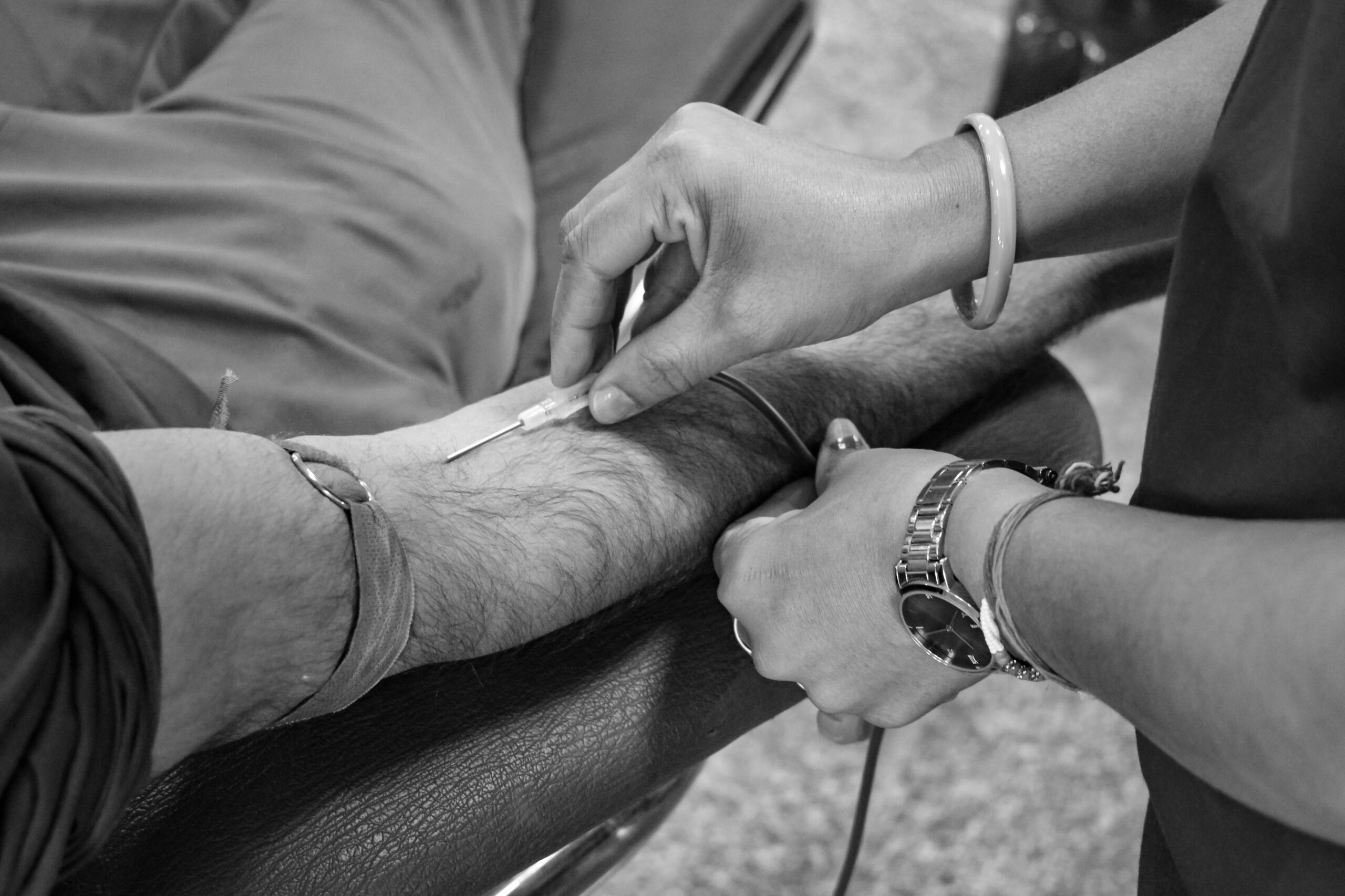
There is a particular kind of frustration that comes with being told, “Your veins are difficult.”
You may know exactly what happens next.
A clinician examines your arm, applies a tourniquet and feels for a suitable vein. Sometimes everything goes smoothly. Other times, the first attempt doesn’t work. Then comes another try, perhaps in a different location.
For older adults, repeated attempts can be especially unpleasant. Skin becomes thinner and more fragile with age, and veins may be harder to see or feel. People who are dehydrated, unwell, cold or undergoing frequent medical treatment can face additional challenges.
But what if clinicians could see more of what is happening underneath the skin before inserting the needle?
That is the idea behind near-infrared, or NIR, vein-visualization technology.
Turning Invisible Veins Into a Visible Map
NIR vein-visualization devices use near-infrared light to help highlight veins beneath the skin. A camera or optical sensor detects differences in how tissues interact with the light, and some systems then display the detected veins on the skin.
The result can look surprisingly futuristic: instead of relying entirely on what the clinician can see and feel, they have an additional visual guide.
Importantly, this is not an X-ray or another form of ionizing radiation. It is an optical technique designed to provide information about superficial blood vessels.
And it isn’t completely new.
Researchers have been investigating NIR vascular visualization for years, particularly for people considered difficult to cannulate.
What is changing is the evidence about where the technology may be most useful.
Why Getting a Vein Can Become Harder With Age
A difficult blood draw isn’t necessarily a sign that something is wrong.
Veins can be difficult to locate for many reasons.
Dehydration can reduce the fullness of peripheral veins. Cold temperatures can cause blood vessels near the skin to constrict. Previous medical procedures can also affect the condition or accessibility of veins.
Age brings another set of challenges.
Older skin tends to become thinner and less elastic. Some veins may become less prominent, while changes in surrounding tissue can make visual or tactile identification more difficult.
For someone who needs blood tests regularly—or requires an intravenous line during a hospital stay—these difficulties can turn an otherwise routine procedure into a stressful experience.
That is where an extra visual tool may have value.
What Does the Research Actually Show?
This is where the story becomes more interesting—and more nuanced—than the technology’s futuristic appearance might suggest.
A 2026 systematic review and meta-analysis specifically examined NIR vein imaging in adults aged 65 and older. It included eight studies involving 1,022 participants.
The researchers found that NIR technology was associated with a significantly higher chance of successful peripheral IV placement on the first attempt. The review also found reductions in procedure time and complications, along with improvements in reported satisfaction and anxiety.
But there was an important qualification.
The authors noted substantial differences between studies and limitations in the quality of the available evidence. In other words, NIR appears promising, but it should not be described as a guaranteed way to eliminate failed needle attempts.
That caution is supported by individual clinical trials.
In one randomized study involving 270 adults with difficult peripheral vascular access, ultrasound guidance achieved a first-attempt success rate of 78.9%, compared with 62.2% using standard technique and 58.9% using NIR.
So the technology isn’t necessarily about replacing skilled clinicians or ultrasound.
It may instead become one more tool in the difficult-access toolbox.
Why This Could Matter to Older Patients
Imagine arriving at a hospital for treatment and knowing that your veins have historically been difficult to access.
Instead of immediately relying on repeated attempts, a clinician may have access to visualization technology that provides additional information about where superficial veins are located.
That could potentially mean fewer attempts, less disruption and a more comfortable experience.
For older adults who already have anxiety about medical procedures, even a reduction in uncertainty can matter.
However, NIR devices don’t make the needle disappear.
They don’t guarantee that every visible vein is suitable for cannulation, and they don’t eliminate the need for clinical judgment. A clinician still has to consider vein size, location, condition and the purpose of the IV access.
NIR Isn’t the Only Technology
Another important development is ultrasound-guided vascular access.
Unlike NIR visualization, ultrasound can provide information about vessels below the surface and can help clinicians assess their depth and surrounding anatomy.
In the randomized adult study mentioned above, ultrasound performed better than both standard technique and NIR for first-attempt success in the difficult-access population studied.
That doesn’t mean NIR has failed.
Different technologies answer slightly different questions.
NIR can help show the path of superficial veins.
Ultrasound can provide a deeper view and additional anatomical information.
The most appropriate option depends on the patient, the clinical situation and the experience of the healthcare professional.
What Can You Do If Your Veins Are Always Difficult?
You don’t need to diagnose the reason yourself.
Instead, tell the healthcare professional that previous blood draws or IV placements have been difficult.
That simple piece of information can help the team plan ahead.
If you have been hospitalized before, have had repeated IV treatments or simply know from experience that your veins are difficult to access, mentioning it early may allow the clinician to consider appropriate equipment or a more experienced practitioner.
And if you are preparing for a routine blood test, follow the laboratory’s instructions about fasting, fluids and medications rather than assuming that drinking extra water or changing your routine is appropriate.
A Small Technology With a Very Human Goal
The most exciting part of NIR vein visualization isn’t the glowing image.
It’s what that image could mean for a person sitting in a hospital chair.
Nobody wants a routine medical procedure to become a long ordeal. Nobody wants to feel anxious before every blood test because they remember the last difficult attempt.
For older adults in particular, reducing unnecessary discomfort and improving the efficiency of care can make an important difference.
The research so far suggests that near-infrared visualization may help clinicians find peripheral veins more successfully in some older patients—but it isn’t magic, and it isn’t a replacement for clinical skill.
Perhaps that’s the better way to think about this technology.
It isn’t banishing the needle.
It is giving healthcare professionals another set of eyes before they use it.
And sometimes, seeing the road clearly is enough to make a difficult journey considerably easier.
Photo by Rahul Sapra: https://www.pexels.com/photo/a-grayscale-of-a-medical-professional-inserting-a-needle-in-a-patient-13009643/