
Getting older can sometimes make the world feel smaller. Retirement may change your daily routine, friends may move away, and activities that once filled the day can gradually disappear.
At the same time, health advice for older adults often focuses on medications, exercise, blood pressure, cholesterol and medical checkups. All of these matter. But there is another part of healthy aging that receives far less attention: having something meaningful to do.
That is where seemingly ordinary hobbies such as knitting, gardening, sewing, quilting, woodworking or crocheting become interesting.
Some observational research has linked regular participation in hobbies and leisure activities with better health and longer survival. But there is an important distinction: these studies do not prove that knitting or gardening itself adds a guaranteed number of years to someone’s life.
The more convincing message is simpler. Hobbies can bring together several things that become increasingly important with age: mental stimulation, movement, routine, relaxation, creativity and social connection.
And unlike many trendy longevity interventions, you can start with something you already enjoy.
Why Hobbies Matter More as We Get Older
Healthy aging isn’t simply about avoiding disease. It also involves maintaining independence, confidence, relationships and the ability to participate in everyday life.
A hobby can quietly support all four.
Consider gardening. A morning spent watering plants, pulling weeds and checking seedlings gets you moving while giving you a reason to go outdoors. Knitting or sewing requires concentration and hand coordination. Joining a craft group creates regular social contact.
None of these activities is a miracle treatment. But together, they can create a lifestyle that is healthier and more engaging.
For older adults who spend much of the day sitting alone or watching television, that difference can be meaningful.
The Brain Benefits of Doing Something With Your Hands
One reason crafts are particularly interesting is that they combine physical and mental activity.
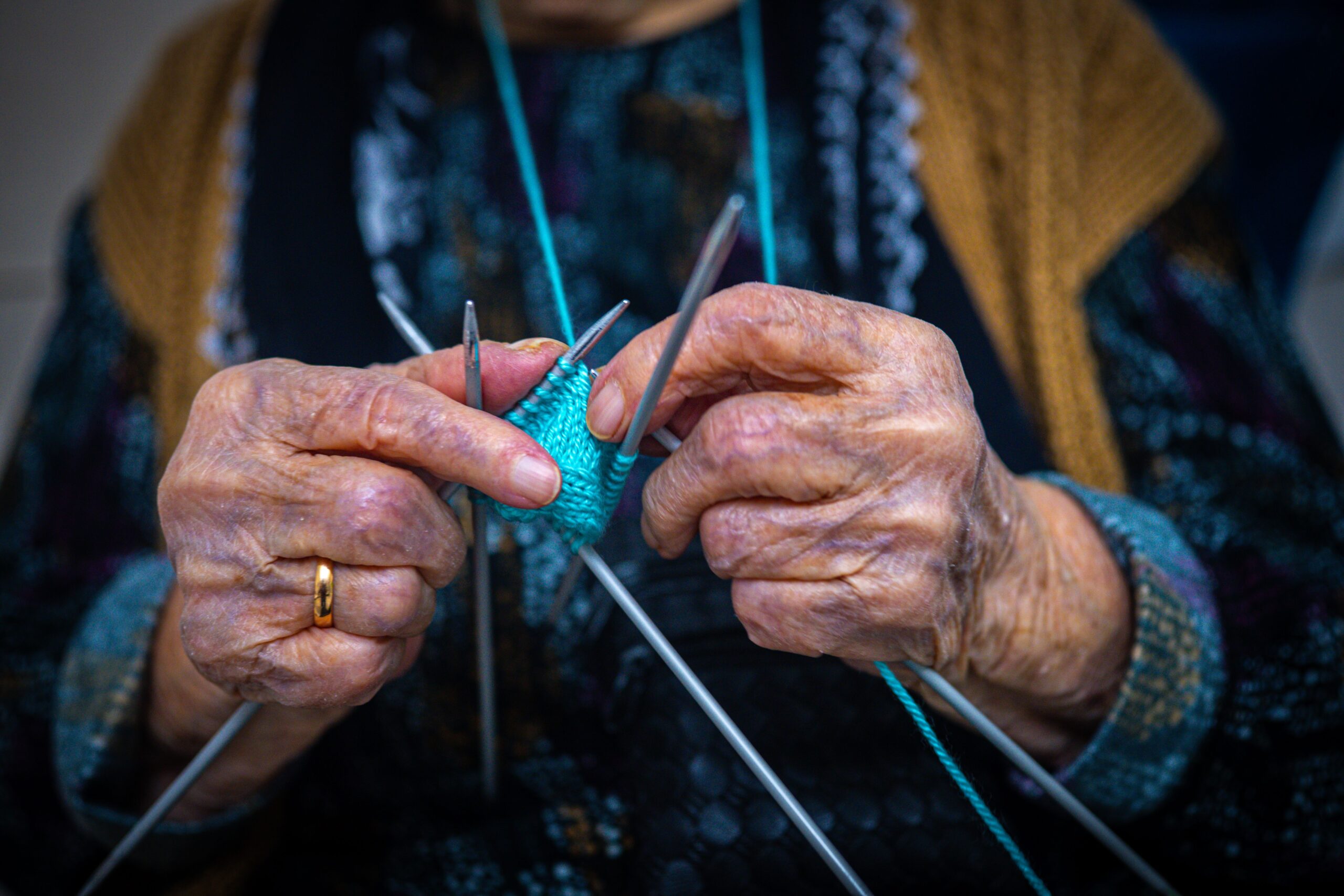
Following a knitting pattern requires attention, sequencing and memory. Sewing involves planning and hand-eye coordination. Gardening involves decisions about planting, watering and adapting to changing conditions.
This doesn’t mean knitting can prevent dementia. There is currently no hobby proven to guarantee protection against cognitive decline.
However, mentally stimulating activities are generally considered part of a broader approach to maintaining cognitive health.
The key may be variety and challenge.
If you have knitted the same simple scarf for 30 years, try learning a new pattern. If you normally grow tomatoes, experiment with herbs. If you enjoy puzzles, learn a new game.
The brain benefits from being engaged—not necessarily from doing something complicated.
Gardening Adds Movement to the Picture
Gardening has another advantage: it gets the body involved.
For an older adult, bending, reaching, carrying a small watering can, walking around the garden and standing up repeatedly can provide useful everyday movement.
It should not replace properly designed strength or balance exercises, particularly for people at risk of falls. But it can complement them.
Gardening also provides exposure to outdoor daylight, which can help support a regular sleep-wake rhythm.
And perhaps most importantly, it gives movement a purpose.
You’re not simply exercising because someone told you to take another walk. You’re walking because your plants need attention.
That small psychological difference can make an activity much easier to maintain.
The Loneliness Connection
One of the biggest overlooked health issues affecting older adults is social isolation.
A hobby can become a bridge back into social life.
A knitting circle, gardening club, woodworking group, community allotment or quilting class provides an easy reason to meet other people. Conversation happens naturally because everyone already has something in common.
This matters because social connection is closely associated with overall health and well-being in later life.
The finished object can also create another form of connection.
A knitted blanket made for a grandchild, vegetables shared with a neighbor or homemade preserves given to a friend can turn an individual hobby into an act of generosity.
The object matters—but the relationship behind it may matter even more.
Don’t Believe Every “Longevity Hobby” Claim
This is where a little skepticism is healthy.
You may see headlines claiming that a particular hobby can add five, eight or even ten years to your life. Such statements can make compelling headlines, but they often simplify observational research.
People who regularly garden or craft may also be more socially connected, physically active, financially secure or generally health-conscious.
Researchers can adjust for some of these differences, but observational studies cannot completely establish cause and effect.
So don’t think of knitting as a replacement for managing blood pressure, getting vaccinated, staying physically active, eating well or taking prescribed medication.
Think of hobbies as one potentially valuable piece of the healthy-aging puzzle.
How to Find a Hobby You’ll Actually Keep
The best hobby isn’t necessarily the one with the strongest research behind it.
It’s the one you genuinely want to do.
If your hands hurt while knitting, try painting, music, gardening or photography. If standing in the garden is difficult, use raised containers or indoor plants. If you dislike group activities, start with a project at home and gradually explore community options.
Start small.
Ten or twenty minutes is enough to establish a routine. Over time, you may naturally spend longer doing something you enjoy.
And don’t worry about being good at it.
A hobby isn’t a competition. The purpose is not to produce something worthy of a magazine cover. The purpose is to keep your mind engaged, your body involved and your days connected to something meaningful.
The Real Secret May Be Having a Reason to Get Up
Perhaps the most interesting lesson isn’t that knitting, gardening or sewing magically slows aging.
It’s that purpose can hide inside ordinary routines.
For one person, that purpose might be growing vegetables. For another, it might be repairing old furniture, painting, baking, playing an instrument or teaching a grandchild how to sew.
As we age, protecting health means looking beyond medical numbers.
Strength matters. Sleep matters. Nutrition matters. Relationships matter. And having something enjoyable to look forward to matters too.
So if there is an unfinished sweater in your cupboard, a neglected garden bed outside or an old hobby you haven’t touched in years, perhaps it is worth giving it another chance.
You may not be adding eight years to your life.
But you might be adding more life to the years you already have.
Photo by eren özçarıkcı: https://www.pexels.com/photo/elderly-woman-knitting-with-needles-37625636/