

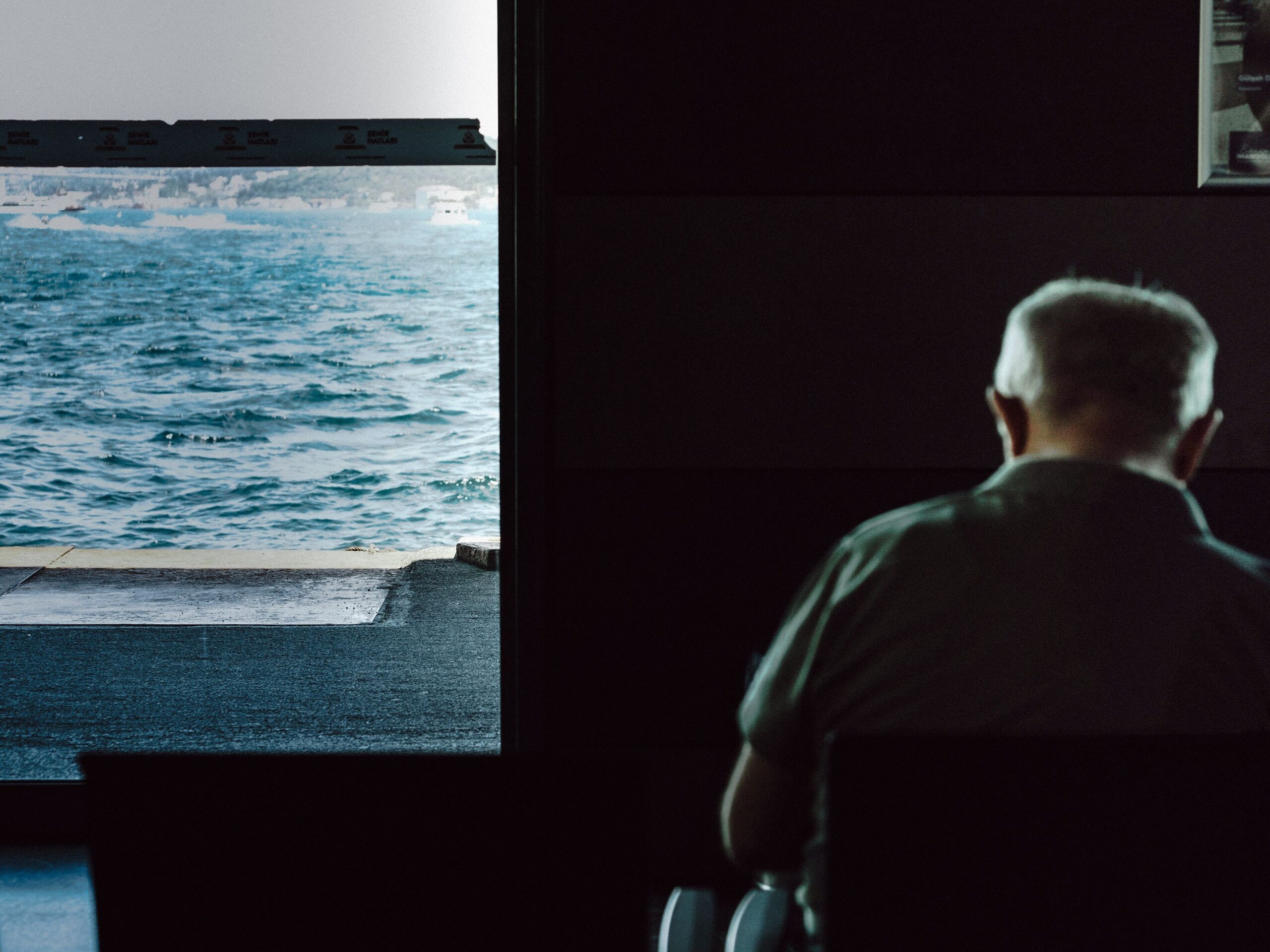
Imagine spending weeks in an intensive care unit.
The machines keeping you alive never stop. Monitors beep through the night. Nurses and doctors come in and out. Lights may remain on at odd hours, sleep is repeatedly interrupted, and days can begin to blur together.
For someone recovering from a serious illness, the ICU can be lifesaving—but it can also be an extraordinarily difficult environment.
That is why a simple idea is attracting attention in critical-care medicine: taking selected ICU patients outdoors.
At Hospital del Mar in Barcelona, Spain, clinicians have developed a program that allows medically stable intensive-care patients to leave the hospital environment for supervised outdoor experiences near the Mediterranean.
It may sound almost too simple to be medical care.
But researchers and critical-care specialists are increasingly interested in whether natural light, fresh air, familiar surroundings and time with family can help address an often-overlooked part of recovery: what happens to the mind after a life-threatening illness.
Surviving the ICU Is Only the Beginning
Modern intensive care has transformed survival.
Ventilators, dialysis, advanced medications and other technologies can keep patients alive through conditions that were once frequently fatal.
But survival does not necessarily mean an immediate return to normal life.
Some ICU survivors experience what clinicians call post-intensive care syndrome (PICS). It can involve physical weakness, problems with concentration or memory, anxiety, depression and symptoms associated with psychological trauma.
The risk can be particularly important for older adults, who may already be vulnerable to frailty, muscle loss and cognitive difficulties after hospitalization.
Recovery can therefore continue long after a patient leaves the ICU.
And that raises an important question:
Could the ICU environment itself be modified to make recovery easier?
Why the ICU Can Confuse the Brain
The human brain relies heavily on environmental signals.
Daylight tells us when it is daytime. Darkness signals nighttime. Familiar sounds, faces and surroundings help us understand where we are and what is happening.
The ICU can disrupt many of these cues.
Patients may receive medications that affect alertness. Their sleep can be interrupted for clinical care. Artificial lighting may replace natural day-night patterns. Serious illness itself can trigger inflammation and metabolic changes that affect brain function.
One consequence can be ICU delirium, a temporary state of confusion and altered attention that is common among critically ill patients.
A person experiencing delirium may struggle to recognize where they are or understand what is happening around them.
For families, watching a previously independent parent or spouse become confused can be deeply distressing.
The Power of Simply Going Outside
The seaside program takes a very different approach.
When medically appropriate, a patient is transported outside with the equipment and clinical staff needed to maintain their care.
Instead of seeing ceiling lights and medical equipment, the patient sees the sky.
Instead of hearing only alarms and machines, they hear natural sounds.
Instead of spending another day surrounded by hospital walls, they can experience sunlight, fresh air and a familiar human environment.
The intervention isn’t intended to replace medication, rehabilitation or intensive medical treatment.
It adds something those treatments cannot easily provide:
a sense of normal life.
Why Daylight Matters
Natural light is one of the body’s most important environmental signals.
Specialized cells in the eye communicate information about light exposure to the brain’s circadian system, helping regulate the body’s internal timing.
Hospitalization can disrupt this rhythm.
Daylight exposure during the day, combined with darkness at night, may help reinforce a more recognizable day-night pattern.
For ICU patients, however, the goal isn’t simply to “reset” the body clock with a few minutes of sunshine.
The broader objective is to restore environmental orientation—helping patients reconnect with the normal rhythm of daytime activity and nighttime rest.
That can be particularly valuable for people who have spent days or weeks in an unfamiliar medical environment.
Nature May Also Provide Psychological Relief
There is another element that is harder to measure but impossible to ignore.
Nature feels different from a hospital.
A wide horizon, moving water, sunlight and natural sounds provide sensory experiences that are difficult to reproduce indoors.
For someone who has spent weeks surrounded by medical equipment, that change may provide a powerful psychological break.
It also gives patients something ordinary to look at and talk about.
The sea.
The weather.
People walking past.
Family members sitting nearby.
These seemingly insignificant experiences can help restore a sense of identity beyond being “the patient in room 12.”
The Family Connection
One of the most meaningful aspects of supervised outdoor sessions may be the opportunity for families to participate.
Critical illness can separate patients from their normal social lives.
Family members may spend hours sitting beside a hospital bed, unsure what to say or how to help.
An outdoor experience changes that dynamic.
Instead of simply watching monitors, relatives can share a moment together.
For an older adult who has spent weeks hospitalized, something as ordinary as feeling sunlight or watching the sea with a spouse, child or grandchild can become an important reminder of life outside the hospital.
That emotional connection may also encourage patients to participate in rehabilitation.
Getting an ICU Patient Outside Is Serious Medical Work
The images may look peaceful, but the logistics are anything but casual.
A critically ill patient cannot simply be rolled outdoors without preparation.
The medical team must determine whether the patient’s condition is stable enough for transport.
Depending on the patient’s needs, the team may have to bring portable oxygen, monitoring equipment, infusion pumps, emergency medications and other essential equipment.
Medical staff must remain close enough to respond immediately if the patient’s condition changes.
For that reason, not every ICU patient is an appropriate candidate.
The priority remains medical safety.
What About Older Adults?
For older adults, the idea is particularly interesting because recovery from serious illness can involve more than healing the original disease.
A prolonged hospital stay can contribute to muscle weakness, reduced mobility, sleep disruption and loss of confidence.
An older person who was independent before hospitalization may temporarily need help walking, bathing or preparing meals afterward.
That is why modern critical-care recovery increasingly emphasizes early rehabilitation and functional recovery, not simply survival.
Safe movement, appropriate physical therapy, good sleep, family involvement and psychological support can all become part of the recovery process.
Outdoor experiences may complement these approaches by giving patients another reason to engage with their surroundings.
A Different Definition of Successful Recovery
Medicine has traditionally celebrated an ICU success story when a patient survives.
But survival is only the first milestone.
The more important question may be:
Can the person return to a life that feels like their own?
That means being able to think clearly, move independently, reconnect with family and regain confidence.
The seaside ICU initiative offers a compelling reminder that healthcare doesn’t always have to become more complicated to become more humane.
Sometimes the intervention is surprisingly simple.
Open the doors.
Let in the daylight.
Bring the family.
Give the patient a view of something other than the ceiling.
The Future of More Human Intensive Care
There is still much to learn about how outdoor exposure affects ICU delirium, psychological recovery and long-term outcomes. A few memorable patient experiences should not be mistaken for proof that a trip to the beach can treat PICS or replace established medical care.
But the underlying principle is increasingly difficult to dismiss.
Patients are people before they are patients.
They have memories, relationships, routines and places that give their lives meaning.
Modern medicine has become extraordinarily good at keeping the body alive through critical illness. The next challenge is helping survivors rebuild the physical and emotional parts of life that illness temporarily took away.
And perhaps that’s why the image of an ICU bed beside the Mediterranean is so powerful.
The machines are still there.
The nurses are still watching.
The medicine hasn’t stopped.
But for a few precious minutes, the patient gets to see the world again.
Photo by rana aldemir: https://www.pexels.com/photo/elderly-man-by-an-open-door-with-sea-view-32435948/