

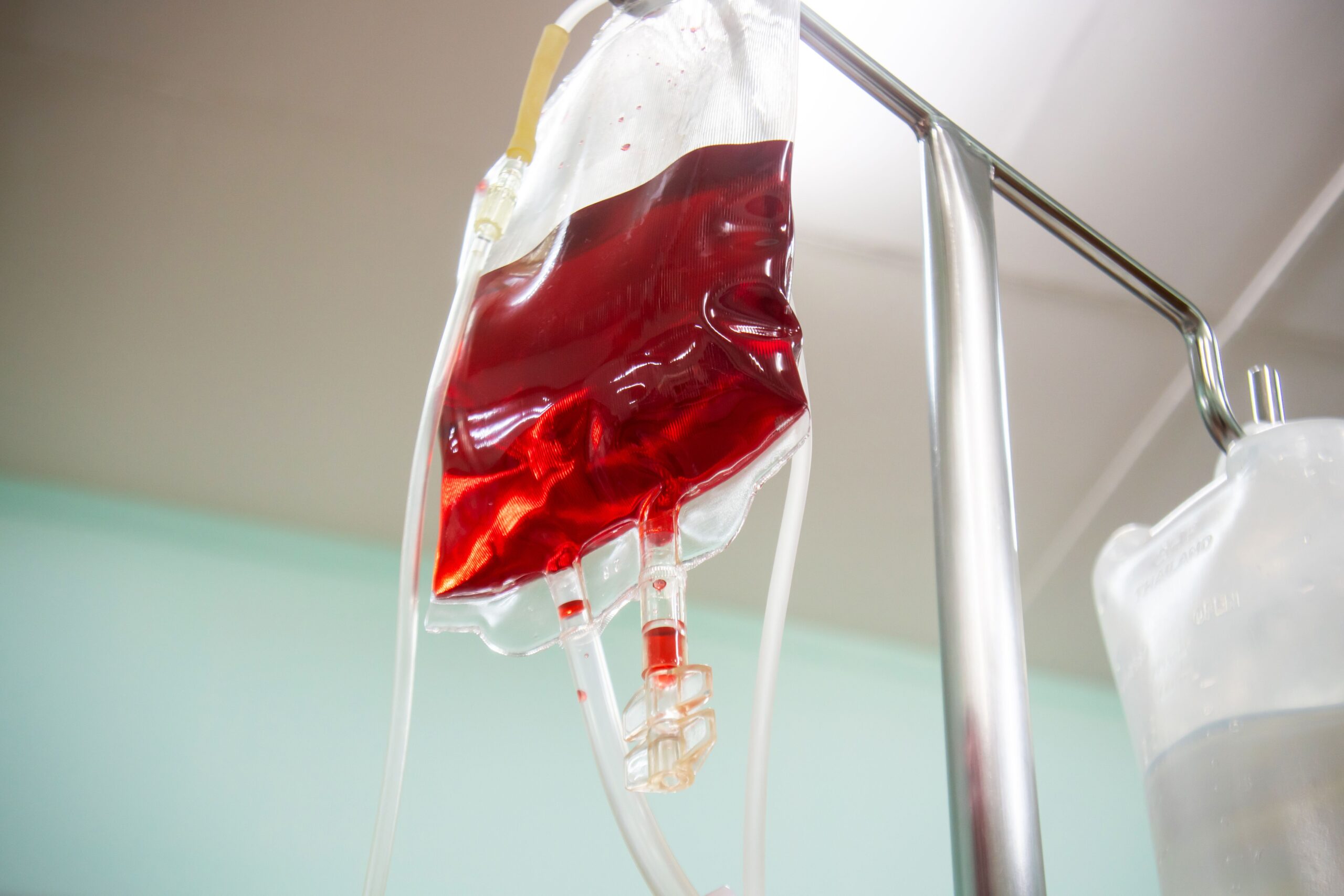
Blood transfusions are among the most important treatments in modern medicine. They can be lifesaving after major bleeding, during some cancer treatments, and for people with certain blood disorders.
So when researchers raise a question about the long-term safety of donated blood, it naturally gets attention.
A recent review led by researchers at University College London and published in The Lancet has asked whether amyloid-beta, a protein associated with Alzheimer’s disease and cerebral amyloid angiopathy, could potentially be transmitted through blood transfusion. Importantly, the authors describe this as a question requiring further investigation—not as proof that Alzheimer’s disease is being spread through today’s blood supply.
That distinction is especially important for older adults, who are more likely to need medical procedures and may already have concerns about memory, dementia or stroke.
Amyloid-Beta Is Not the Same as a Virus
The word “transmission” can sound frightening, but amyloid-beta does not behave like an ordinary infectious virus.
Alzheimer’s disease is not contagious. You cannot catch it from another person through touching, coughing, sharing food or caring for someone with dementia.
Researchers are instead investigating an unusual biological phenomenon sometimes described as protein seeding. In certain circumstances, abnormal protein material can potentially influence normally shaped proteins to form abnormal aggregates.
There is already evidence that amyloid-beta can be transmitted in extremely unusual medical circumstances involving historical treatments. These included cadaver-derived human growth hormone and certain tissue grafts—procedures that were discontinued decades ago.
The question now is whether a similar mechanism could ever occur through blood.
The Blood-Transfusion Clue That Got Researchers Thinking
The latest discussion builds partly on a large Scandinavian study published in 2023.
Researchers examined health-record data from 1,089,370 people who had received red-blood-cell transfusions in Sweden and Denmark. They looked at whether recipients were more likely to experience spontaneous intracerebral hemorrhage—a type of bleeding inside the brain—when their blood donors later developed multiple spontaneous brain hemorrhages.
The result was intriguing.
In the Swedish cohort, recipients exposed to blood from donors who later experienced multiple spontaneous brain hemorrhages had an adjusted hazard ratio of 2.73 for a subsequent spontaneous brain hemorrhage. A similar association appeared in the Danish validation cohort, with a hazard ratio of 2.32.
But there is a crucial caveat.
An association does not prove that something in the blood caused the brain hemorrhages.
The researchers themselves noted that the findings could have been affected by selection bias and other forms of confounding. Further investigation is needed before scientists can determine whether cerebral amyloid angiopathy was actually transmitted through transfusion.
What Is Cerebral Amyloid Angiopathy?
For older readers, this part of the story is particularly relevant.
Cerebral amyloid angiopathy (CAA) occurs when amyloid-beta accumulates in the walls of small blood vessels in the brain. Over time, those vessels can become fragile and more prone to bleeding.
CAA is an important cause of certain brain hemorrhages in older adults and can also be associated with cognitive problems.
This is different from saying that a blood transfusion causes Alzheimer’s disease.
In fact, UCL researchers emphasize that although rare medically acquired amyloid-beta diseases have been documented, scientists still do not know whether contemporary medical procedures such as blood transfusion can transmit amyloid-beta pathology.
Should People Be Worried About Receiving Blood?
For someone scheduled for surgery or receiving a medically necessary transfusion, the most important message is reassuring:
There is currently no evidence that people should avoid necessary blood transfusions because of this theoretical risk.
The UCL researchers themselves describe blood transfusions as important and lifesaving while calling for more research into possible risks.
Modern transfusion systems already have extensive safeguards for known infectious threats. The new scientific question is different: can extremely small amounts of abnormal proteins have biological effects years or decades later?
That is a much harder problem to investigate.
Why Detecting These Proteins Is So Difficult
Blood banks routinely screen donated blood for important infectious diseases using highly developed testing systems.
Amyloid-beta presents a different challenge.
Researchers need to determine whether potentially harmful “seeds” are actually present in blood, whether they remain biologically active after blood processing, and—most importantly—whether exposure can cause disease in another person.
Those questions cannot be answered simply by detecting an ordinary amyloid-beta molecule in a blood sample.
Scientists therefore need extremely sensitive laboratory methods and long-term epidemiological research to determine whether a genuine transfusion-related risk exists.
What Older Adults Should Take Away
If you are an older adult who has received a blood transfusion in the past, this research is not a reason to assume that you are at increased risk of Alzheimer’s disease.
The Scandinavian study did not establish that transfusions transmit Alzheimer’s disease. It identified an association involving brain hemorrhage among recipients whose donors later developed multiple spontaneous hemorrhages.
And there is an important difference between investigating a possible risk and proving that the risk exists.
For now, people should continue following medical advice regarding necessary transfusions, surgery and treatment.
Science Is Asking the Question Before It Has the Answer
The most interesting part of this story may not be the possibility of “transmissible Alzheimer’s.”
It is the fact that scientists are willing to investigate an unexpected possibility before it becomes an established medical problem.
The history of transfusion medicine shows why caution matters. Researchers have previously identified serious risks associated with contaminated blood products and developed screening and processing methods to reduce them.
The current amyloid-beta research is at a much earlier stage.
There is a scientific signal. There is biological evidence from unusual historical medical exposures. There is an intriguing epidemiological association. But there is not yet proof that modern blood transfusions transmit Alzheimer’s disease or cerebral amyloid angiopathy.
For patients and families, that distinction matters.
The right response is not fear. It is careful research, transparent communication and continued attention to transfusion safety.
And as scientists work to answer this unusual question, one thing remains unchanged: when a blood transfusion is medically necessary today, its established lifesaving benefits remain far more certain than this still-unproven theoretical risk.
Photo by panumas nikhomkhai: https://www.pexels.com/photo/close-up-of-iv-blood-bag-in-hospital-setting-37464043/