

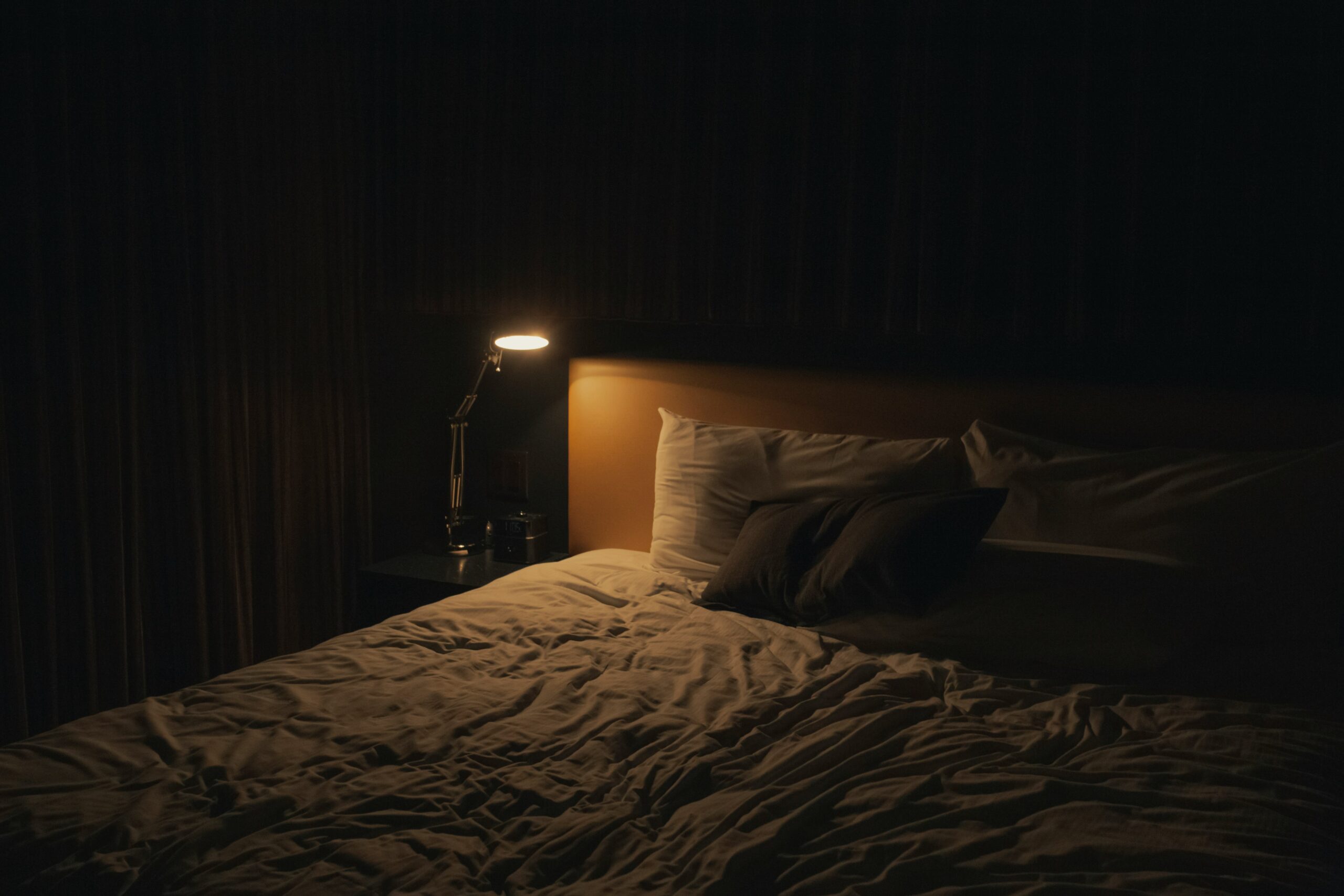
For many people, darkness at bedtime is no longer guaranteed.
A streetlight shines through the curtains. A television glows from the corner of the room. A phone charges beside the bed, its screen occasionally lighting up. Even small indicator lights from electronics can add a faint glow to an otherwise dark bedroom.
None of these sources may seem important on their own.
But your body is paying attention to light long after you’ve decided it is time to sleep.
Human biology evolved around a predictable cycle of daylight and darkness. Today, artificial lighting allows us to remain active long after sunset, and that convenience has created a new question for sleep researchers: what happens when nighttime never becomes completely dark?
The answer is becoming clearer.
Light is one of the strongest signals controlling the body’s internal clock, and nighttime exposure can interfere with the biological processes that help prepare us for sleep.
Your Brain Has a Built-In Clock
Deep inside the brain is a small group of cells called the suprachiasmatic nucleus, or SCN. It acts as the body’s central circadian clock.
The SCN receives information about light primarily through specialized cells in the retina. During daylight, this signal helps keep the body alert and synchronized with daytime activity.
As evening approaches and light levels fall, the body’s biology begins shifting toward nighttime.
Melatonin production normally increases in darkness, helping signal that it is time to prepare for sleep. Body temperature and alertness also change as part of this daily rhythm.
This is why exposure to bright light at night can be so disruptive.
Your brain doesn’t simply interpret light as something you can see.
It interprets light as information about when you are in the day.
Not All Nighttime Light Is the Same
It is important not to turn this into a simple rule that every photon of nighttime light is dangerous.
The intensity, timing, color and duration of exposure all matter.
Bright light close to bedtime is generally more likely to affect the circadian system than a very dim source. Light entering the eyes is particularly important because it provides the signal that reaches the brain’s biological clock.
That means a bright phone screen held close to your face is a different exposure from a faint light coming through a closed door.
Still, reducing unnecessary light during sleep is a relatively simple way to create an environment that better supports the body’s natural sleep rhythms.
What Happens When You Sleep in a Bright Room?
One of the biggest concerns is sleep quality.
You may technically remain asleep while your brain and body respond to environmental signals.
Research has linked nighttime light exposure with changes in sleep patterns, and experimental studies have found that sleeping under brighter conditions can affect physiological measures such as heart rate and next-morning metabolic responses.
That doesn’t mean sleeping beside a tiny LED will automatically cause disease.
It does mean that persistent nighttime light deserves more attention than it once received.
Sleep is not simply a period when consciousness switches off.
During sleep, the brain moves through different stages, including non-REM and REM sleep. These stages are associated with important processes involving memory, learning, emotional regulation and physical recovery.
Repeated disruption can leave you feeling tired even when you technically spent enough hours in bed.
Your Heart Doesn’t Completely Switch Off at Night
Another reason researchers are interested in nighttime light is cardiovascular function.
During healthy sleep, the body generally moves into a quieter physiological state. Heart rate and blood pressure typically decrease compared with daytime levels.
Artificial light during sleep has been investigated as a potential factor affecting this nighttime physiology.
A Northwestern University study, for example, found that participants exposed to room lighting during sleep experienced changes in heart rate and metabolic measures compared with participants who slept in very dim conditions.
However, small experimental studies cannot establish that ordinary bedroom lighting directly causes heart disease.
Long-term health is influenced by many factors, including physical activity, diet, stress, sleep duration, age and existing medical conditions.
The more cautious conclusion is that nighttime light may be one of several environmental factors worth controlling when trying to protect healthy sleep.
Could Light Affect Blood Sugar?
The relationship between sleep, circadian rhythms and metabolism is another area receiving considerable scientific attention.
Your body’s ability to regulate glucose changes throughout the day. Circadian rhythms influence hormones, metabolism and the timing of many biological processes.
Artificial light at night may interfere with these rhythms, particularly when exposure is bright or occurs at biologically sensitive times.
Some laboratory studies have found changes in insulin sensitivity and glucose regulation after nighttime light exposure.
But this does not mean that leaving a small lamp on overnight will give someone diabetes.
The evidence is more nuanced.
Researchers are investigating whether repeated circadian disruption, including exposure to artificial light at night, could contribute to metabolic problems over the long term.
What About Light Through Closed Eyelids?
Your eyelids block a substantial amount of light, but they are not completely opaque.
Some light can still reach the retina, particularly when exposure is relatively bright.
That is one reason a dark sleeping environment may be preferable to sleeping directly beside a bright lamp or television.
Still, the most important practical point is not to become frightened by every tiny source of illumination.
If a small indicator light doesn’t disturb your sleep, its health significance is unlikely to be comparable to spending hours staring at a bright screen late at night.
How to Make Your Bedroom Darker
The good news is that improving your sleep environment does not require expensive technology.
Start with the obvious sources.
Block outdoor light. Blackout curtains or well-fitted shades can reduce light entering through windows.
Turn off unnecessary electronics. Televisions, monitors and bright displays do not need to remain illuminated while you’re sleeping.
Move your phone away from the bed. This reduces both nighttime screen exposure and the temptation to check notifications.
Cover distracting LEDs. If a small indicator light bothers you, covering or disabling it can make the room darker.
Consider an eye mask. A comfortable sleep mask can be useful when you cannot control the surrounding environment, particularly while travelling.
And don’t forget the hour before bed.
Reducing bright indoor lighting in the evening can help create a clearer transition between daytime activity and nighttime rest.
Darkness Is Only One Piece of Healthy Sleep
A completely dark bedroom can support good sleep, but it cannot compensate for an unhealthy sleep schedule.
Adults generally need around seven or more hours of sleep each night, although individual needs vary.
Consistent bed and wake times, regular physical activity, limiting caffeine late in the day and addressing persistent sleep problems are also important.
If you regularly snore loudly, wake up gasping, experience severe daytime sleepiness or struggle to sleep despite giving yourself enough opportunity, talk with a healthcare professional. Problems such as sleep apnea and chronic insomnia may require specific treatment.
The Bigger Picture
Modern life has given us enormous control over our environment.
We can work at midnight, exercise under artificial lights and scroll through a glowing screen in bed.
But our circadian biology still responds to the basic signals that shaped human life for thousands of years.
Light tells the brain when to be awake.
Darkness helps signal that the day is over.
You don’t need to turn your bedroom into a completely lightless laboratory to protect your health. But removing unnecessary nighttime light is a simple, low-cost step that may help your body maintain the rhythm it already knows.
Sometimes better sleep doesn’t require another gadget.
It may simply require turning one off.
Photo by Jp Valery on Unsplash