

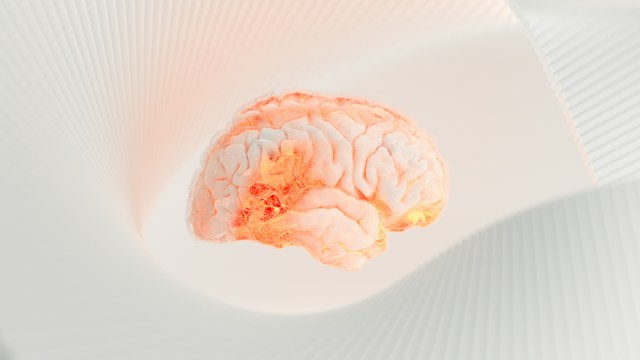
The Light-and-Sound Rhythm Scientists Hope Could Protect the Brain
Could a carefully timed rhythm help the brain fight Alzheimer’s disease?
MIT researchers are investigating whether 40-hertz light and sound stimulation can influence brain rhythms, immune cells and Alzheimer’s-related biology. Early human findings are intriguing, but researchers stress that the approach remains experimental.
For years, scientists have searched for ways to slow the biological changes that accompany Alzheimer’s disease. Now, an unusual possibility is attracting attention: using precisely timed light and sound to influence the brain’s own electrical rhythms.
The idea comes from research led by scientists at MIT’s Picower Institute for Learning and Memory. Their approach, known as GENUS—short for gamma entrainment using sensory stimuli—uses light and sound presented at 40 hertz, a frequency within the brain’s gamma rhythm range.
It sounds remarkably simple. But the biology behind it is anything but simple.
And while the research has produced encouraging findings, it is important to distinguish between what scientists have observed so far and what has actually been proven in people.
Why 40 hertz?
The brain is constantly producing electrical activity at different rhythms. Gamma rhythms, generally referring to activity in roughly the 30–80 hertz range, are associated with processes including attention, perception and cognition.
MIT researchers became interested in 40 hertz after finding that stimulating this frequency in mouse models of Alzheimer’s disease appeared to produce several biological effects.
In those experiments, 40-Hz light, sound or a combination of both was associated with changes involving amyloid and tau—proteins strongly associated with Alzheimer’s disease—as well as neurons, synapses and immune cells in the brain. Researchers also observed increased activity and coordination of gamma rhythms.
One particularly interesting area of investigation involves microglia, immune cells that live within the brain. Microglia help maintain brain tissue and respond to damaged cells and other unwanted material.
The research suggests that changing brain rhythms may influence how these cells behave.
That has led scientists to ask a bigger question: could stimulating a particular brain rhythm help support some of the brain’s natural maintenance systems?
What about the brain’s “cleanup” system?
The phrase “brain cleanup” can make the science sound more settled than it is.
The brain does have systems involved in clearing waste and maintaining its environment. MIT research has explored whether 40-Hz stimulation may influence blood vessels, supporting cells and the glymphatic system—a network involved in the movement of fluid through brain tissue.
In animal studies, researchers have reported changes suggesting that gamma stimulation can promote mechanisms associated with amyloid clearance.
But this does not mean that flashing lights or clicking sounds have been proven to remove Alzheimer’s disease from the human brain.
That distinction matters.
A mechanism observed in mice is a reason to conduct human research, not evidence that the same intervention prevents or reverses dementia.
Human research is beginning to tell a more interesting story
The encouraging part is that scientists are no longer studying this idea only in animals.
MIT researchers conducted early-stage human studies to examine whether 40-Hz light and sound could safely influence brain activity in people. The studies found that the stimulation increased 40-Hz activity and appeared to be well tolerated, although the number of participants was small.
More recently, a small long-term follow-up attracted attention.
In research published in 2025, five people continued receiving daily 40-Hz sensory stimulation for approximately two years after participating in an early MIT Alzheimer’s study. Three participants with late-onset Alzheimer’s showed better performance on several cognitive assessments than comparable patients in national databases. Two participants who provided blood samples also showed reductions in a blood biomarker associated with Alzheimer’s disease.
But there is an enormous caveat: only five people were followed in this long-term analysis.
Two participants with early-onset Alzheimer’s did not show significant benefits. The study was also not large enough to establish that the treatment itself caused the differences.
The MIT researchers therefore describe the findings as promising but preliminary.
A larger test is still needed
This is where the story gets especially important for families dealing with memory loss.
A treatment can appear safe and biologically interesting without yet being proven to slow Alzheimer’s disease.
Researchers still need larger randomized clinical trials that can determine whether 40-Hz stimulation produces meaningful, lasting improvements in memory, thinking, daily functioning or disease progression.
A 2025 systematic review and meta-analysis examined the available evidence on 40-Hz auditory and visual stimulation in Alzheimer’s disease and mild cognitive impairment. The review reflects growing interest in the approach, while also highlighting the need for stronger evidence as the field develops.
MIT and its research partners are continuing to study the approach, including trials involving people with mild Alzheimer’s disease and research into whether sensory stimulation could have a preventive role in people at elevated risk.
What should older adults make of it?
For now, the most sensible response is curiosity rather than a rush to try an unproven therapy.
There is no established home light-and-sound treatment that people should use as a substitute for medical care for Alzheimer’s disease. The research devices used in clinical studies are part of carefully designed investigations, with participants monitored for cognitive, neurological and other outcomes.
That is particularly important because flashing light can be uncomfortable or problematic for some people, and the ideal intensity, duration and delivery method remain research questions.
The bigger significance of the MIT work may be the scientific idea behind it.
Instead of focusing only on removing individual proteins or developing another medication, researchers are asking whether the brain’s own electrical rhythms can be influenced in ways that change cellular behavior.
That is a very different way of thinking about neurodegenerative disease.
A promising idea—not a miracle cure
The 40-Hz story is exciting precisely because researchers are beginning to connect neuroscience, sensory stimulation and the biology of aging.
Animal studies have produced striking findings. Early human studies suggest the approach can influence brain rhythms and appears feasible. A tiny long-term human study has now raised further questions about whether it might eventually affect cognitive decline and Alzheimer’s biomarkers.
But the most important word remains “investigational.”
Scientists have not yet shown that 40-Hz light and sound can prevent Alzheimer’s disease, reverse dementia or reliably clear harmful proteins from the human brain.
The next generation of clinical trials will determine whether this fascinating laboratory idea can become a genuine medical treatment.
For now, the flashing light and rhythmic sound are not a prescription for better brain health. They are something perhaps more valuable at this stage: a scientific clue that may lead researchers toward a new understanding of how the aging brain protects and repairs itself.