

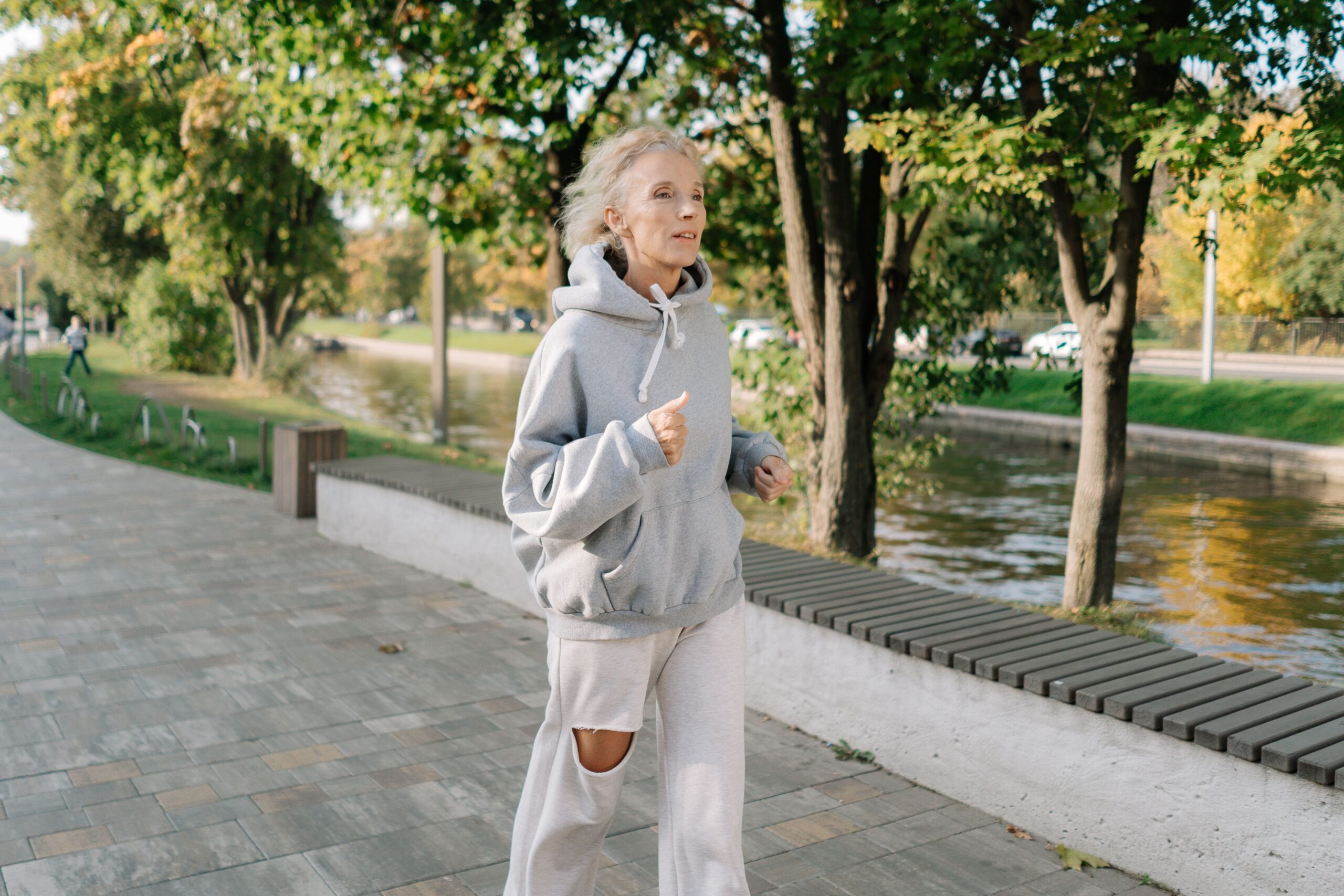
For most of us, getting older feels like accepting a long list of physical compromises. Our hair turns gray, our joints ache a little more each year, and climbing a flight of stairs somehow becomes noticeably harder than it used to be. We often tell ourselves that these changes are simply the price of aging—especially when it comes to the heart.
For decades, many people believed that while exercise could help keep the heart healthy, it couldn’t actually reverse the physical aging of the organ itself. Once the heart muscle stiffened with age, the damage was considered permanent. Doctors could slow the decline, but not truly turn it around.
A remarkable study published in the journal Circulation is now forcing scientists to rethink that belief.
New research suggests the aging heart can regain years of lost flexibility through the right kind of exercise, challenging one of medicine’s longest-held assumptions.
Researchers discovered something extraordinary: the human heart may be far more adaptable than previously imagined. Under the right conditions, years of age-related stiffness can begin to reverse—not through surgery, medication, or expensive treatments, but through a carefully designed exercise routine.
The findings offer something increasingly rare in modern medicine: genuine hope that one of the body’s most important organs still has the ability to heal itself.
The story begins with a question that seems deceptively simple. What actually happens to the heart when we spend years living a sedentary life?
Most people know the heart is a muscle, but unlike the muscles in our arms or legs, it never gets a day off. Every minute of every day, it contracts thousands of times, pumping oxygen-rich blood throughout the body. In youth, the heart—particularly its left ventricle—is remarkably flexible. It expands easily as blood enters, then contracts powerfully to send that blood where it needs to go.
Over time, however, inactivity changes the heart’s architecture.
Years spent sitting behind desks, commuting, and living increasingly inactive lifestyles gradually cause the heart muscle to become less elastic. Instead of stretching effortlessly, the left ventricle becomes stiff. Filling with blood requires more pressure, making the heart work harder with every beat.
Many cardiologists compare it to the difference between a fresh rubber balloon and one left sitting in a drawer for years. Both can still function, but one requires far more effort.
This process dramatically increases the risk of a condition known as Heart Failure with Preserved Ejection Fraction (HFpEF), one of the fastest-growing forms of heart failure among older adults. Patients often describe feeling exhausted after minimal physical activity. Walking upstairs or carrying groceries suddenly becomes a challenge because the heart can no longer relax efficiently between beats.
For years, this stiffening was viewed as an unavoidable consequence of aging.
Then researchers decided to test that assumption.
Led by Dr. Benjamin Levine of UT Southwestern Medical Center, scientists recruited 53 healthy adults between the ages of 45 and 64. None of the participants had serious heart disease, but most shared one thing in common: years of relatively sedentary living.
Instead of simply observing them, researchers divided participants into two different groups.
One group followed a structured exercise program for two years. The other participated in light stretching, yoga, balance exercises, and core strengthening.
At first glance, both groups appeared to be making healthier lifestyle choices. Yet as months passed, one group began experiencing changes that astonished researchers.
Those following the structured cardiovascular program didn’t merely improve their fitness.
Their hearts physically changed.
Medical imaging revealed that the left ventricle became significantly more flexible than it had been at the start of the study. Overall heart elasticity improved by roughly 25 percent, while participants’ maximum oxygen uptake—commonly measured as VO₂ max—increased by approximately 18 percent.
In contrast, the control group experienced almost none of these cardiac improvements.
Yoga and stretching certainly offered benefits for flexibility and balance, but they didn’t appear capable of remodeling the heart muscle itself.
The difference wasn’t simply exercising more.
It was exercising differently.
Dr. Levine’s team emphasized that casual physical activity alone isn’t enough to reshape the heart. Walking the dog once a day or occasionally riding a bicycle certainly contributes to overall health, but reversing years of cardiac stiffening requires a carefully balanced combination of endurance training and higher-intensity effort.
Participants typically performed one challenging interval session each week, along with several moderate aerobic workouts and strength-training sessions spread throughout the week. Recovery days remained equally important, allowing the heart time to adapt between periods of stress.
The results demonstrate one of biology’s most fascinating principles.
The human body adapts to the demands placed upon it.
When challenged appropriately—and consistently—the heart responds by becoming stronger, more efficient, and surprisingly youthful.
Perhaps the most surprising discovery wasn’t that the heart could improve.
It was that this ability has an expiration date.
Researchers found what they describe as a biological “window of opportunity.”
Middle age appears to represent the period during which the heart remains flexible enough to undergo meaningful remodeling. When similar programs were tested in adults over 65, participants still became fitter and stronger, but the heart itself showed far less structural improvement.
In other words, timing matters.
That doesn’t mean exercise becomes useless after retirement—far from it. Physical activity remains one of the most powerful tools for preventing disease, maintaining independence, and improving quality of life.
But if the goal is to literally reverse years of heart stiffening, acting during middle age may provide the greatest return.
The implications extend far beyond elite athletes or fitness enthusiasts.
Modern life has quietly become one of the most sedentary periods in human history.
Millions of people spend eight to ten hours each day sitting at work, followed by additional hours in cars, on couches, or behind computer screens. Even those who consider themselves reasonably active may spend the overwhelming majority of their waking hours inactive.
The heart wasn’t designed for that reality.
What makes this research so compelling is that it doesn’t rely on miracle supplements or expensive medical technology.
Instead, it reinforces a simple truth that modern medicine continues to rediscover: movement remains one of the body’s most effective forms of therapy.
For anyone who has spent years avoiding exercise, the findings shouldn’t create anxiety—they should create motivation.
The researchers stress that nobody should jump directly into high-intensity interval training without preparation. Building cardiovascular fitness gradually remains the safest approach.
Beginning with consistent brisk walking several times each week can establish the foundation needed for more demanding exercise later. As endurance improves, cycling, swimming, rowing, or jogging can further strengthen the cardiovascular system. Eventually, carefully supervised interval training may provide the additional stimulus necessary for long-term heart remodeling.
The important lesson isn’t perfection.
It’s consistency.
One intense workout won’t transform the heart.
Hundreds of workouts performed over months and years just might.
The research ultimately offers something increasingly valuable in today’s health landscape: proof that aging isn’t always as irreversible as we’ve been led to believe.
While no one can stop time, science suggests we possess far more influence over how our bodies age than previously imagined.
Our hearts remember how we treat them.
Every walk, every workout, every decision to remain active sends a message to the most important muscle in the body.
And according to this groundbreaking research, it’s never too early—and often not too late—to teach your heart how to feel young again.
Photo by cottonbro studio: https://www.pexels.com/photo/elderly-woman-in-gray-hoodie-sweater-jogging-on-pavement-6293191/