
When people think about cardiovascular health, they usually focus on the heart, blood pressure, cholesterol, and aerobic exercise. But an important part of circulation sits much lower in the body: the calf muscles.
Your calves help return blood from the legs toward the heart. When you walk, climb stairs, flex your ankles, or simply move your feet, muscles in the lower leg contract and compress nearby veins. One-way valves inside those veins help keep blood moving upward rather than flowing backward. This mechanism is known as the calf muscle pump.
That is why vascular specialists sometimes describe the calf pump as a kind of “peripheral heart.” It does not replace the actual heart, but it provides important assistance with venous return.
And in an age when many people spend hours sitting, that assistance matters.
Why Long Periods of Sitting Can Affect Your Legs
Modern routines often involve long stretches of inactivity. A person might sit through school or work, spend hours commuting, and then relax in front of a screen.
During those periods, the calf muscles aren’t contracting very often.
Gravity naturally encourages blood and fluid to remain in the lower legs when we are standing or sitting. Regular muscle contractions help counteract this effect. When movement is limited, some people may notice sensations such as heavy legs, ankle swelling or discomfort.
Long-term problems with the veins can become more significant. Chronic venous disease can involve problems with venous valves, obstruction or abnormal blood flow, and calf-pump function is one part of this complicated system.
Importantly, this does not mean that sitting automatically causes heart disease or that every swollen ankle is a circulation problem. Many different conditions can cause leg symptoms.
How the Calf Muscle Pump Actually Works
Think of your lower-leg muscles as a natural mechanical assist for your veins.
When the calf muscles contract:
Muscle contraction → veins are compressed → blood is pushed upward → venous valves limit backward flow
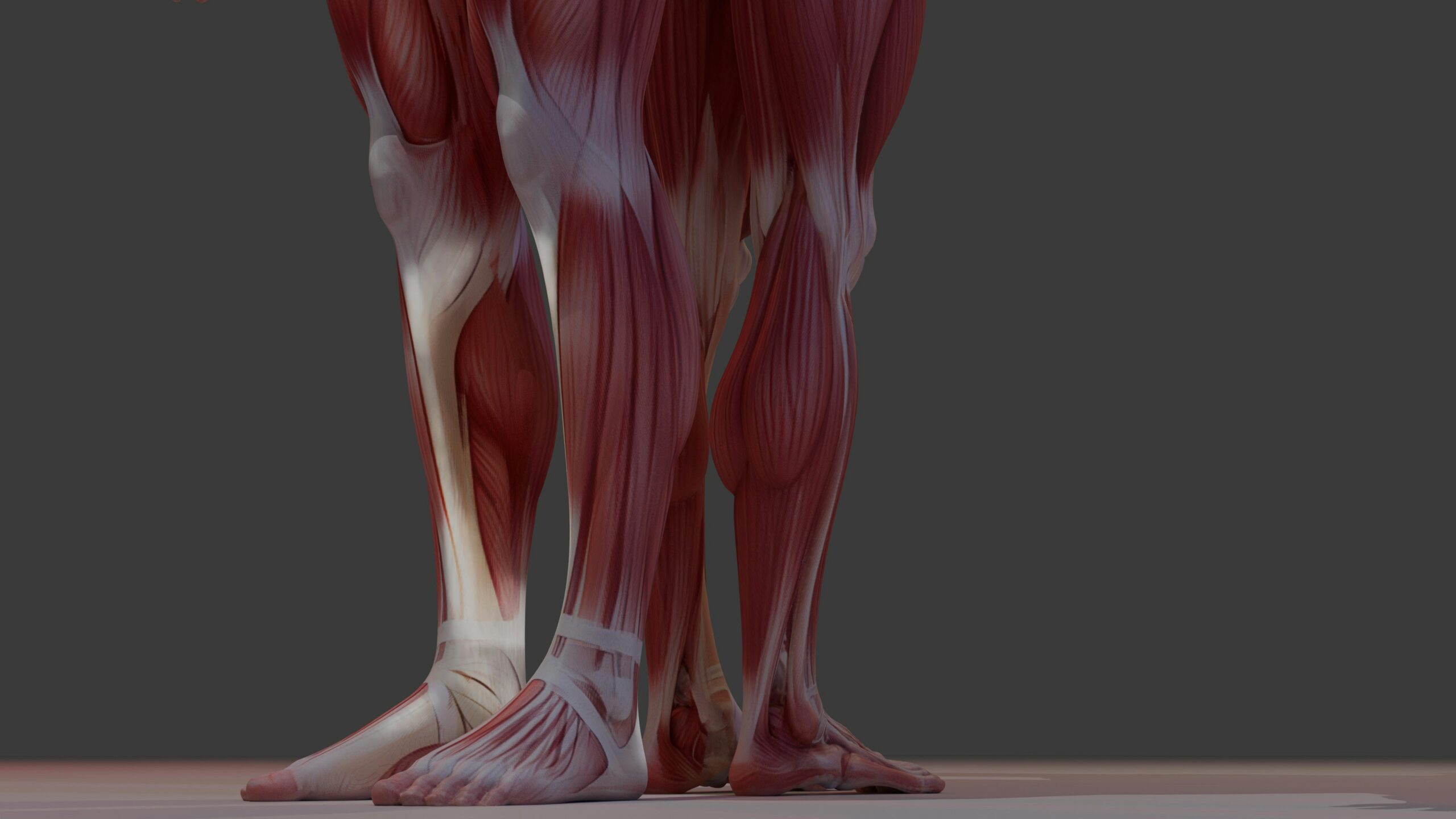
The gastrocnemius and soleus muscles are particularly important because they surround deep veins in the lower leg. Research has identified the calf pump as a major contributor to returning blood from the legs.
When the muscles relax, the veins can refill and prepare for the next contraction.
Walking therefore does more than move your body from one place to another. Every step repeatedly activates this pumping mechanism.
Why Movement Breaks Are Worth Taking
You don’t need an intense workout every time you have been sitting.
For everyday health, the goal is simply to avoid remaining completely still for unnecessarily long periods. Standing up, walking around, changing position and moving your ankles all increase lower-leg muscle activity.
For people with chronic venous disease, research suggests that exercise training can improve aspects of calf-pump function, muscle strength and ankle mobility, although the benefits depend on the severity and underlying cause of the condition.
This is one reason regular movement is useful even when your schedule doesn’t allow for a formal workout.
Try building movement into ordinary moments
- Walk around briefly after a long period of sitting.
- Take the stairs when appropriate and comfortable.
- Move your ankles and feet while seated.
- Stand up and change position regularly during screen-heavy activities.
- Include walking and other age-appropriate physical activity in your normal routine.
These aren’t magic exercises, and they aren’t a treatment for an underlying vascular disorder. They are simple ways to keep your muscles participating in normal circulation.
What About Swollen or Heavy Legs?
Occasional tired legs after spending a long day on your feet are common. Persistent symptoms, however, deserve attention.
Chronic venous disease can produce symptoms including leg heaviness, swelling, discomfort, visible veins and, in more advanced cases, skin changes or ulcers. The relationship between calf-pump function and venous disease is well established, although the condition itself is more complicated than simply having “weak calves.”
A recent study published in Vascular Medicine also examined the relationship between calf muscle pump function and the severity of chronic venous disease, adding to evidence that the pump is an important component of lower-limb venous circulation.
If swelling or discomfort keeps returning, especially if it affects daily activities, it is better to discuss it with a healthcare professional rather than assuming you simply need more exercise.
Don’t Confuse Venous Circulation With Heart Health
The phrase “second heart” is useful as a metaphor, but it can also be misleading.
Your calf muscles don’t literally pump blood throughout your entire cardiovascular system. Their major role here is assisting venous return from the lower limbs.
And keeping your calves moving isn’t a substitute for the bigger habits that protect cardiovascular health: regular physical activity, adequate sleep, nutritious food, avoiding tobacco exposure, and appropriate medical care.
Think of the calf pump as one small but remarkably clever part of a much larger circulation system.
The Bigger Problem: A Body Designed to Move in a Sedentary World
Perhaps the most interesting lesson isn’t about calf raises at all.
It is about how different modern life is from the environment in which our bodies evolved.
We can now spend hours without walking more than a few steps. We can study, work, travel and entertain ourselves while barely changing position. The body, meanwhile, continues operating according to the same biological principles.
Your muscles still need movement.
Your joints still need movement.
Your circulation still benefits from movement.
That doesn’t mean you need to be constantly active. It simply means that breaking up long periods of stillness is a sensible part of taking care of your body.
When Leg Symptoms Shouldn’t Be Ignored
Some leg symptoms require prompt medical attention rather than a home exercise routine.
Seek urgent medical care for sudden swelling or pain in one leg, particularly if it occurs with unexplained shortness of breath, chest pain, fainting or difficulty breathing. These can be warning signs of a potentially serious blood clot or other medical emergency.
For persistent swelling, recurring pain, significant varicose veins, skin changes, numbness, or difficulty walking, arrange an evaluation with a healthcare professional.
The important point is not to diagnose yourself from a symptom alone.
Your Calves Don’t Need a Gym to Do Their Job
The calf muscles may not receive the same attention as the heart, lungs or major muscle groups, but they have an important supporting role in keeping blood moving through the legs.
Every ordinary step activates them. Every walk gives them work to do. Even small changes in how often you move can help break up long stretches of inactivity.
The “second heart” nickname may be catchy, but the underlying biology is real: your calf muscles are an important part of your body’s venous-return system.
So the next time you stand up after sitting for a long time, don’t think of those first few steps as insignificant.
Your circulation is moving with you.
Photo by Brecht Corbeel on Unsplash