

A malaria diagnosis in Germany is unusual.
A malaria diagnosis in someone who has not recently traveled to a malaria-endemic region is even more unusual.
That is why the latest developments around Frankfurt Airport have attracted attention from infectious-disease specialists and public-health officials.
On September 17, Frankfurt authorities confirmed that one of two residents recently diagnosed with malaria tropica in the Schwanheim district had died. Both residents lived close to Frankfurt Airport and, according to the city, neither had recently traveled to a malaria-endemic area or worked at the airport.
The death became the third associated with the airport-linked cluster reported since July. Earlier, two airport employees had died after contracting malaria. Six airport employees in total were reported to have been infected.
Why this outbreak is so unusual
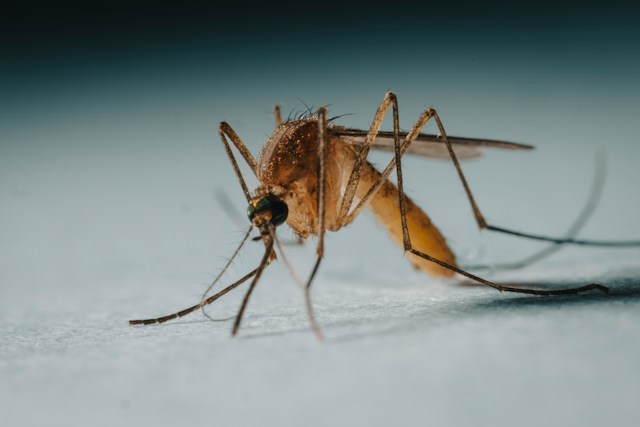
Malaria is caused by parasites of the Plasmodium genus and is normally transmitted through the bite of an infected Anopheles mosquito.
Germany does see malaria cases, but they are overwhelmingly associated with travel to countries where the disease circulates.
The Frankfurt situation is different.
Health authorities believe the recent infections are examples of so-called airport malaria—a rare event in which an infected mosquito is transported by aircraft from a malaria-endemic region and subsequently bites someone after arriving in Europe. The exact circumstances surrounding the newest infections are still being investigated.
The two Schwanheim cases occurred roughly five kilometers from the airport, within a distance that experts say an Anopheles mosquito could potentially travel.
That does not mean mosquitoes are spreading malaria throughout Frankfurt.
In fact, the Frankfurt Health Department continues to assess the risk to the general population as very low. Malaria also does not spread directly from one person to another through ordinary contact.
The diagnostic problem may be just as important
There is another lesson hidden in these cases: doctors normally use travel history as an important clue when considering malaria.
That makes sense. If someone develops fever after returning from a malaria-endemic region, malaria is naturally among the possibilities doctors consider.
But what happens when the person has never been there?
Frankfurt’s health authorities have specifically asked doctors to consider malaria when patients have unexplained fever, even when they report no travel to a malaria-endemic area. They have particularly highlighted people who live, work or spend time around the airport.
That message is important because malaria can initially resemble many other illnesses.
Fever, chills, headache, tiredness and body aches can have numerous causes. Without the right exposure history, a rare tropical infection may not immediately come to mind.
For Plasmodium falciparum, the parasite responsible for malaria tropica, timely diagnosis and treatment are especially important because the disease can become severe.
What should older adults pay attention to?
Older adults do not need to assume that living anywhere in Germany means they are at significant risk of malaria.
The current official assessment around Frankfurt remains that the risk to the general population is very low.
But older adults—and anyone else—should avoid dismissing unexplained symptoms simply because malaria seems unlikely.
If you live near Frankfurt Airport, work there or have recently spent substantial time around the airport and develop an unexplained fever, chills, headache or marked weakness, contacting a healthcare professional is sensible.
Tell the clinician about your location and any relevant exposure around the airport.
That information could be particularly useful because the absence of international travel might otherwise make malaria seem unlikely.
Is climate change responsible?
It is tempting to connect every unusual mosquito-related event in Europe with climate change.
The reality is more complicated.
The current Frankfurt cases have been linked by officials and experts to the possibility of an infected mosquito being transported by aircraft. The investigation into exactly how the infections occurred is ongoing.
Climate and weather can influence mosquito survival and the geographic suitability of environments for different mosquito species. But that does not mean the Frankfurt outbreak has been proven to be caused by climate change.
For readers, that distinction matters.
Public-health investigations work by separating what is known from what is still being studied.
What happens next?
Authorities are continuing surveillance around Frankfurt Airport and have been working to identify how the infections occurred.
Specialists are also examining parasite samples to investigate their possible origin. The Institute of Tropical Medicine in Antwerp reported that its researchers are analyzing parasite DNA from patient blood samples and comparing genome sequences with existing databases.
Meanwhile, Frankfurt officials are asking healthcare professionals to remain alert to unexplained fever and are advising people in the airport area to seek medical advice if concerning symptoms develop.
The public-health message is therefore more measured than the headline might suggest.
Yes, three deaths have now been associated with this unusual cluster.
Yes, malaria tropica can be a serious and potentially life-threatening infection.
But officials continue to say that the risk to the general Frankfurt population is very low, and malaria is not transmitted through ordinary person-to-person contact.
The bigger lesson
Perhaps the most important lesson from Frankfurt is not that an airport can suddenly become a source of widespread malaria.
It is that rare diseases can occasionally appear in unexpected places—and doctors need the flexibility to recognize them.
For older adults, that means one simple principle is worth remembering: persistent or unexplained fever deserves attention, particularly when there is an unusual environmental or travel-related exposure.
The Frankfurt investigation is still developing.
And for now, the most useful response is neither panic nor dismissal—but paying attention to what health authorities and medical professionals learn next.
Photo by Rapha Wilde on Unsplash