

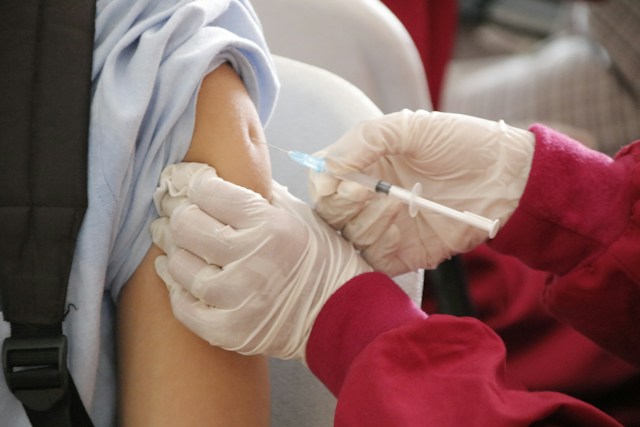
The HPV vaccine is often discussed as a tool for protecting girls. But vaccinating boys could also help reduce the spread of the virus and strengthen the fight against cervical cancer.
Cervical cancer prevention has traditionally focused on girls—and for good reason. But HPV spreads between people, meaning boys can also play an important role in reducing transmission. New modelling research from South Korea is adding to the conversation about whether broader vaccination could accelerate progress toward elimination.
Human papillomavirus, better known as HPV, is one of the most common sexually transmitted infections worldwide. Most HPV infections clear naturally, but persistent infection with high-risk HPV types can lead to cervical cancer. HPV can also cause cancers affecting the anus, penis and head and neck, as well as genital warts.
Nearly all cervical cancer cases are linked to HPV infection, which is why vaccination has become one of the most important tools in cervical cancer prevention.
Why boys are part of the HPV conversation
For years, HPV vaccination programmes have primarily targeted adolescent girls because the main public-health goal is preventing cervical cancer.
WHO continues to recommend vaccination of girls before age 15 as a central part of its cervical cancer elimination strategy. Its global targets call for 90% of girls to be fully vaccinated by age 15, alongside high levels of screening and treatment.
But HPV is not a virus that affects only women.
Boys can become infected and develop HPV-related disease themselves. They can also transmit HPV to future partners. Vaccinating boys therefore has two potential benefits: direct protection for the boys who receive the vaccine and indirect protection for the wider population.
WHO notes that vaccinating boys can provide additional benefits where countries have the resources and capacity to expand vaccination programmes.
That community effect is important because vaccination does more than protect one individual. When enough people are immune, there are fewer opportunities for a virus to circulate.
What the new South Korean study found
A 2025 study published in the Bulletin of Mathematical Biology examined how vaccination and cervical screening could work together to reduce HPV and related cancers in South Korea.
The researchers built a mathematical model using Korean health data. Their simulations suggested that the country’s existing level of female HPV vaccination—around 88% in the model—would not by itself produce the level of vaccine-derived herd immunity needed to eliminate HPV.
The model found that adding vaccination for boys could change that picture. With female vaccination maintained at 88%, the researchers estimated that vaccinating at least 65% of males could bring the model’s reproduction threshold below one, a mathematical condition associated with disease elimination. Without male vaccination, the model estimated that roughly 99% of females would need to be vaccinated to reach the same threshold.
Those numbers are striking—but they need context.
This was a mathematical modelling study, not a clinical trial or a real-world demonstration that vaccinating 65% of boys will eliminate HPV. The result depends on the assumptions, vaccine effectiveness, population structure and other parameters built into the model. The researchers specifically studied South Korea, so the numbers should not automatically be applied to every country.
Still, the broader message is important: increasing vaccination coverage in both sexes can strengthen population-level protection.
Boys benefit directly, too
There is another reason to include boys in HPV prevention discussions: they are not simply being vaccinated for someone else’s benefit.
HPV vaccination can protect against infections associated with several cancers and other HPV-related diseases. WHO notes that boys can benefit from protection against genital warts and HPV-related cancers, including cancers of the penis, anus and head and neck, depending on the vaccine used.
That makes HPV vaccination a broader cancer-prevention strategy rather than a vaccine relevant only to cervical health.
For families, this distinction matters. Vaccinating boys is not about placing responsibility for women’s health on boys or girls. It is about recognizing that infectious diseases move through populations, and prevention can work best when protection is shared.
Vaccination is only one piece of the puzzle
Even strong HPV vaccination programmes cannot replace cervical cancer screening.
WHO’s elimination strategy is built around three connected goals: vaccinating 90% of girls by age 15, screening 70% of women with a high-performance test by ages 35 and 45, and ensuring that 90% of women with precancer or invasive cancer receive appropriate treatment.
That means a future with far less cervical cancer will require more than simply increasing vaccine coverage.
People also need access to screening, follow-up testing, treatment and reliable healthcare services. These needs are particularly important in communities where healthcare access is limited.
In June 2026, WHO and its partners again called for stronger health systems, expanded HPV vaccination, accessible screening and better referral and treatment pathways to accelerate cervical cancer elimination.
Could gender-neutral vaccination make a difference?
There is already evidence that vaccinating both girls and boys can increase population-level protection against oncogenic HPV in some settings.
Research summarized by the International Agency for Research on Cancer found that gender-neutral vaccination produced stronger herd protection in settings where vaccination coverage among girls was lower. Modelling based on Finnish data also suggested that gender-neutral vaccination could help eliminate certain high-risk HPV types under particular coverage conditions.
But public-health policy has to consider more than biological effectiveness. Vaccine supply, affordability, healthcare capacity, existing vaccination rates and disease burden all influence which strategy makes the most sense for a particular country.
WHO therefore continues to prioritize vaccination of girls while recognizing that boys can be an important additional target where feasible and affordable.
A shared approach to prevention
Cervical cancer is unusual among cancers because much of its burden can be prevented through vaccination, screening and treatment.
The latest research does not mean that vaccinating boys is a magic solution or that girls’ vaccination programmes should receive less attention. Instead, it adds another piece to a larger public-health picture.
Protecting girls remains central to global cervical cancer elimination efforts. Protecting boys can add direct health benefits and help reduce HPV transmission across the population.
The most useful shift may be to stop thinking of HPV as a women’s health issue alone.
It is an infection shared across communities, and preventing the cancers it can cause requires prevention strategies that reach everyone who can benefit.
For today’s families, the message is straightforward: HPV vaccination is cancer prevention—and broader, equitable access to that prevention could help move the world closer to a future in which cervical cancer is no longer a major public-health threat.