

There is something satisfying about finding a second use for something that would normally become kitchen waste.
For many people, boiling eggs is a simple breakfast routine. The eggs go into a pot, the water heats up, and after cooking, the liquid is poured down the drain.
But gardeners have long wondered whether that leftover water could have another destination: the garden.
The idea is simple. Eggshells contain a large amount of calcium carbonate, along with smaller quantities of other minerals. During cooking, some material from the shell can enter the surrounding water. That has led to a popular gardening practice of allowing the water to cool and using it on plants.
But there is an important distinction between a useful recycling habit and a powerful fertilizer.
For older adults who enjoy gardening, that distinction matters. The goal should not be to replace proven soil care with a kitchen trick. Instead, boiled egg water can be viewed as a small way to reduce waste while supporting an already healthy gardening routine.
Why Are Eggshells So Rich in Calcium?
An eggshell is primarily made of calcium carbonate. That calcium gives the shell the strength it needs to protect the developing egg.
Calcium is also an essential nutrient for plants. It contributes to the structure of cell walls and helps support healthy growth, particularly in newly developing tissues.
That is why calcium is often discussed when gardeners deal with problems such as blossom-end rot in tomatoes and peppers.
However, blossom-end rot is more complicated than simply “not enough calcium.”
The condition is strongly associated with problems involving calcium delivery to developing fruit. Irregular watering, root damage and other growing conditions can interfere with calcium movement even when calcium is present in the soil.
So pouring calcium-containing water onto a struggling tomato plant is not a guaranteed solution.
What Actually Happens When Eggs Are Boiled?
This is where the popular gardening story needs some perspective.
Calcium carbonate is not highly soluble in ordinary water. Consequently, boiling an egg does not turn a pot of water into a concentrated calcium fertilizer.
Some minerals may enter the water during cooking, but the quantity is expected to be relatively small.
That means cooled egg water should not be treated like commercial plant fertilizer.
Instead, think of it as a low-cost recycling option.
If the water is plain, cooled and free from salt or other additives, using it to water suitable plants is generally a much more reasonable approach than expecting it to transform poor soil.
And there is another important point: the eggshell itself contains far more calcium than the water left behind.
The Shell May Be the Bigger Story
If your goal is to return calcium to the garden, the shell is potentially more useful than the cooking water.
Gardeners commonly save eggshells, dry them and crush them before adding them to compost or soil.
But large pieces of shell break down slowly. Grinding them into smaller particles increases their surface area and can make the mineral material more accessible over time.
Still, eggshells are not an instant fertilizer.
Their effect depends on factors such as soil chemistry, particle size and moisture. They also should not be viewed as a substitute for testing soil when a genuine nutrient problem is suspected.
For a vegetable garden, knowing what your soil actually needs is much more useful than adding calcium simply because it sounds beneficial.
A Simple Habit Older Gardeners Can Try
If you already boil eggs regularly, reusing the water can be an easy waste-reduction habit.
The safest routine is uncomplicated.
First, use only plain water. If you added salt while boiling your eggs, don’t use that water on your plants. Excess sodium can damage soil and interfere with plant water uptake.
Second, allow the water to cool completely. Hot cooking water should never be poured directly onto plant roots or potting soil.
Third, use it occasionally rather than treating it as a daily fertilizer. Plants still need an appropriate balance of nutrients, water, light and suitable soil.
Finally, pay attention to the plant. If a plant is struggling, yellowing or producing damaged new growth, the answer may be poor drainage, insufficient light, pests, watering problems or a genuine nutrient deficiency—not necessarily a lack of calcium.
What About Older Adults and Gardening?
This small kitchen habit also fits into a bigger conversation about healthy aging.
Gardening can encourage gentle physical activity, time outdoors and engagement with nature. For older adults, maintaining a few herbs, flowers or vegetables can also provide a satisfying routine without requiring a large garden.
But gardening should remain comfortable and safe.
Use lightweight watering cans when possible, avoid lifting heavy bags of soil, take breaks during hot weather and use raised containers or elevated beds if bending becomes uncomfortable.
The objective isn’t to create more work. It is to make everyday routines a little more sustainable and enjoyable.
The Bottom Line
Boiled egg water is an interesting example of how an ordinary household leftover can be given another purpose.
There is a legitimate biological reason eggshells are associated with calcium: the shell is largely calcium carbonate, and calcium is an important plant nutrient.
But the popular idea that a pot of egg water is a powerful “miracle fertilizer” goes much further than the evidence supports.
The amount of calcium entering plain cooking water is relatively small, so the water should be considered a modest recycling practice—not a treatment for nutrient deficiencies or plant disease.
For older adults who enjoy gardening, that may actually be the best way to think about it.
You don’t need a miracle.
Sometimes a useful habit is simply one that costs nothing, reduces waste and gives you another reason to spend a few peaceful minutes caring for something that grows.
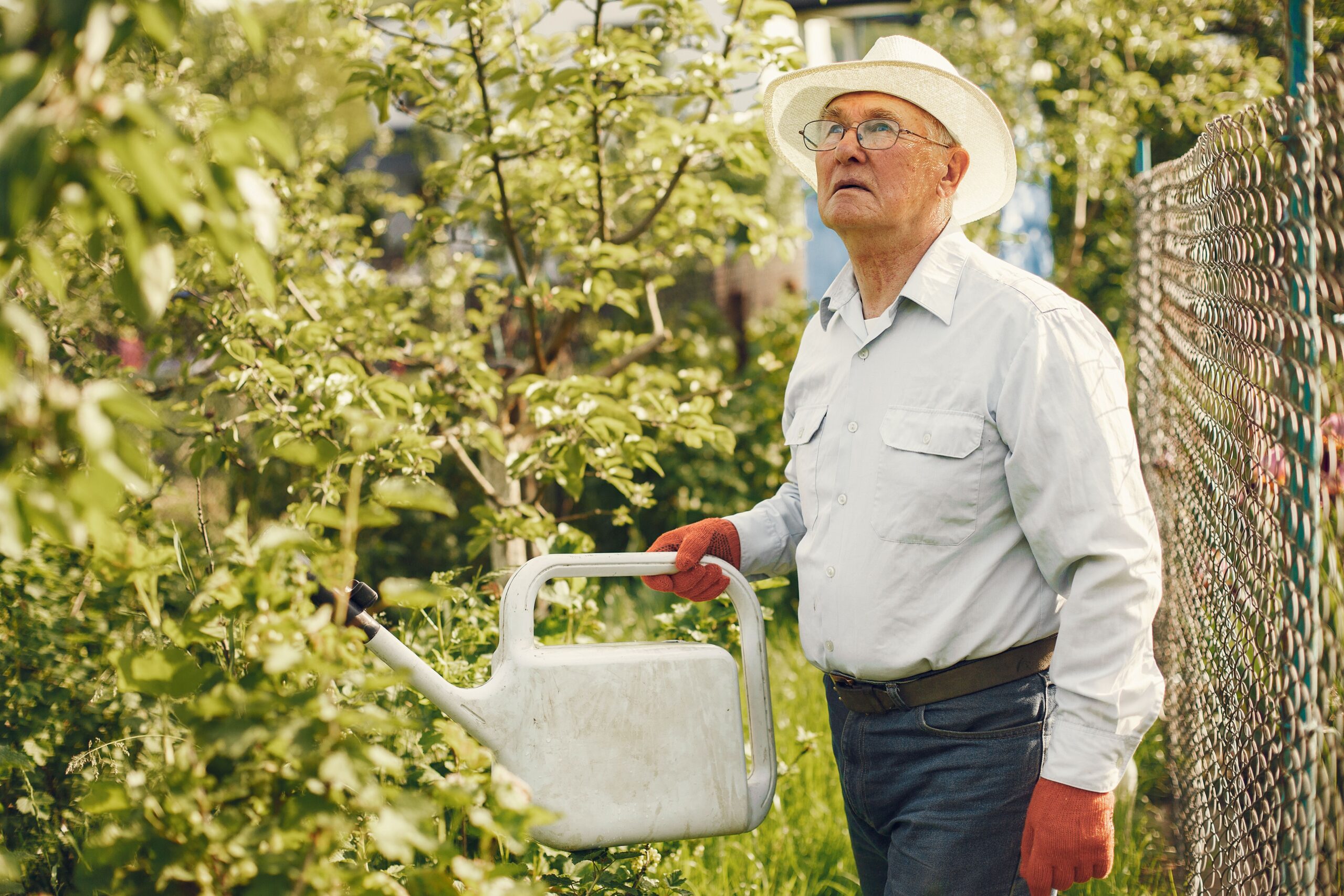
Photo by Gustavo Fring: https://www.pexels.com/photo/photo-of-an-elderly-man-holding-a-watering-can-near-green-plants-4894630/