

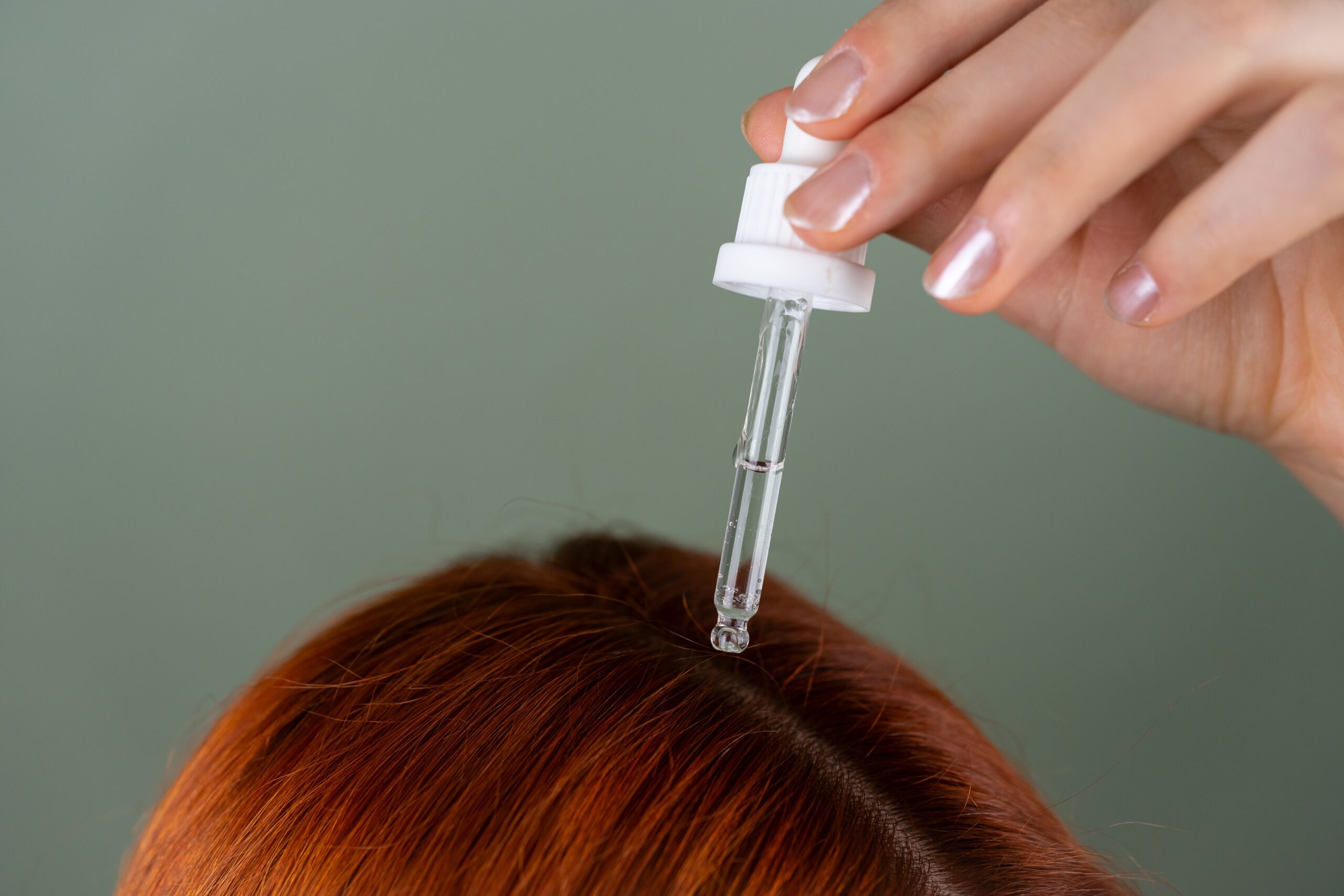
Finding a new bald patch in the mirror can be unsettling. Unlike gradual thinning, patchy hair loss can appear surprisingly quickly, leaving people wondering what caused it—and whether the hair will come back.
That is where an unusual home remedy entered the medical conversation: onion juice.
A 2002 study published in The Journal of Dermatology investigated whether crude onion juice could encourage hair regrowth in people with alopecia areata, an autoimmune condition that causes characteristic patches of hair loss.
The results attracted considerable attention. People applying onion juice experienced substantially more regrowth than those applying tap water, with researchers reporting regrowth in a large majority of the treatment group by the end of the study.
But there is an important catch that can easily disappear in online headlines: this was a small, older study involving a specific type of hair loss.
It does not establish onion juice as a proven treatment for every form of hair loss.
First, Identify the Type of Hair Loss
Hair loss is not one disease.
Alopecia areata occurs when the immune system mistakenly attacks hair follicles, disrupting their normal growth cycle. It can produce smooth, round or oval patches on the scalp and sometimes affect eyebrows, eyelashes or other body hair.
Pattern hair loss is different.
Androgenetic alopecia, commonly known as male- or female-pattern hair loss, is strongly influenced by genetics and hormonal signaling. Hair follicles gradually become smaller, producing increasingly fine hairs.
There are also other causes, including nutritional deficiencies, thyroid problems, certain medications, infections, significant physical stress and conditions that cause inflammation or scarring around follicles.
That distinction matters because a remedy studied in alopecia areata cannot automatically be assumed to work for genetic hair thinning.
What Did the Onion Study Actually Find?
The 2002 trial was relatively small. Participants with patchy alopecia areata applied either crude onion juice or tap water to affected areas twice daily.
Researchers reported significantly more hair regrowth in the onion-juice group. Some participants began showing regrowth within several weeks, while the control group generally showed little change.
The findings were certainly interesting—but they should be interpreted in context.
A small clinical trial is useful for generating evidence and questions. It is not the same as having multiple large, independent trials confirming a treatment’s effectiveness.
There is also another issue: alopecia areata can sometimes improve spontaneously. Hair may regrow without treatment, particularly in people with limited disease.
So while the study provides a reason for researchers to investigate onion-derived compounds further, it does not prove that onion juice will produce the same results for everyone.
Why Might Onion Juice Have an Effect?
Researchers have proposed several possible explanations.
Onions contain sulfur-containing compounds and plant chemicals such as quercetin, which has antioxidant and anti-inflammatory properties in laboratory research.
Inflammation is relevant to alopecia areata because the condition involves an abnormal immune response around hair follicles.
However, it is important not to turn a plausible mechanism into a proven treatment.
Finding an anti-inflammatory compound in a food does not automatically mean applying that food to the skin will suppress an autoimmune disease.
The exact mechanism behind any possible benefit from topical onion juice remains uncertain.
Don’t Confuse Onion Juice With a Cure
Social media can make promising research sound much more definitive than it really is.
Claims that onion juice can “cure baldness” or reverse advanced male-pattern hair loss go well beyond the evidence.
The original research focused on alopecia areata, not ordinary genetic pattern baldness.
That difference is crucial.
For someone experiencing gradual thinning around the temples, crown or central scalp, rubbing onion juice onto the area should not replace an evaluation by a dermatologist.
Likewise, sudden widespread shedding can have an entirely different cause that needs investigation.
What About Safety?
“Natural” does not automatically mean harmless.
Fresh onion juice can irritate the skin. Some people may develop redness, itching or contact dermatitis after exposure. Applying concentrated raw ingredients to already irritated or broken skin can make symptoms worse.
Anyone considering a topical home remedy should therefore be cautious, particularly if they have sensitive skin or an existing scalp condition.
It is also worth remembering that a burning or tingling sensation does not mean a treatment is working. Skin irritation can simply be skin irritation.
And if hair loss is sudden, painful, associated with scaling or inflammation, or accompanied by loss of eyebrows or eyelashes, experimenting with household remedies may delay appropriate medical care.
When Hair Loss Deserves Medical Attention
A dermatologist can often learn a great deal from the pattern and timing of hair loss.
A round, smooth bald patch may suggest alopecia areata. Diffuse shedding after illness or major stress may point toward another condition. Gradual thinning can suggest androgenetic alopecia.
Sometimes blood tests or other investigations are appropriate, depending on the person’s symptoms and medical history.
Getting the diagnosis right is often more important than finding the most popular home remedy.
For alopecia areata, established medical treatments can include corticosteroids and other therapies chosen according to the extent and severity of the disease. For pattern hair loss, different evidence-based treatments may be considered.
The Bigger Lesson From the Onion Study
The most interesting part of the onion-juice story may not be the onion itself.
It is the reminder that traditional remedies can generate worthwhile scientific questions—but interesting findings still need to be tested carefully.
The 2002 study gave researchers a signal worth investigating. It did not provide a universal prescription for hair loss.
More than two decades later, the responsible takeaway is therefore neither “onion juice is useless” nor “onion juice cures baldness.”
It is much simpler:
There is limited evidence that topical onion juice may help some people with patchy alopecia areata, but stronger research is needed, and the finding should not be generalized to other types of hair loss.
For anyone watching their hair change, that distinction can save time, money and frustration.
And sometimes the most important step isn’t reaching for something in the kitchen.
It’s finding out why the hair is falling out in the first place.
Photo by Beyzanur K.: https://www.pexels.com/photo/applying-hair-serum-with-precision-dropper-28994390/