

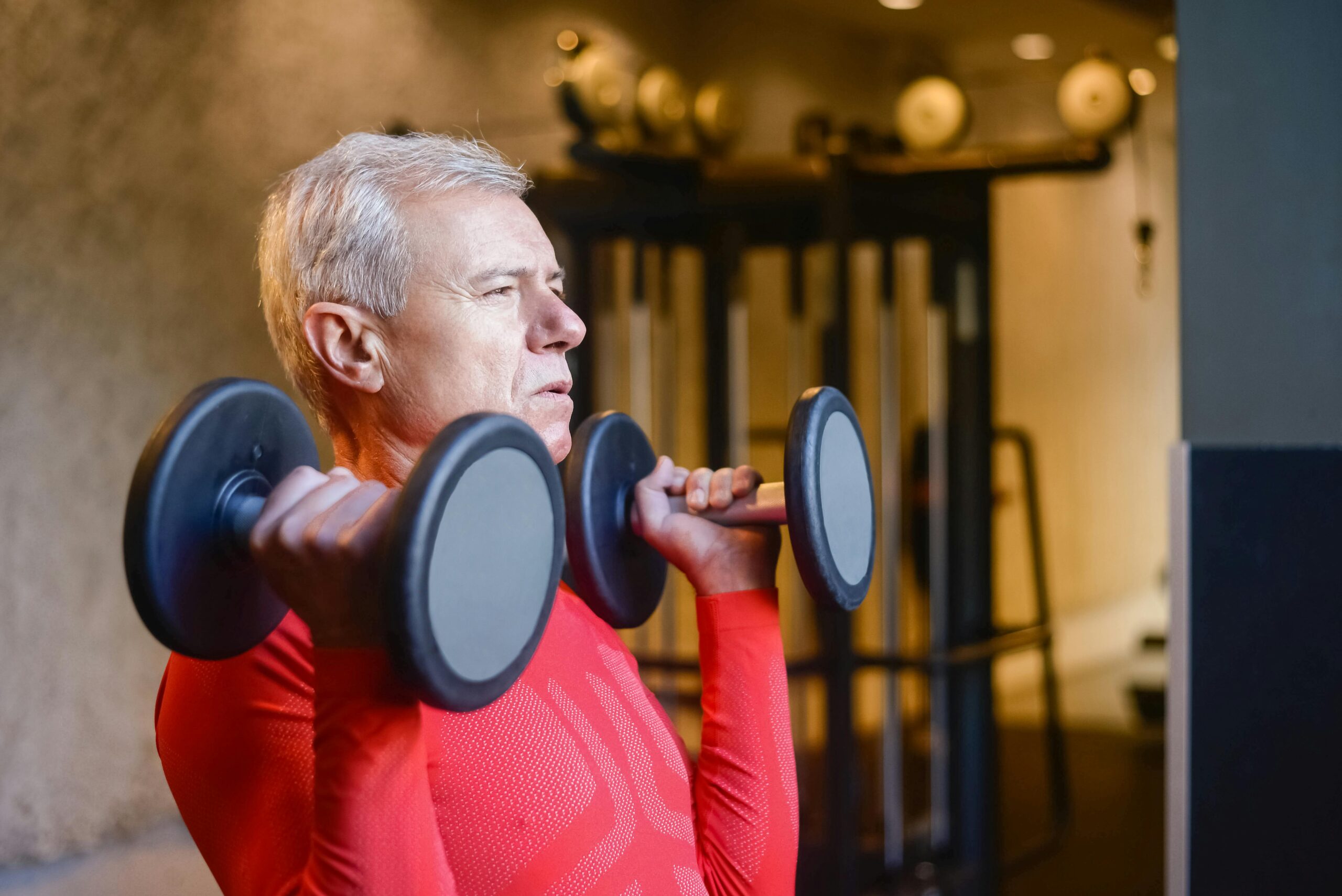
Stop what you’re doing for a moment. Find something that weighs about 11 pounds — a gallon of water, a small bag of flour, a medium-sized pot. Now lift it overhead, comfortably, with one hand.
That’s it. That’s the test.
If you’re over 50 and that felt harder than it should have — or if you quietly avoided trying it altogether — a landmark new study has something important to tell you about what’s happening inside your body right now.
Researchers tracked 51,000 adults aged 50 and older across 15 countries for four years. Their finding was both startling and clarifying: adults who reported difficulty lifting just 5 kilograms — 11 pounds — faced substantially higher risks for Alzheimer’s disease, arthritis, depression, cardiovascular problems, and diminished quality of life. Nearly 1 in 5 of the participants reported struggling with this basic task. And those individuals weren’t just weaker. They were biologically older, more inflamed, more metabolically compromised — and dying sooner.
Eleven pounds. The weight of a bag of dog food. A toddler. A small watermelon. The threshold between two dramatically different health trajectories.
This is not a story about lifting weights. It’s a story about what your muscles are actually doing inside your body — and what happens to everything else when they quietly start to disappear.
The Test That Outperformed Expensive Medical Screening
What makes this particular study remarkable is not just what it found — it’s how simple the finding was.
Researchers tracked 51,000 adults aged 50 and older across 15 countries for four years. Nearly 20% reported trouble lifting 5 kg. Those individuals faced substantially higher risks for Alzheimer’s disease, arthritis, depression, cardiovascular problems, and diminished quality of life.
This self-reported metric — can you lift 11 pounds without difficulty? — outperformed complex tests as a screening tool that anyone can try at home. No lab work. No imaging. No expensive biomarker panel. Just an honest answer to a question most people have never thought to ask themselves.
The reason the test works so well as a predictor isn’t arbitrary. Muscle strength directly correlates with systemic health. Weakness signals sedentary habits, inflammation, and metabolic decline — all precursors to age-related diseases. The 11-pound threshold is essentially a proxy for the total biological state of the person attempting it. Struggling to lift it doesn’t cause disease. It reveals the metabolic environment in which disease is already developing.
Gender differences amplify urgency: men’s failure signals severe decline relative to baseline mass. Because men start with significantly more muscle mass than women, losing enough strength to struggle with 11 pounds represents a proportionally greater deterioration — one that correlates with steeper health risk curves across multiple disease categories.
This is not a test designed to shame anyone. It is a remarkably accessible early warning system. And the earlier you receive the warning, the more you can do about it.
📺 Watch: The Study That Changed How We Think About Aging
Why Muscle Loss Starts Earlier Than Anyone Tells You
Here is the number that most Americans over 40 have never heard — and should know immediately:
Once you turn 30, your muscle mass starts declining by as much as 8% per decade. That decline speeds up after age 60.
Eight percent per decade. Starting at 30. Not 60. Not 70. Thirty.
By the time most people start thinking about muscle loss as a concern — usually when they notice that the grocery bags feel heavier than they used to, or that getting up from a low chair requires more effort — they may have already lost 20 to 30 percent of their peak muscle mass. The decline has been running quietly for two or three decades.
Sarcopenia, the age-related loss of muscle mass and function, affects up to 30% of older adults. The word comes from the Greek for “poverty of flesh,” and it describes a condition that is simultaneously extremely common and almost universally underdiagnosed. Most people experiencing it have no clinical label for what’s happening — they just feel progressively less capable, less energetic, and less like themselves.
The prevalence of sarcopenia was estimated to influence 10% to 16% of the elderly worldwide. In the United States, with its combination of sedentary lifestyle, ultra-processed diet, and aging population, those numbers are likely at the higher end of that range.
The biology of why sarcopenia accelerates with age involves several intersecting mechanisms. Motor neurons that control muscle fibers are lost with age, and the remaining neurons must compensate by expanding their territory — reducing the precision of muscle control. Satellite cells — the stem cells that repair and regenerate muscle tissue — become less active and less responsive to training signals. Anabolic hormones including testosterone, estrogen, human growth hormone, and IGF-1 all decline with age, reducing the body’s capacity to synthesize new muscle protein even when protein intake is adequate. And chronic low-grade inflammation — the same inflammaging process covered in our previous article in this series — directly degrades muscle tissue through inflammatory cytokine activity.
The result is a body that is progressively losing one of its most metabolically important organs. Because that is exactly what muscle is.
Muscle Is Not Just for Moving Things
This is the conceptual shift that is redefining medicine in 2026 — and the reason the 11-pound test matters so far beyond physical capability.
The most profound shift in 2026 is the rebranding of skeletal muscle. For years, we viewed muscle through the lens of bodybuilding. Today, the medical community recognizes muscle as a vital endocrine organ. “Metabolic Armor” is the term gaining traction among longevity experts. It refers to the role muscle plays in glucose disposal, cytokine signaling, and protecting against sarcopenia.
Let’s unpack what that actually means in practice.
Muscle and blood sugar. Skeletal muscle is the primary site of insulin-mediated glucose disposal in the body — accounting for approximately 70 to 80 percent of glucose uptake after a meal. More muscle mass means more capacity to absorb blood glucose efficiently, without requiring large insulin responses. Less muscle mass means insulin resistance escalates — not because the pancreas is failing, but because there isn’t enough metabolically active tissue to absorb the glucose being produced. This is one of the primary mechanisms through which sarcopenia drives type 2 diabetes risk in aging adults, independent of body weight or diet.
Muscle and inflammation. Active muscle tissue releases anti-inflammatory signaling molecules called myokines during contraction. These include IL-6 in its acute anti-inflammatory form, IL-10, and BDNF — brain-derived neurotrophic factor, the molecule responsible for neuronal growth, maintenance, and repair. Every time you use your muscles, you are releasing a pharmacological cocktail of anti-inflammatory and neuroprotective compounds directly into your bloodstream. Lose the muscle, lose the pharmacy.
Muscle and the brain. The BDNF connection deserves its own emphasis. BDNF is to the brain what fertilizer is to a garden — it drives the growth of new neurons, supports synaptic plasticity, and protects existing neurons from degeneration. Exercise-induced BDNF release from muscle is one of the primary mechanisms through which physical activity protects against cognitive decline and Alzheimer’s disease. Chronic inflammation is known to damage both muscle tissue and neurons. High levels of inflammatory markers in the blood are associated with both sarcopenia and dementia. This creates a cycle where inflammation degrades the body and the brain simultaneously.
Muscle and bone. Bone density responds directly to mechanical loading — the stress placed on bones by muscle contractions and weight-bearing movement. Sarcopenia and osteoporosis are closely linked; as muscle mass declines, bone remodeling signals weaken, and fracture risk rises. Strength training helps preserve muscles and improves bone density, potentially reducing risk for osteoporosis, fractures and falls. In adults over 65, hip fractures are associated with dramatically elevated one-year mortality rates — up to 30 percent in some studies. The chain from muscle loss to bone loss to fracture to mortality is well-documented and far shorter than most people realize.
Muscle and cardiovascular health. In research involving 4,449 people age 50 and older, stronger study participants were less likely to die over the four-year study than were study participants with low muscle strength. The mechanisms include muscle’s role in reducing systemic inflammation, supporting insulin sensitivity, lowering resting blood pressure, and maintaining healthy metabolic rate — all of which reduce cardiovascular load over time.
The Alzheimer’s Connection — Deeper Than You Think
The link between muscle weakness and Alzheimer’s disease found in the 51,000-person study isn’t new — it’s the most consistent finding across a now-substantial body of research, and it’s worth understanding mechanistically rather than just statistically.
Sarcopenia, defined as the age-associated loss of muscle mass and increased fragility with age, is increasing worldwide. The condition often precedes the development of Alzheimer’s disease, thereby decreasing the levels of mobility and physical activity in those affected. Indeed, the loss of muscle mass has, in some studies, been associated with an increased risk of Alzheimer’s disease and other dementias.
The specific genes implicated in the shared biology of sarcopenia and Alzheimer’s are revealing: APOE (the most significant genetic risk factor for late-onset Alzheimer’s), BDNF, ACE, FTO, and FNDC5 — the gene that encodes irisin, an exercise-induced hormone that crosses the blood-brain barrier and directly stimulates BDNF production in the hippocampus. The brain benefits of exercise are not metaphorical. They run through specific genes and molecular pathways that connect muscle activity to hippocampal health.
Probable sarcopenia, indicated by low handgrip strength, is a prevalent condition among hospitalized older adults and may reflect broader functional and nutritional decline. A 2026 study published in the journal Nutrients examining 194 hospitalized patients with Alzheimer’s clinical syndrome found that those with probable sarcopenia had significantly lower cognitive test scores, lower nutritional status markers, and slower gait speed — a cascade of decline that appears to run in parallel with and accelerating alongside cognitive deterioration.
Sarcopenia, the age-related loss of muscle mass and function, affects up to 30% of older adults. In addition to being an established component of frailty and predictor of mobility dysfunction, sarcopenia is associated with cognitive decline and increased risk of cognitive impairment, with approximately 70% of individuals with late-stage dementia having sarcopenia.
Seventy percent. Nearly three-quarters of people in late-stage dementia have sarcopenia. The two conditions don’t just correlate — they appear to be biological travel companions, each accelerating the other’s progression through shared inflammatory, metabolic, and neurotrophic pathways.
The 2026 Fitness Revolution That Medicine Is Finally Catching Up To
Something significant is shifting in American fitness culture — and for once, it is shifting in exactly the right direction.
Life Time’s 2026 wellness survey shows 82% of Americans targeting greater wellbeing, with 42.3% naming strength training their primary goal. Longevity tops trends at 37.8%, surpassing GLP-1 drugs.
This is a meaningful cultural inflection point. For decades, American fitness culture was organized around weight loss — calories burned, pounds shed, dress sizes dropped. Strength training was something bodybuilders did. Cardio was what doctors recommended. The idea of building muscle as a primary health strategy for people in their 50s and 60s was not mainstream medical messaging.
That is changing fast. For the over-40 crowd, the “trend” is moving away from high-rep “toning” and toward progressive overload with heavy compound lifts. The goal? Building a reservoir of strength that acts as a buffer against chronic disease.
And medicine itself is beginning to follow. Les Mills notes Medicare’s 2026 reimbursement for activity assessments, integrating exercise into preventive clinical care. The CDC notes that 4 in 5 of the most costly chronic conditions among adults 50 or older can be prevented or managed with physical activity. Medicare Advantage plans increasingly cover gym memberships and fitness programs including SilverSneakers — a recognition at the payer level that exercise is not lifestyle enhancement but clinical intervention.
Resistance training has also been shown to lower blood pressure for people 60 and over, according to a 2025 study published in Archives of Gerontology and Geriatrics. Moderate physical activity can improve sleep quality and lower blood pressure, while also reducing risk of dementia, heart disease, stroke, and type 2 diabetes. It strengthens bones, improves balance, and can lower fall risk in adults over 65.
The fitness industry is investing accordingly. Fitness chains invest in equipment, metabolic testing, and recovery programs to support safe lifting. Danny King, Life Time’s recovery director, declares strength training “the new weight loss” for sustained performance.
He’s right — and the 51,000-person study proves exactly why.
What to Actually Do — Starting This Week
This is the part that matters most. The research is compelling. The biology is clear. Now here’s the practical translation for Americans over 50 who want to move the needle on their own healthspan.
Test yourself honestly first. Find something that weighs 11 pounds. Lift it overhead, one hand at a time, smoothly and comfortably. If that felt genuinely difficult — not just mildly effortful, but actually challenging — that’s meaningful data. If you couldn’t do it at all, that’s urgent data. Either way, it’s actionable data.
Start resistance training — this week, not next month. A study of more than 500 older women with sarcopenia concluded that resistance training at least twice weekly enhances muscle strength and physical function, specifically gait speed. A second study of older adults with sarcopenia found that resistance training three times weekly for eight to twelve weeks significantly increases handgrip strength and knee extension — functions critical for daily living.
You do not need a gym to start. Focus on form first: begin with body weight exercises including squats, lunges, wall pushups, and going from sitting to standing from a chair. When you are comfortable doing eight repetitions and feel confident about your form, add resistance bands or light weights to make it more challenging.
The progression matters more than the starting point. Whatever you can do today, do it consistently. Add resistance gradually as your body adapts. The signal your muscles need to stop declining — and potentially reverse some of the loss — is progressive overload: consistently asking them to do slightly more than they did last time.
Do compound movements, not isolation exercises. Squats, deadlifts, rows, presses, and lunges recruit multiple large muscle groups simultaneously, producing more total muscle stimulus, more myokine release, more metabolic benefit, and more functional carryover to real-life tasks than bicep curls and leg extensions. The grocery bag test is a compound movement. Train for it with compound movements.
Pair resistance training with Zone 2 cardio. Hybrid athlete protocols recommend 3 to 4 resistance days plus 150 to 200 minutes of Zone 2 cardio weekly. Zone 2 cardio — walking briskly, cycling at a conversational pace, swimming — improves mitochondrial density, cardiovascular efficiency, and metabolic flexibility in ways that complement rather than compete with strength training. The combination produces better longevity outcomes than either alone.
Eat enough protein — and time it right. Muscle protein synthesis requires adequate protein intake. For adults over 50, research increasingly supports higher protein targets than the general RDA — approximately 1.2 to 1.6 grams per kilogram of body weight daily, distributed across meals. Protein synthesis peaks when leucine — the primary muscle-building amino acid — crosses a threshold per meal, which is why spreading protein across three meals outperforms getting most of it at dinner. Eggs, fish, poultry, Greek yogurt, cottage cheese, and legumes are all excellent sources. If appetite is reduced, a high-quality whey or pea protein supplement can help meet targets.
Prioritize sleep and recovery. Sleep quality, rated good by 43.1% of Life Time survey respondents, complements training for optimal recovery. Experts prioritize recovery metrics like heart rate return over max lifts. Human growth hormone — the primary driver of muscle repair and synthesis — is released almost exclusively during deep sleep. Shortchanging sleep shortchanges muscle recovery. The two are not separate health behaviors; they are the same health behavior viewed from different angles.
Use wearables strategically. Wearables track progress, enabling personalized plans. You don’t need a sophisticated device, but tracking your resting heart rate, sleep quality, and workout consistency provides the feedback loop that makes progressive improvement sustainable. What gets measured gets managed.
Check your Medicare or insurance coverage. If you’re enrolled in a Medicare Advantage (Part C) health insurance plan, your plan may offer SilverSneakers. This fitness program specifically targets people over 65, giving them special access to gyms, community exercise classes, and workout videos. Many Americans are leaving this benefit entirely unused — a free or low-cost gym membership sitting unclaimed in their insurance card. Call your plan and ask specifically about fitness benefits before paying out of pocket.
The Number That Should Change How You Spend Your Afternoons
The CDC notes 4 in 5 of the most costly chronic conditions among adults 50 or older can be prevented or managed with physical activity.
Four out of five. The diseases that dominate American healthcare costs — heart disease, type 2 diabetes, osteoporosis, cognitive decline, depression — are substantially preventable or manageable through the same intervention: building and maintaining muscle mass through consistent resistance training.
The 51,000-person study didn’t discover something new about 11 pounds. It discovered something new about how early and how accurately our muscles betray what’s happening in our biology. Struggling to lift a gallon of water isn’t just a sign that your arms are weak. It’s a sign that your metabolic defenses are thinning — that inflammation is running high, that insulin sensitivity is dropping, that your brain is losing its most important protective signal, that your bones are losing their scaffolding.
And it’s a sign that arrives years, sometimes decades, before the disease it is predicting has a name.
Try lifting 11 pounds overhead today. Success predicts robust healthspan; struggle demands action. Resistance training, recovery focus, and consistency build resilience against aging’s toll. This research empowers individuals to own their vitality, proving simple habits yield profound results.
Your muscles have been quietly protecting you your entire life — regulating your blood sugar, fighting your inflammation, growing your brain cells, holding your bones together.
The question is whether you’re going to protect them back.
Sources: 51,000-Person International Study via MindBodyGreen; Life Time 2026 Wellness Survey via PR Newswire (January 2026); Strength for Longevity Substack — Fitness Trends for 2026 (January 2026); UCLA Health — Why Strength Training Is Critical for Older Adults (March 2026); AARP — The 4 Exercises Every Adult Over 50 Should Do (January 2026); Mayo Clinic Press — The Many Benefits of Resistance Training as You Age; PLOS One — Prevalence and Correlation of Sarcopenia with Alzheimer’s Disease: A Systematic Review and Meta-Analysis (March 2025); PubMed — Sarcopenia as a Risk Factor for Alzheimer’s Disease: Genetic and Epigenetic Perspectives (2024); PSYPost — Weak Muscles Linked to Higher Dementia Risk in Middle-Aged and Older Adults (December 2025); University of Miami Miller School of Medicine — Sarcopenia and Mobility Dysfunction as Indicators of ADRD Risk (2023); Frontiers in Aging Neuroscience — Sarcopenic Obesity and Dementia in Chinese Elderly (2025); Nutrients Journal — High Prevalence of Probable Sarcopenia in Alzheimer’s Clinical Syndrome (January 2026); Tufts Medicare Preferred — Strength Training for Older Adults; Flagship Health — Medicare Advantage Fitness Benefits; Healthline — Exercise Plan for Older Adults (January 2026); Metabolism: Clinical and Experimental — Epidemiology of Sarcopenia (2023); ACSM Top Fitness Trends 2026.
This article is for informational purposes only and does not constitute medical advice. Please consult a licensed physician, physical therapist, or certified fitness professional before beginning a new exercise program, especially if you have existing health conditions.
💬 READER’S CORNER
Did you try the 11-pound test? How did it go — and are you already doing any resistance training? Tell us where you’re starting from in the comments. No judgment, only encouragement.