

Cancer treatment has changed dramatically over the past few decades. But for some cancers, doctors still face an uncomfortable reality: destroying the tumor can be difficult without also putting healthy tissue under considerable stress.
That challenge becomes especially complicated in older adults, who may be managing other health conditions, taking several medications, or trying to preserve independence while undergoing treatment.
This is where precision oncology is becoming increasingly important.
Instead of simply asking how aggressively a tumor can be attacked, researchers are asking a different question: Can we target the cancer more precisely while giving the rest of the body a better chance to recover?
Two recent areas of research illustrate that shift. One involves laser interstitial thermal therapy (LITT), a minimally invasive technique being studied for selected brain tumors. The other involves the IL-17 immune pathway in ovarian clear cell carcinoma.
Neither represents a universal cure. But both demonstrate how modern cancer research is becoming more targeted and biologically sophisticated.
When a Brain Tumor Is in the Wrong Place
Glioblastoma is one of the most aggressive primary brain cancers. One of its greatest challenges is location.
A tumor may sit close to regions responsible for speech, movement, memory, or other essential functions. Removing every visible cancer cell through conventional surgery may therefore carry a significant risk of damaging healthy brain tissue.
That is one reason researchers have been investigating LITT.
The National Cancer Institute describes LITT as a treatment in which MRI imaging guides a thin catheter into abnormal tissue. Laser energy delivered through the catheter produces heat that destroys targeted tissue.
The concept is surprisingly simple: rather than opening a large area of the skull to reach a difficult tumor, doctors can sometimes reach the target through a much smaller opening.
MRI guidance allows the treatment team to monitor the procedure and temperature while the laser is applied.
For appropriately selected patients, this can offer an important potential advantage: less invasive access to a tumor that might otherwise be difficult or unsafe to reach surgically.
But it is important not to confuse promising technology with a replacement for standard care. LITT is currently being investigated in multiple clinical settings, including recurrent glioblastoma, and the National Cancer Institute lists ongoing trials combining LITT with other treatments.
Why the Blood-Brain Barrier Matters
The brain has a remarkable protective system called the blood-brain barrier. It helps prevent potentially harmful substances circulating in the blood from easily entering brain tissue.
Unfortunately, that protection can also make it harder for some cancer treatments to reach a tumor.
Researchers have found that LITT can temporarily alter the local blood-brain barrier. This has generated interest in combining laser treatment with medicines that might otherwise have difficulty reaching the tumor.
The NCI is currently studying combinations involving LITT and systemic therapies such as lomustine and pembrolizumab in recurrent glioblastoma.
That does not mean every patient receiving LITT will automatically benefit from these combinations. Rather, it represents an important direction for research: use a precisely targeted procedure not only to damage the tumor, but potentially to make the tumor more accessible to the next treatment.
A Different Kind of Precision: Turning the Immune System Toward Ovarian Cancer
The second development comes from a completely different field.
Ovarian clear cell carcinoma (OCCC) is an uncommon subtype of ovarian cancer that can be difficult to treat, particularly when the disease returns or becomes resistant to conventional therapies.
Researchers have therefore been searching for biological weaknesses that could make these tumors more responsive to the immune system.
A study published in Molecular Cancer in June 2026 examined the role of interleukin-17 (IL-17) in OCCC.
The researchers analyzed human tumor data and used an immunocompetent mouse model to investigate how IL-17 affects the tumor’s immune environment.
Their findings suggest that IL-17 can activate inflammatory signaling inside OCCC cells, including pathways involving NF-κB. This was associated with production of cytokines and chemokines that can help attract immune cells into the tumor.
In simpler terms, researchers are investigating whether a tumor that normally has relatively little immune-cell activity can be changed into an environment where immune cells can enter and respond more effectively.
That is the intriguing part.
From an “Immune-Cold” Tumor to a More Visible Target
Cancer cells can sometimes create an environment that makes it difficult for the immune system to recognize or attack them effectively.
Researchers often describe tumors with limited immune-cell infiltration as “immune cold.”
The 2026 OCCC study found that a small subset of tumors had particularly high IL17A expression and a more T-cell-inflamed gene-expression pattern. In laboratory experiments using a mouse model, IL-17 exposure increased the presence and activation of CD4-positive and CD8-positive T cells within tumors.
That finding is scientifically interesting because immune checkpoint drugs work by helping immune cells mount a stronger attack against cancer. If researchers can understand why some tumors respond and others do not, treatment could eventually become more personalized.
But there is an important caveat: this is not yet evidence that an IL-17 treatment can cure ovarian clear cell carcinoma in people.
Much of the functional work in this study was conducted in an animal model, and the researchers themselves describe the need for further investigation.
For patients and families, that distinction matters.
Why This Matters More as We Get Older
Cancer treatment is not simply about eliminating abnormal cells.
For an older adult, maintaining the ability to walk independently, communicate clearly, live at home, manage medications, and spend time with family can be just as important as the treatment itself.
That is why less invasive approaches can be particularly interesting.
A treatment that potentially reduces surgical disruption or shortens recovery may have practical importance for carefully selected patients. At the same time, a treatment designed around a tumor’s specific molecular characteristics could eventually reduce unnecessary exposure to therapies unlikely to work.
This is the promise of precision medicine—not necessarily more treatment, but better-matched treatment.
Of course, suitability depends on the individual. Age alone does not determine whether someone can tolerate cancer treatment. Doctors also consider overall health, physical function, other illnesses, medications, tumor characteristics, previous treatments, and the patient’s own goals.
The Bigger Change Happening in Cancer Care
These two research directions look very different.
One uses MRI-guided heat to target tissue from inside a tumor.
The other investigates molecular signaling that may alter how immune cells interact with ovarian cancer.
Yet they share the same philosophy: understand the tumor more precisely and then choose an intervention designed around that biology.
That is a significant change from the old image of cancer treatment as simply throwing everything possible at the disease.
The future is unlikely to be one miraculous treatment that works for everyone. It will probably be a collection of increasingly specialized approaches—some surgical, some molecular, some immunological—combined according to the biology of an individual patient’s cancer.
Hope, With a Healthy Dose of Reality
For anyone facing glioblastoma or ovarian clear cell carcinoma, headlines about breakthroughs can bring understandable hope. But hope is most useful when it is grounded in what the evidence actually shows.
LITT is a real medical technology with established uses and ongoing clinical research, but it is not appropriate for every brain tumor.
The IL-17 findings are exciting laboratory and translational research, but they are not yet an established IL-17-based treatment for ovarian clear cell carcinoma.
What we can say with confidence is that cancer research is becoming increasingly precise.
And for older adults and their families, that may be one of the most important developments of all: the conversation is gradually moving from simply asking how much treatment a person can endure to asking which treatment is most likely to help that particular person, with the least unnecessary burden.
That is not a cure-all.
But it is a meaningful step toward a more individualized, more thoughtful future in cancer care.
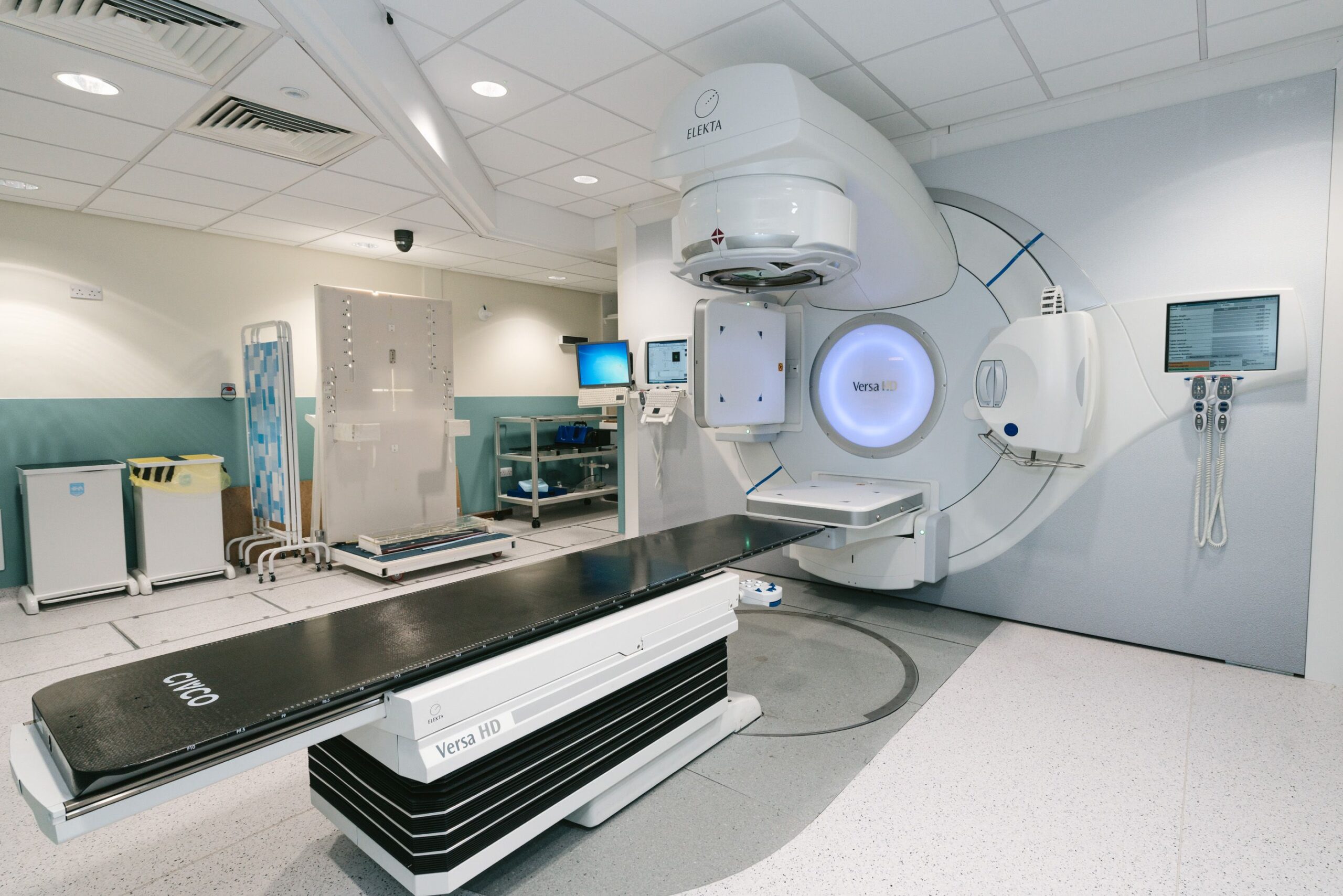
Image Alt Text (PT): MRI-guided laser therapy and immune-cell research representing emerging precision cancer treatments.
Photo by Jo McNamara: https://www.pexels.com/photo/medical-equipment-in-a-hospital-11288665/