

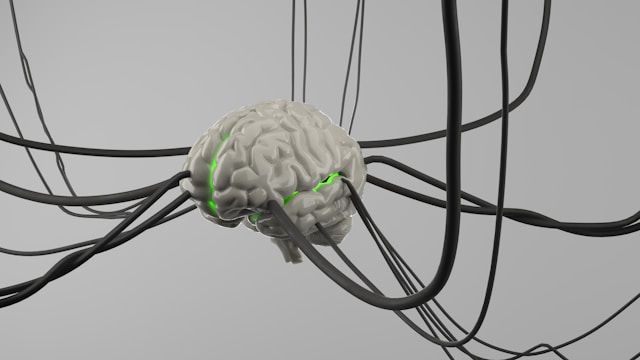
New research on Toxoplasma gondii is revealing how a long-lasting infection can alter communication between brain cells—while raising important questions about what these changes mean for human health.
Toxoplasma gondii is probably not a parasite most people think about during an ordinary day. Yet it is remarkably common. The single-celled organism occurs worldwide and can remain in the body for a very long time. In the United States alone, the CDC estimates that more than 40 million people are infected, although most people with healthy immune systems never develop noticeable symptoms.
That familiar picture is beginning to become more complicated.
A study from researchers at the University of California, Riverside, published in 2025, found that Toxoplasma gondii can change communication between infected neurons and surrounding brain cells. The findings do not mean that everyone carrying the parasite is developing brain disease. Instead, they offer scientists a closer look at what a persistent infection can actually do inside neural tissue.
What the New Research Found
Toxoplasma gondii has a particular ability to persist inside the body. After infection, the parasite can form cysts in tissues, including the brain. In people with healthy immune systems, these infections are generally controlled and may cause no symptoms at all. Problems are more likely when the immune system is severely weakened, or when infection is newly acquired during pregnancy.
The UC Riverside research focused on a less visible part of the infection: communication between brain cells.
Cells use microscopic structures called extracellular vesicles to exchange biological information. These tiny packages can carry proteins and other molecules from one cell to another. The researchers found that neurons infected with Toxoplasma released fewer of these vesicles and that their contents were altered. This affected how nearby astrocytes—the support cells that help maintain the brain’s chemical environment—responded to the infection.
That finding is important because it suggests that the effects of an infection may extend beyond the individual cells containing the parasite.
But there is an important caveat: this is laboratory research into cellular mechanisms. It does not prove that people with an otherwise symptom-free Toxoplasma infection will experience memory loss, personality changes, dementia or other neurological problems.
Why “Dormant” May Be Too Simple
For years, the word “dormant” has been useful for describing persistent Toxoplasma infection. But scientists are increasingly interested in what happens biologically while the parasite remains in tissue.
The parasite may be contained without being completely irrelevant to the cells around it. The new research suggests that infected neurons can influence neighbouring cells through changes in extracellular vesicle signalling. Scientists now want to understand whether these cellular changes matter in actual human disease and, if so, under what circumstances.
That is a very different conclusion from saying that Toxoplasma is silently damaging everyone’s brain.
For most healthy people, toxoplasmosis causes no symptoms. When symptoms do occur, they can resemble a mild flu-like illness, with swollen lymph nodes, muscle aches and pain. Serious disease can affect the brain, eyes or other organs, particularly in people with weakened immune systems.
Who Needs to Take Toxoplasmosis Seriously?
Pregnancy is one of the most important situations in which prevention matters.
Someone who becomes newly infected during or just before pregnancy can pass Toxoplasma to the developing baby. Congenital infection can sometimes cause serious complications, including eye or brain problems, and some affected babies may not show symptoms immediately.
People with severely weakened immune systems are another important high-risk group. In these individuals, an earlier infection can reactivate and cause serious illness involving the brain and other organs.
For everyone else, the focus is generally on sensible food and hygiene precautions rather than fear.
How Toxoplasma Spreads
Cats play an important role in the parasite’s life cycle, but simply owning or touching a cat does not mean someone will become infected.
People can acquire Toxoplasma by accidentally swallowing the parasite from contaminated soil or cat feces, eating contaminated or undercooked meat, consuming contaminated produce or water, and through mother-to-child transmission during pregnancy. Rare cases can also occur through organ transplantation or blood transfusion.
Simple habits can lower the risk.
Cook meat to appropriate food-safety temperatures, wash fruits and vegetables under running water, clean kitchen surfaces after preparing raw meat and wash your hands after gardening or handling potentially contaminated soil. If you have a cat, changing the litter box daily helps because the parasite generally needs one to five days after being shed to become infectious.
People who are pregnant or immunocompromised should discuss additional precautions with their healthcare provider.
What Scientists Still Don’t Know
The most interesting part of the latest research may be the questions it raises rather than the answers it provides.
Scientists now have more evidence that Toxoplasma can influence communication between infected neurons and nearby support cells. But researchers still need to determine how these laboratory observations translate to people living with chronic infection.
That distinction is essential. A biological change observed in cells is not automatically a disease.
For now, Toxoplasma gondii remains a widespread infection that is usually harmless in healthy people but can become dangerous in particular circumstances. The emerging neuroscience is giving researchers a better understanding of how the parasite interacts with the brain—and potentially pointing toward future ways of detecting or treating persistent infection.
The message for everyday health is straightforward: there is no reason to panic about Toxoplasma, but there are good reasons to take food safety, hand hygiene and pregnancy-related precautions seriously. Meanwhile, scientists are continuing to investigate what a parasite that can persist in the brain may be doing at the microscopic level.
Photo by Bhautik Patel on Unsplash