

Many people occasionally notice a visible nose hair and instinctively reach for a pair of tweezers. While plucking may seem like a quick grooming solution, healthcare professionals generally advise against removing nose hairs from the root.
Instead, experts recommend trimming visible hairs with rounded-tip scissors or an electric nose hair trimmer, which helps maintain appearance while reducing the risk of skin irritation.
Why Nose Hair Is Important
Nose hair serves an important purpose in the body’s natural defense system.
The tiny hairs inside the nostrils help filter dust, pollen, and other airborne particles before they enter the respiratory tract. They also contribute to maintaining moisture within the nasal passages.
For these reasons, removing every nose hair is neither necessary nor recommended.
What Happens When You Pluck Nose Hair?
Plucking removes the hair from its follicle, leaving behind a very small opening in the skin.
Although this opening usually heals without problems, it can occasionally become irritated or infected if bacteria enter the area.
Possible complications include:
- Local irritation
- Minor bleeding
- Inflamed hair follicles (folliculitis)
- Small skin infections
Most cases are mild and resolve with appropriate care, but persistent pain, swelling, or discharge should be evaluated by a healthcare professional.
Understanding the “Danger Triangle”
Doctors sometimes refer to the area extending from the bridge of the nose to the corners of the mouth as the “danger triangle” of the face.
This region has blood vessels that communicate with structures deeper within the head. Although serious complications are very rare, infections in this area can occasionally spread and require prompt medical attention.
Because of this anatomy, healthcare providers encourage avoiding unnecessary injury to the skin around and inside the nose.
Safer Ways to Groom Nose Hair
If visible nose hair is a cosmetic concern, experts recommend safer alternatives, including:
- Using an electric nose hair trimmer designed for nasal grooming.
- Carefully trimming only the hairs that extend beyond the nostril with rounded-tip grooming scissors.
- Avoiding waxing or forceful plucking, which may increase the chance of irritation.
These methods shorten the hair while allowing it to continue performing its natural filtering function.
When to Seek Medical Advice
Most minor irritation after grooming improves on its own.
However, you should seek medical evaluation if you experience:
- Increasing redness or swelling.
- Persistent pain.
- Fever.
- Pus or drainage.
- Vision changes or severe facial swelling.
These symptoms may indicate an infection that requires medical treatment.
Nose hair plays an important role in protecting the respiratory system, and removing it by plucking is generally not recommended.
For most people, trimming visible hairs with appropriate grooming tools offers a safer alternative while preserving the nose’s natural protective function.
If you develop signs of infection or have concerns about recurring nasal irritation, consult a qualified healthcare provider for evaluation.
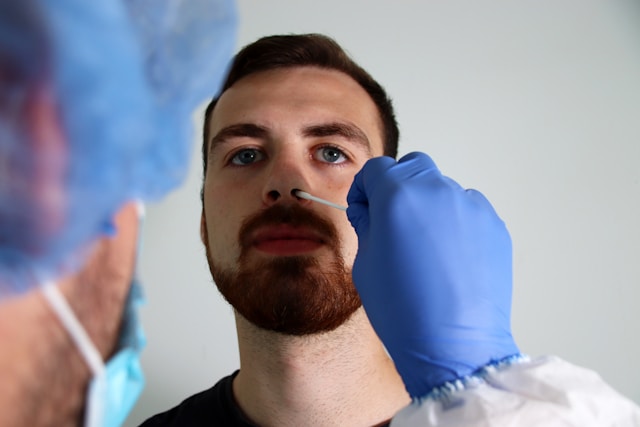
Photo by Maskmedicare Shop on Unsplash