

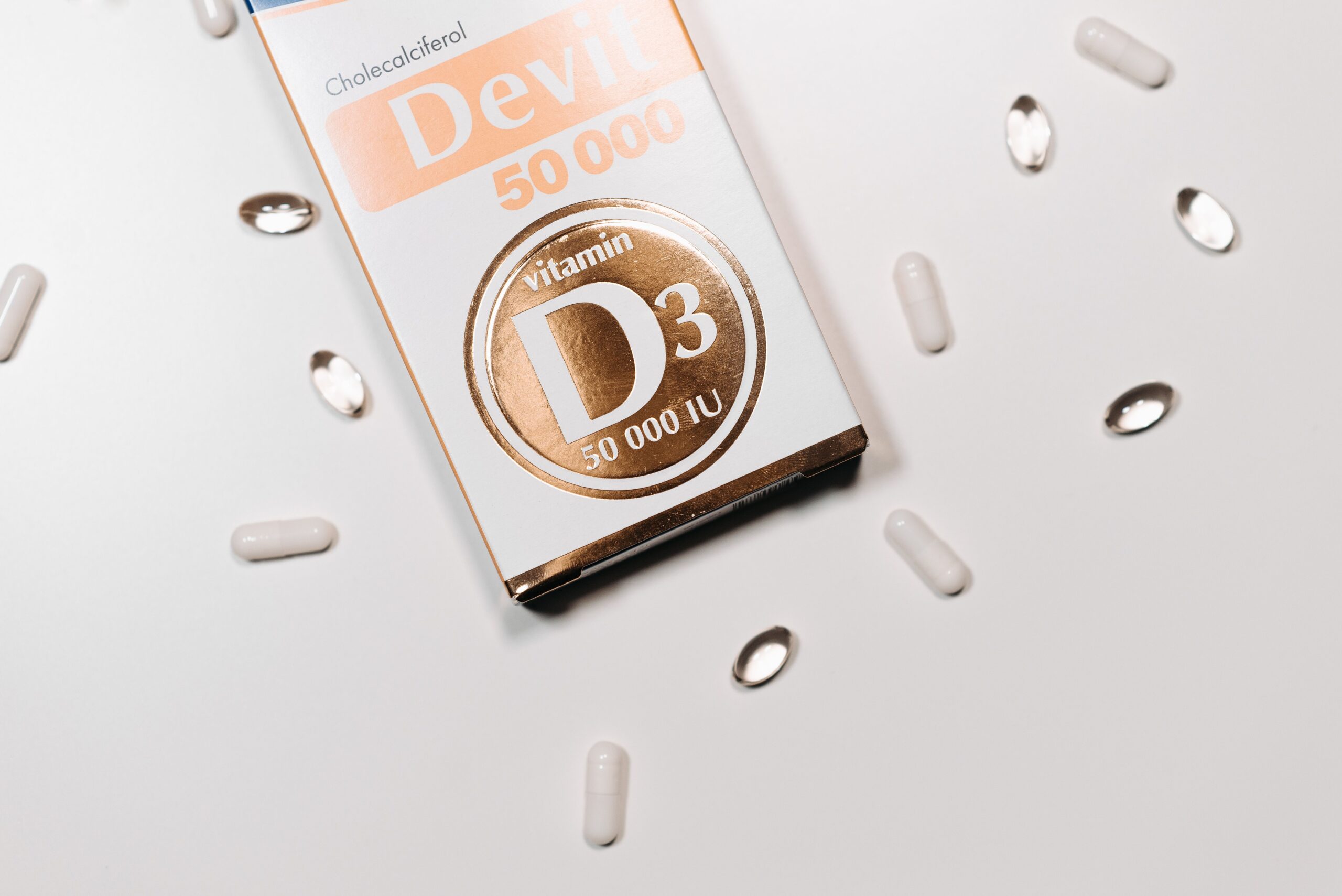
Aging happens in countless tiny steps.
Cells divide. Tissues repair themselves. Inflammation comes and goes. DNA faces years of everyday wear and tear. Deep inside our cells, another process is happening quietly: structures called telomeres gradually become shorter.
Now, researchers have found an intriguing connection between vitamin D and this process.
In a 2025 analysis from the large VITAL randomized clinical trial, researchers reported that adults taking 2,000 IU of vitamin D3 daily experienced less shortening of their leukocyte telomeres over four years than those taking a placebo. The difference was modest—about 140 base pairs of reduced telomere loss—but statistically significant.
That does not mean vitamin D makes a person biologically three years younger.
It does, however, raise an interesting question: could an ordinary nutrient help protect cells from one aspect of biological aging?
The Tiny Structures at the Ends of DNA
Telomeres sit at the ends of chromosomes and help protect genetic material during cell division.
A useful way to picture them is as protective caps. Each time certain cells divide, their telomeres can become shorter. When telomeres become critically short, cells can enter a state called senescence, in which they stop dividing normally.
Telomere length is therefore one biological marker scientists study when investigating aging.
But it is only one piece of a much larger puzzle.
A person’s health and aging are influenced by genetics, physical activity, nutrition, sleep, environmental exposures, chronic diseases and many other factors. A longer telomere does not automatically mean a person will live longer or avoid age-related illness.
That distinction is important when interpreting the latest vitamin D findings.
What Did the New Study Actually Find?
The research came from the VITAL trial, a large randomized, double-blind, placebo-controlled study involving more than 25,000 U.S. adults.
For the telomere analysis, researchers examined 1,031 participants with measurements taken at baseline and during follow-up. Participants assigned to vitamin D3 received 2,000 IU per day.
After four years, the vitamin D group showed less telomere shortening than the placebo group.
The researchers estimated that vitamin D supplementation reduced telomere attrition by approximately 140 base pairs over the study period.
That sounds impressive when translated into the language of “cellular aging,” but it needs context.
The study measured telomere changes in white blood cells. It did not prove that vitamin D slows the entire aging process, prevents all age-related diseases, or extends lifespan.
It is evidence of a biological effect—not proof of an anti-aging treatment.
Why Might Vitamin D Matter?
Vitamin D is best known for its role in calcium absorption and bone health, but it also participates in immune and cellular processes.
Researchers have proposed several possible explanations for its relationship with telomere biology, including effects on inflammation and cellular stress.
Chronic inflammation is associated with several processes involved in aging and disease. Vitamin D also interacts with immune signaling, which makes it biologically plausible that vitamin D status could influence pathways connected with cellular aging.
But scientists are still working out exactly how these relationships operate.
A correlation between vitamin D and cellular health should not automatically be interpreted as proof that taking extra vitamin D will prevent aging-related disease.
The Big Anti-Aging Claim Needs a Reality Check
This is where headlines can easily get ahead of the science.
You may see claims suggesting that vitamin D can “turn back the biological clock” or make cells several years younger.
That is not what the research demonstrates.
The study found a measurable difference in telomere shortening. It did not show that participants became younger, lived longer, or reversed existing age-related damage.
Telomeres are also only one marker of biological aging.
Your cardiovascular system, muscles, brain, immune system and metabolism all change with age, and these processes cannot be reduced to one measurement.
So the more accurate takeaway is much less dramatic—but still interesting:
Vitamin D may influence one biological pathway associated with cellular aging.
That is a research finding worth following.
Should Everyone Take 2,000 IU?
Not necessarily.
The 2,000 IU dose used in the VITAL study should not automatically become a universal recommendation.
Vitamin D needs vary according to age, diet, health conditions, medications and other factors. The National Institutes of Health notes that vitamin D is important for bone health and calcium metabolism, while excessive supplementation can cause toxicity.
For adults, the established tolerable upper intake level is 4,000 IU per day from all sources unless a healthcare professional is supervising treatment. Excessive vitamin D can raise calcium levels and, in severe cases, contribute to kidney problems and other serious complications.
More is therefore not automatically better.
For teenagers and children, vitamin D requirements and upper limits are different, so adults should not simply apply adult supplement doses to younger people.
The Bigger Picture of Healthy Aging
Perhaps the most useful lesson from this research is that healthy aging is unlikely to depend on a single nutrient.
Vitamin D is important, particularly when someone has inadequate intake or deficiency. But it works within a much larger picture of health.
Regular physical activity supports cardiovascular and muscular health. A balanced diet supplies essential nutrients. Adequate sleep supports numerous biological processes. Avoiding tobacco and limiting harmful environmental exposures also matter.
Those habits may not sound as exciting as an “anti-aging vitamin,” but they have something a miracle supplement does not: a much broader evidence base for supporting overall health.
A Promising Clue, Not a Fountain of Youth
The latest research gives scientists another reason to investigate the relationship between vitamin D and cellular aging.
The finding that vitamin D3 supplementation was associated with less telomere shortening over four years is intriguing, particularly because it came from a randomized clinical trial.
But the discovery should be viewed as one piece of a much larger scientific puzzle.
Vitamin D cannot stop the clock.
It cannot erase wrinkles, reverse someone’s chronological age or guarantee a longer life.
What it may do is help support normal biological processes—and researchers are still learning exactly how much that matters for long-term health.
For now, the most honest conclusion is also the most interesting: one of the body’s simplest nutrients may have a role in protecting cellular health as we age, but science has not yet turned vitamin D into an anti-aging pill.
The clock is still ticking.
Scientists are simply getting better at understanding what happens inside the cells as it does.
Photo by Pavel Danilyuk: https://www.pexels.com/photo/pills-and-vitamin-capsules-beside-white-labeled-box-5998514/