

If you spend hours sitting at a desk, studying, driving, or relaxing on the couch, you may know the feeling: you stand up and your lower back feels stiff, your hips feel tight, and your body takes a few moments to “wake up.”
It is an increasingly common problem in modern life. Many people spend much of their day sitting, often with little movement between long periods of work or screen time.
So could one simple movement help?
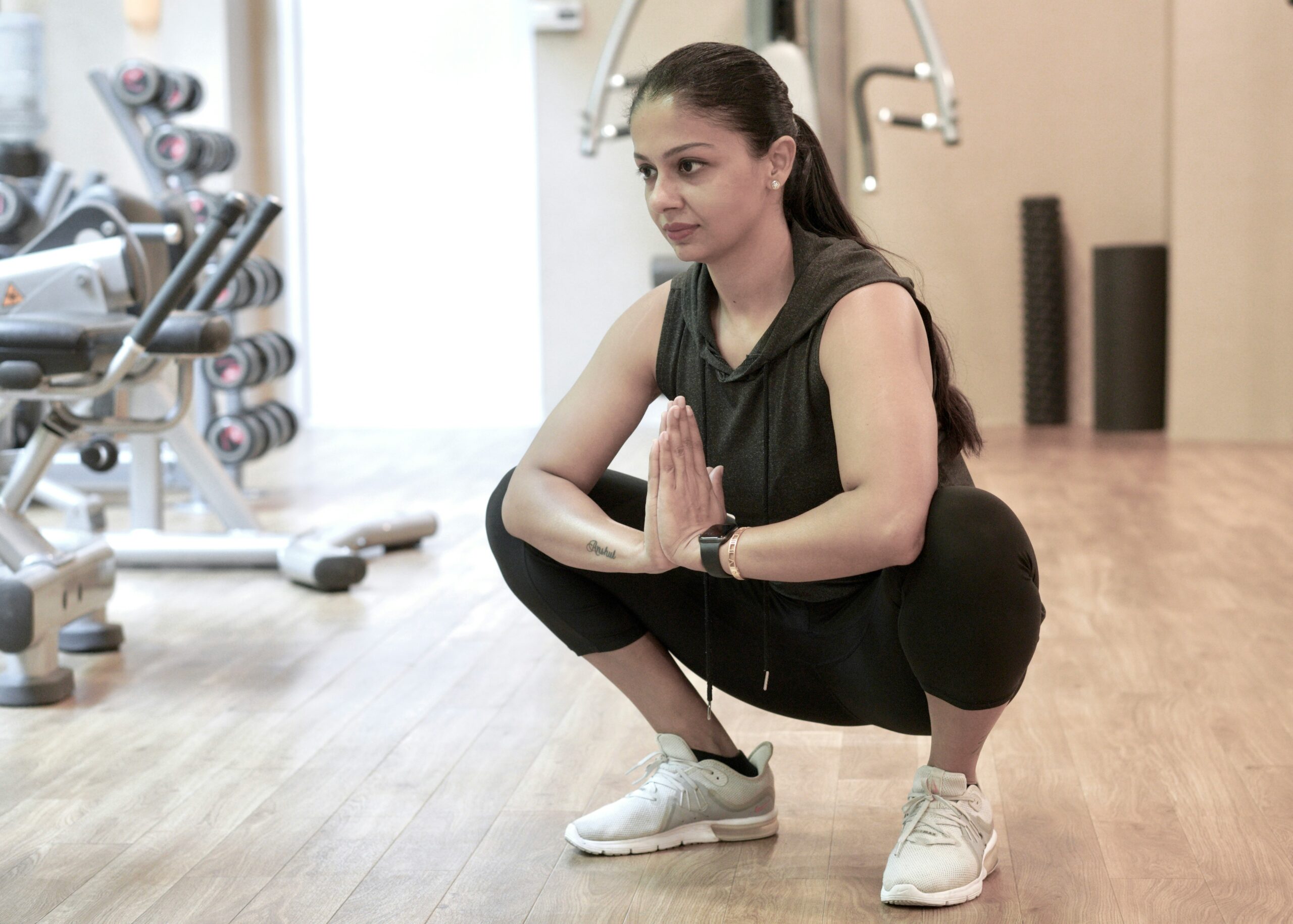
The deep squat has attracted attention from physiotherapists, mobility specialists, and fitness professionals because it takes the hips, knees and ankles through a much greater range of motion than ordinary chair sitting. Some people find that spending a short period in a comfortable squat helps them feel less stiff.
But there is an important distinction: a deep squat is a mobility exercise, not a guaranteed treatment for chronic lower-back pain.
Why Sitting Can Leave You Feeling Stiff
Sitting itself is not necessarily harmful. The bigger issue is often staying in the same position for too long.
When you remain seated for extended periods, your hips and knees stay bent while your lower body remains relatively inactive. Your muscles and joints are simply not moving through their normal range.
Over time, this can contribute to feelings of stiffness and discomfort, particularly when combined with low levels of physical activity.
Your lower back also has to work as part of a larger movement system. The hips, pelvis, abdominal muscles and legs all contribute to how your spine moves and bears loads.
That is why improving movement throughout the lower body can sometimes make everyday activities feel easier.
What Makes the Deep Squat Different?
A deep squat requires substantial bending at the hips and knees, along with ankle flexibility. Unlike sitting in a chair, your body has to actively control the position.
For some people, this provides a useful opportunity to move joints and muscles that may spend much of the day in relatively limited positions.
A comfortable squat may also encourage movement around the ankles, hips and pelvis while requiring the trunk to remain stable.
However, everyone’s anatomy and mobility are different. Some people naturally squat deeply and comfortably, while others may struggle to keep their heels down or maintain balance.
That does not mean anything is necessarily “wrong” with their body.
Can It Actually Relieve Back Pain?
This is where the popular claims need some caution.
There is no strong evidence that holding a deep squat for exactly 60 seconds can permanently eliminate lower-back pain or “decompress” spinal discs in a way that treats an underlying condition.
Back pain has many possible causes, including muscle strain, changes in the joints or discs, injuries, nerve irritation, and other medical conditions. In many cases, the exact cause is not immediately obvious.
Movement can nevertheless play an important role in managing many forms of nonspecific back pain.
For some people, gentle mobility exercises can reduce stiffness and make everyday movement more comfortable. Regular physical activity is also generally considered an important part of maintaining musculoskeletal health.
The goal should therefore be simple: move more, move comfortably, and avoid treating one exercise as a miracle cure.
How to Try a Deep Squat Safely
If you want to experiment with the movement, start with comfort rather than depth.
Stand with your feet approximately shoulder-width apart, or slightly wider if that feels more natural. Allow your toes to turn outward slightly.
Slowly bend your knees and hips and lower yourself only as far as you can comfortably control.
Keep your heels supported if possible. If they naturally lift from the floor, place a stable support underneath them or hold onto something sturdy for balance.
You do not need to force yourself into the deepest possible position.
Once you reach a comfortable depth, breathe normally and remain there briefly. If it feels good, you can gradually increase the amount of time over several sessions.
There is no special benefit to pushing through pain simply to reach a deeper squat.
What If You Cannot Get Low?
That is completely fine.
Mobility varies considerably between individuals, and factors such as ankle flexibility, hip structure, previous injuries, strength and experience can affect how comfortably someone squats.
Try a supported version instead.
Hold a sturdy surface while lowering yourself, or use a chair behind you as a reference point. You can also practice partial squats rather than immediately attempting a full-depth position.
The aim is to build comfortable movement—not to win a flexibility contest.
The Bigger Problem May Be Sitting All Day
If lower-back stiffness is bothering you, focusing exclusively on one minute of exercise may miss the bigger picture.
Instead, consider how often you move throughout the day.
Stand up periodically.
Walk for a few minutes.
Change positions while working.
Take the stairs when practical.
Stretch gently if it feels comfortable.
Add activities you actually enjoy, whether that means walking, cycling, swimming, recreational sports, or strength training.
These small changes can be easier to maintain than trying to compensate for an entire day of inactivity with one intense exercise.
When Back Pain Needs Medical Attention
Not every episode of back pain should be treated as ordinary stiffness.
Seek medical advice if pain is severe, persistent, repeatedly returning, or interfering significantly with normal activities.
Urgent medical assessment is particularly important when back pain occurs with symptoms such as significant weakness, numbness, loss of bladder or bowel control, fever, or following a serious injury.
People recovering from surgery or significant injuries should also ask their healthcare professional which exercises are appropriate before beginning new mobility routines.
A One-Minute Habit, Not a Miracle
The deep squat is an old and remarkably simple human movement. For people who can perform it comfortably, a short daily practice may be a useful way to introduce more hip, knee and ankle movement into a sedentary routine.
But the bigger lesson is not the number 60.
It is the reminder to stop treating the human body like a machine designed to sit in one position all day.
If a minute of comfortable squatting encourages you to move, stretch, walk and change positions more often, that can be a worthwhile habit.
Your lower back does not necessarily need a miracle exercise.
It may simply need a little more movement, a little more variety, and a routine you can realistically maintain.
Photo by Aparna Johri on Unsplash