

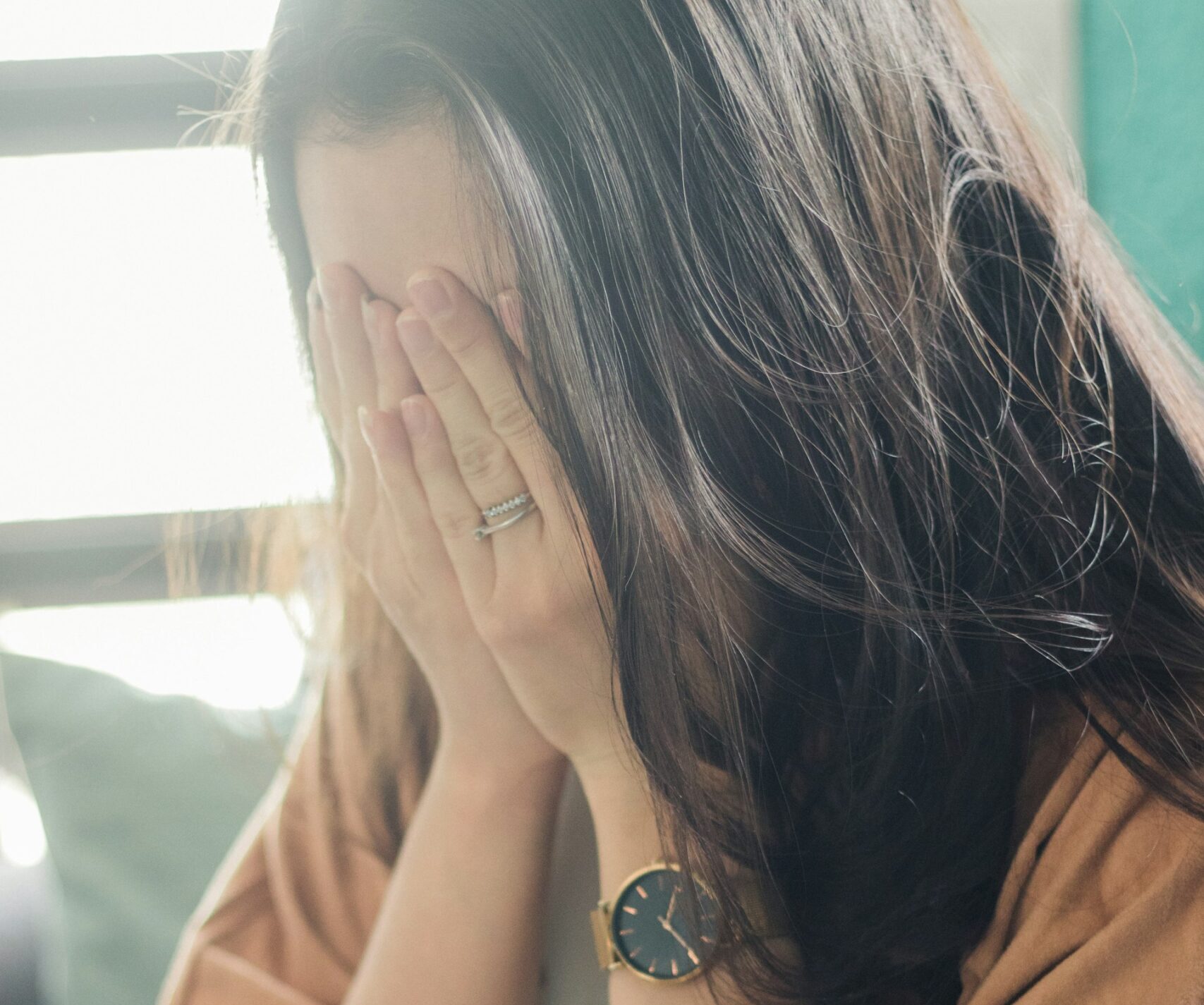
In 2022, 32% of American adults said they felt more anxious than the year before. In 2023, that number climbed to 37%. In 2024, it hit 43%.
Let that trend sink in for a moment. Not a spike, not a reaction to a single event — a consistent, year-over-year escalation in how anxious Americans feel, measured across three consecutive years by the American Psychiatric Association’s annual anxiety poll.
And it’s not just a feeling. An estimated 42.5 million US adults are currently living with a diagnosable anxiety disorder — making anxiety the most common mental health condition in the country, more prevalent than depression, more prevalent than any other psychiatric diagnosis. The CDC’s most recent 2024 data shows that 1 in 5 US adults has been told by a doctor they have some form of anxiety disorder. One in 8 report regularly experiencing feelings of worry, nervousness, and anxiety severe enough to affect daily functioning.
This is not a country of people who need to relax. This is a country in the grip of a physiological crisis — one that is being systematically undertreated, misunderstood, and increasingly normalized as simply “how modern life feels.”
It shouldn’t feel this way. And for most people, it doesn’t have to.
What Anxiety Actually Is — And What It Isn’t
Before anything else, let’s be clear about what we’re talking about. Anxiety is not the same as stress.
Stress is a response to something external and identifiable — a deadline, a difficult conversation, a health scare. It typically resolves when the stressor resolves. Anxiety is different. It’s a persistent state of apprehension and physiological arousal that doesn’t always have a clear trigger, doesn’t resolve when circumstances change, and often exists independently of what’s actually happening in someone’s life.
At the biological level, anxiety involves the dysregulation of the body’s threat-detection system — primarily the amygdala, a small almond-shaped structure deep in the brain that processes fear and danger signals. In people with anxiety disorders, the amygdala fires more readily, more intensely, and in response to stimuli that wouldn’t trigger the same response in someone without anxiety. The result is a nervous system that is chronically running threat-response protocols that weren’t designed for continuous activation.
The physiological consequences of this are real and measurable: elevated cortisol, suppressed immune function, disrupted sleep architecture, increased cardiovascular strain, gut microbiome disruption, and altered prefrontal cortex activity — the part of the brain responsible for rational thought, judgment, and emotional regulation. Chronic anxiety isn’t just uncomfortable. It physically changes the brain and body over time.
The most common forms of anxiety disorder in the US include generalized anxiety disorder (GAD), social anxiety disorder, panic disorder, and specific phobias. GAD alone affects approximately 6.8 million American adults — and fewer than half receive treatment.
What’s Driving the Escalation
The rising trend isn’t random. Several intersecting forces are pushing American anxiety levels in one direction consistently.
Economic and financial stress sits at the top of the list. A 2025 survey of 2,000 Americans found that 70% are currently experiencing significant financial anxiety — stress around costs, housing, healthcare, and long-term financial security. The APA’s 2025 Stress in America report found that 76% of adults identified the future of the nation as a significant source of stress, a figure that has held steady since just before the 2024 election — meaning political and societal uncertainty has become a persistent background noise in the American emotional landscape.
Social media and digital overconsumption is increasingly implicated in anxiety escalation, particularly among younger Americans. The APA’s 2025 report found that 65% of adults aged 18 to 34 reported stress related to artificial intelligence alone — up from 52% just a year prior. Constant information exposure, social comparison, doomscrolling, and the dopamine disruption caused by algorithmic content feeds all activate the same stress-response circuitry that anxiety operates through. Adults aged 18 to 29 report the highest prevalence of anxiety and depression symptoms of any age group in CDC data.
Post-pandemic residue continues to shape the mental health landscape more than most people acknowledge. The pandemic didn’t just cause acute stress — it restructured social behavior, eroded community connection, disrupted sleep and routine, increased isolation, and in many cases created ongoing health anxieties that didn’t resolve when restrictions lifted. The APA’s 2025 Stress report was subtitled “A Crisis of Connection” for this reason — loneliness and social disconnection emerged as one of the dominant drivers of escalating anxiety and stress across demographic groups.
Rising healthcare costs create a specific anxiety loop that is uniquely American: people are anxious about their health, but anxious about the cost of addressing it, which prevents them from getting help, which worsens the anxiety. One-third of Americans in the 2025 survey identified healthcare affordability as a direct source of mental health deterioration.
The Groups Hit Hardest
Anxiety affects everyone, but the distribution is far from even.
Young adults aged 18 to 29 carry the heaviest burden by CDC measures — this is the generation that grew up with smartphones, came of age during the pandemic, and entered adulthood into an economy defined by housing unaffordability, student debt, and career instability. Their anxiety prevalence is consistently the highest of any adult age group.
Women experience anxiety disorders at roughly twice the rate of men across all age categories. This gender disparity is partially hormonal — estrogen and progesterone fluctuations during menstrual cycles, pregnancy, and menopause all interact with the HPA axis and amygdala reactivity. It’s also partially societal — women carry disproportionate caregiving burdens, experience more trauma exposure of certain types, and face specific socioeconomic stressors that men do not.
LGBTQ+ Americans face a dramatically elevated burden. The 2023 National Survey on the Mental Health of LGBTQ Youth found that 67% of LGBTQ+ young people reported anxiety symptoms — more than double the prevalence in the general population. The 2024 data shows this figure has held at 66%. This isn’t a mental health anomaly. It’s a direct reflection of the minority stress model: chronic exposure to prejudice, discrimination, family rejection, and identity-based threat activates the same neural anxiety pathways that other stressors do — continuously.
Adults in rural areas experience higher rates of anxiety and depression than urban adults, according to CDC data from 2019 to 2022, combined with significantly reduced access to mental health services. The combination of geographic isolation, limited provider availability, and cultural stigma creates an especially challenging environment for rural Americans seeking help.
What Actually Works — The Evidence-Based Approach
Here’s where the conversation gets useful. Anxiety is highly treatable. The gap between having anxiety and getting effective help is not a scientific gap — it’s an access, awareness, and stigma gap. Here’s what the evidence actually supports.
Cognitive Behavioral Therapy (CBT) is the gold standard psychological treatment for anxiety disorders, with decades of randomized controlled trial evidence behind it. CBT works by helping people identify and restructure the cognitive patterns — the thought loops — that sustain anxiety responses even when no real threat exists. It teaches practical skills for managing physiological arousal, avoiding the behavioral avoidance patterns that reinforce anxiety over time, and building tolerance for uncertainty. Multiple meta-analyses have found CBT to be as effective as medication for mild to moderate anxiety, with lower relapse rates when treatment ends. It doesn’t require years of therapy — structured CBT protocols for anxiety typically run 8 to 16 sessions.
Exercise is not a soft lifestyle suggestion. It is a clinically documented anxiety intervention. Aerobic exercise reduces amygdala reactivity, increases BDNF (brain-derived neurotrophic factor) which supports neuroplasticity, lowers baseline cortisol levels, and increases GABA — the brain’s primary inhibitory neurotransmitter that counteracts the excitatory signals underlying anxiety. A 2024 meta-analysis found that regular moderate aerobic exercise reduced anxiety symptoms comparably to pharmacological treatment in people with mild to moderate anxiety disorders. The recommended minimum is 150 minutes of moderate aerobic activity per week — approximately 30 minutes, five days a week.
Sleep restoration is not optional for anxiety recovery. The relationship between sleep and anxiety is bidirectional and vicious: anxiety disrupts sleep, and sleep deprivation worsens anxiety. Specifically, the prefrontal cortex — which regulates emotional responses and keeps the amygdala in check — is among the first brain regions to lose function under sleep deprivation. Without adequate prefrontal regulation, the amygdala becomes hyperresponsive. Research has shown that going from 5 hours to 8 hours of sleep reduces anxiety reactivity by up to 30%. Treating insomnia is not separate from treating anxiety — it’s foundational to it.
Breathwork and nervous system regulation are among the most accessible and fastest-acting anxiety interventions available without a prescription. Slow, controlled breathing — specifically extending the exhale longer than the inhale — directly activates the parasympathetic nervous system, counteracting the sympathetic arousal of anxiety. The physiological sigh (two quick nasal inhales followed by a long, slow exhale) has been studied by Stanford’s neuroscience lab and found to produce the fastest reduction in physiological anxiety markers of any real-time breathing technique. Diaphragmatic breathing practiced for 5 minutes produces measurable cortisol reduction. These are not placebo effects — they’re direct physiological interventions.
Medication, when appropriate, works. SSRIs and SNRIs are first-line pharmacological treatments for most anxiety disorders, with consistent efficacy demonstrated across clinical trials. Buspirone is an effective non-addictive option for GAD. Benzodiazepines provide rapid relief but carry dependence risk and are generally recommended for short-term use only. The decision to use medication is individual and should be made with a psychiatrist or physician who can weigh the specific anxiety disorder type, severity, history, and other health factors. Medication and therapy together typically produce better outcomes than either alone.
Dietary and gut-based interventions represent an emerging but increasingly compelling area. The gut-brain axis — the bidirectional communication system between the gut microbiome and the central nervous system — is now understood to play a meaningful role in anxiety regulation. Gut bacteria influence serotonin production (approximately 90% of the body’s serotonin is produced in the gut), GABA signaling, and inflammatory cytokine levels that directly affect brain chemistry. A diet high in fermented foods, fiber-rich vegetables, and omega-3 fatty acids supports microbiome diversity in ways that research increasingly links to reduced anxiety symptoms. Ultra-processed food and high-sugar diets, conversely, create patterns of microbial dysbiosis associated with elevated anxiety and depression markers.
What Doesn’t Work — Honestly
This deserves to be said plainly, because the wellness industry has built a profitable business around anxiety that frequently substitutes comfort for effectiveness.
Crystal healing, detox teas, and most “adaptogen blends” marketed for anxiety have no meaningful clinical evidence behind them. Alcohol reduces acute anxiety through GABA modulation — but it is also a depressant that worsens baseline anxiety over time, disrupts sleep architecture, and creates dependence. The “glass of wine to unwind” is a short-term loan against tomorrow’s anxiety balance. Cannabis reduces acute anxiety in many users but increases baseline anxiety and panic risk with regular use, particularly in younger users and those genetically predisposed to anxiety disorders.
Avoidance — the most natural and immediate response to anxiety — is also the single behavior most likely to maintain and worsen it over time. Every time an anxiety sufferer avoids a feared situation, the brain records the avoidance as confirmation that the threat was real and dangerous. Gradual, supported exposure to anxiety triggers is the behavioral mechanism through which anxiety disorders are most durably resolved.
The Access Gap Nobody Talks About Loudly Enough
Of the estimated 42.5 million Americans with anxiety disorders, only about half receive any treatment. Of the 61.5 million Americans with any mental health condition in 2024 per SAMHSA data, 29.5 million received no treatment at all.
This is not primarily because people don’t want help. The barriers are structural: shortage of mental health providers (the US has approximately 30 mental health providers per 100,000 people, with severe rural deficits), insurance coverage gaps, high out-of-pocket costs, waitlists of weeks to months for psychiatry and therapy appointments, and persistent cultural stigma in communities where seeking mental health help is still viewed as weakness.
Telehealth has meaningfully expanded access — particularly for CBT, which translates well to video formats. Apps like Woebot and platforms like BetterHelp and Talkspace have their limitations but represent real access expansion for people who otherwise couldn’t reach care. The National Alliance on Mental Illness (NAMI) helpline (1-800-950-NAMI) and the 988 Suicide and Crisis Lifeline (which also handles anxiety and mental health crises, not just suicidality) are free, immediate resources available to anyone.
The Bottom Line
Anxiety in America is not a personal failure. It’s a public health crisis with documented, measurable, year-over-year escalation — driven by economic pressure, social disruption, digital overconsumption, and a healthcare system that has never adequately resourced mental health at the level the burden demands.
It is also, for most people, genuinely treatable. Not manageable-while-suffering. Actually treated, with meaningful reduction in symptoms and restoration of quality of life.
CBT works. Exercise works. Sleep works. Breathing techniques work. And for those who need it, medication works. The biggest obstacle between 42.5 million anxious Americans and relief isn’t scientific — it’s the gap between knowing help exists and actually accessing it.
If you’ve been living with anxiety that you’ve written off as just how life feels — it’s worth questioning that assumption. This doesn’t have to be your baseline.
Sources: American Psychiatric Association — Anxiety and Depression Poll 2024, APA Stress in America 2025 Report, CDC Mental Health Data 2024, SAMHSA National Survey on Drug Use and Health 2024, NAMI Mental Health by the Numbers 2025, Innerwell Mental Health Statistics 2026, Los Angeles Outpatient Center — Anxiety Statistics 2025, Frontiers in Psychiatry — Rising Burden of Anxiety Disorders in Adolescents and Young Adults (2024), ScienceDirect — Exercise and Gut Microbiota in Depression and Anxiety (January 2025).
This article is for informational purposes only and does not constitute medical advice or treatment. If you are experiencing anxiety that affects your daily life, please consult a licensed mental health professional. If you are in crisis, call or text 988 (Suicide and Crisis Lifeline) or call NAMI at 1-800-950-6264.
💬 READER’S CORNER
Has anxiety changed how you live — and what has actually helped you? Share your experience in the comments. Real stories from real people matter more here than you know.