

Here’s a number that should get your attention: according to the CDC, approximately 37 million American adults are currently living with chronic kidney disease. That’s roughly 1 in 7 adults in this country — and an estimated 9 out of 10 of them have no idea.
That’s not a typo. Nine out of ten people with chronic kidney disease (CKD) are undiagnosed.
The reason is both simple and unsettling: your kidneys don’t hurt when they’re damaged. Unlike a pulled muscle or a headache, declining kidney function produces no pain signal. The kidneys are extraordinary compensators — they can lose more than half their filtering capacity before most people notice anything wrong at all. By the time symptoms are obvious, significant and often irreversible damage has already occurred.
The CDC estimates that 1 in 3 American adults — roughly 86 million people — are at risk for CKD based on the current prevalence of diabetes, hypertension, and obesity in the US population. The number of Americans reaching end-stage kidney disease, requiring dialysis or transplant, increased by more than 40% between 2000 and 2019. As of late 2024, over 90,000 Americans were on the kidney transplant waiting list. Only about 1 in 4 would receive one.
This is a public health crisis hiding in plain sight. And the way to stay out of those statistics is to know what early kidney stress actually looks like — because your body does send signals. Most people just don’t know what they’re looking for.
What Your Kidneys Actually Do (And Why It Matters)
Before the warning signs, a quick picture of what’s at stake.
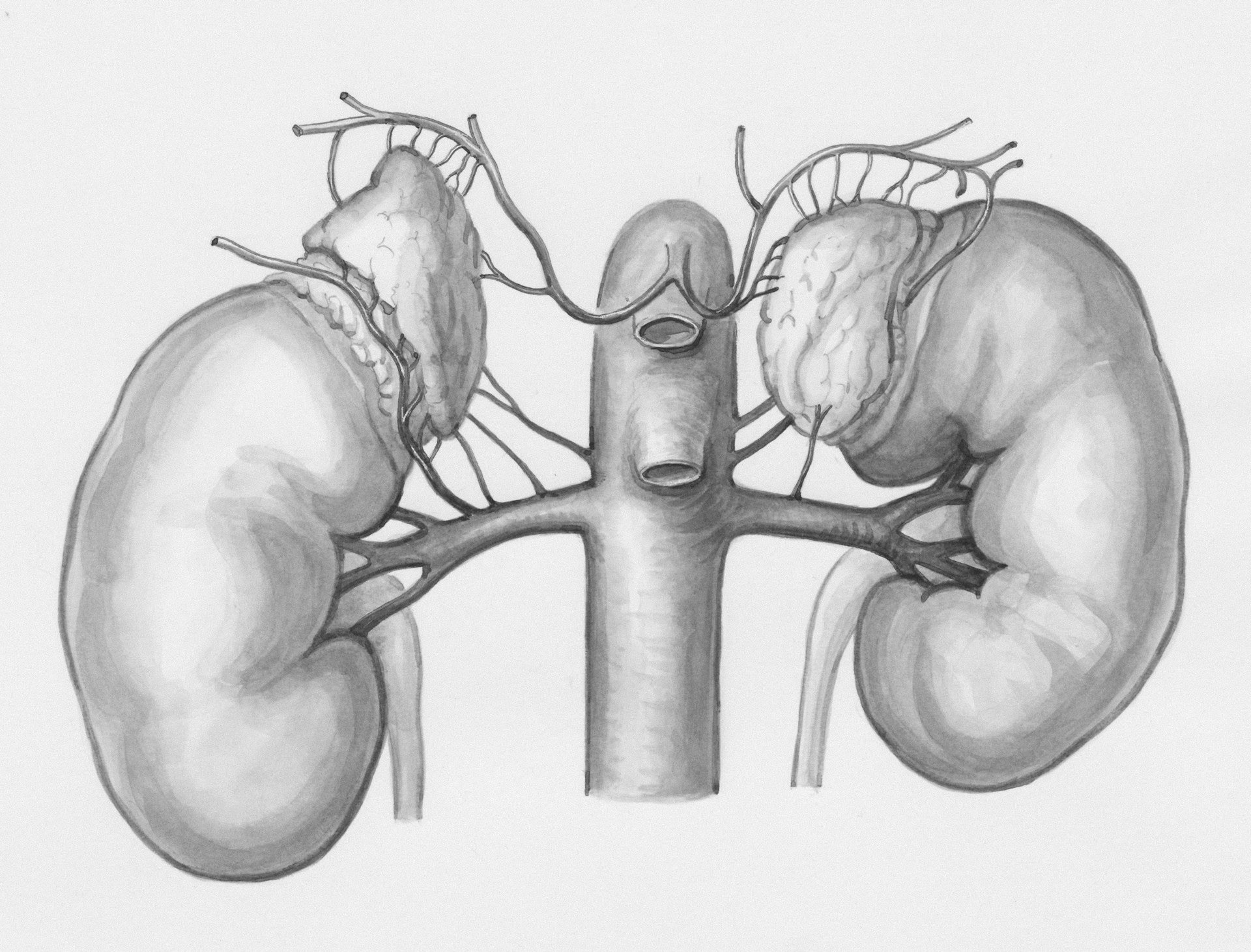
Your kidneys — two fist-sized, bean-shaped organs sitting just below your ribcage on either side of your spine — filter all of your blood approximately every 30 minutes. Every single day, they process around 200 quarts of blood, removing waste products, toxins, and excess fluid and sending them out of the body through urine. They regulate blood pressure through the renin-angiotensin system. They produce erythropoietin (EPO), the hormone that tells your bone marrow to make red blood cells. They activate vitamin D. They balance electrolytes — sodium, potassium, calcium, phosphorus — with extraordinary precision.
When kidney function declines, all of those systems start to falter simultaneously. Waste builds up in the blood. Fluid accumulates in tissues. Blood pressure becomes harder to control. Red blood cell production drops. Vitamin D can no longer be activated. Electrolyte imbalances begin cascading into muscle, bone, and cardiovascular problems.
That’s the chain reaction a missed early warning sign can set in motion. Here’s what to actually watch for.
📺 Watch: The 7 Warning Signs Explained
Dr. Eric Berg DC — Published November 25, 2021
The 7 Warning Signs Your Kidneys Are Under Stress
1. Swelling in Your Legs, Feet, Ankles — or Under Your Eyes
Edema — fluid accumulation in body tissues — is one of the most visible and clinically significant early signs of kidney dysfunction. When the kidneys lose their ability to efficiently remove excess sodium and fluid from the body, that fluid accumulates in the tissues, most commonly in the lower extremities.
Swelling that develops gradually in the feet, ankles, or lower legs — particularly swelling that gets worse as the day progresses or after long periods of standing — is worth taking seriously. Puffiness that appears under the eyes in the morning, before you’ve had time to be on your feet, is another specific signal: the National Kidney Foundation notes this periorbital puffiness occurs when the kidneys are losing significant amounts of protein into the urine rather than retaining it in the body.
Not all swelling is kidney-related — heart disease, liver disease, venous insufficiency, and medication side effects can also cause edema. But new, unexplained swelling that doesn’t resolve with elevation and rest, especially combined with any other symptom on this list, warrants a kidney function test.
2. Foamy or Bubbly Urine
Your urine should be pale yellow to clear, and while a single layer of large bubbles that quickly dissipate is normal, persistent foam that takes multiple flushes to clear is not.
That foam is protein. Specifically, it’s albumin — the same protein found in egg whites, which is why the foam often looks exactly like scrambled eggs in your toilet bowl. Healthy kidneys retain albumin and other proteins in the bloodstream; damaged kidneys allow it to leak through the filtration barrier into urine. This is called proteinuria, and it’s one of the earliest detectable markers of kidney damage.
The 2024 KDIGO (Kidney Disease Improving Global Outcomes) guidelines recommend testing for proteinuria using a urine albumin-to-creatinine ratio (uACR) alongside an eGFR blood test for the most complete picture of kidney health. Neither test alone catches all cases.
Proteinuria often precedes any other symptom by years. If your urine regularly looks foamy — not occasionally, but consistently — that’s a specific signal worth acting on, not explaining away.
3. Persistent Fatigue and Weakness
Unexplained, persistent tiredness that doesn’t resolve with rest is a classic but frequently missed sign of kidney dysfunction — and the mechanism is direct.
The kidneys produce erythropoietin (EPO), a hormone that signals the bone marrow to produce red blood cells. When kidney function declines, EPO production falls, red blood cell counts drop, and the result is anemia — a reduced ability of the blood to carry oxygen to tissues. The fatigue of kidney-related anemia feels different from normal tiredness: it’s heavy, persistent, and doesn’t respond to sleep the way tiredness from exertion does. Concentration becomes difficult. Tasks that used to feel manageable feel effortful.
Simultaneously, waste products that healthy kidneys would filter out begin accumulating in the bloodstream. This uremic buildup adds another layer of systemic fatigue, mental fog, and weakness. The combination of anemia and uremia is what gives advanced kidney disease its characteristic exhausted, clouded presentation — but the early stages of both can begin quietly, long before they become dramatic.
4. High Blood Pressure That’s Difficult to Control
The relationship between the kidneys and blood pressure is a two-way street — and one of the most important connections in the entire cardiovascular-renal system.
The kidneys regulate blood pressure through the renin-angiotensin-aldosterone system (RAAS), which controls how much sodium and fluid the body retains. When kidney function declines, this regulation becomes impaired, and blood pressure rises. Conversely, chronically elevated blood pressure is itself one of the two leading causes of kidney damage in the United States, behind only diabetes.
This bidirectional relationship creates a dangerous cycle: high blood pressure damages the kidneys, damaged kidneys lose their ability to regulate blood pressure, which drives blood pressure even higher. For many patients, blood pressure that becomes suddenly harder to control — that requires higher doses or additional medications to manage — is the first clinical clue that kidney function is declining, even before significant symptoms appear.
The American Kidney Fund lists high blood pressure as one of the most common signs of kidney damage specifically because this cycle often begins long before a diagnosis is made. If you have hypertension and haven’t had your kidney function checked recently, it’s worth asking your doctor for an eGFR and uACR test.
5. Metallic Taste in Your Mouth or Ammonia-Like Breath
This one is easy to miss because it seems so disconnected from kidneys — but it’s a direct physiological consequence of what happens when filtration fails.
When the kidneys can no longer adequately remove waste from the bloodstream, urea — a nitrogen-containing waste product from protein metabolism — begins to accumulate. At elevated levels, the body begins excreting urea through the breath, where it breaks down into ammonia. This produces a characteristic ammonia or urine-like smell on the breath that patients and their close contacts often notice before any other symptom.
The metallic taste develops through a similar mechanism: accumulated waste products in the bloodstream alter taste perception, and urea in saliva changes the chemical environment of the mouth. Food often begins tasting different — bitter, metallic, or simply wrong — and appetite may decrease as a result. This symptom, called uremia-related dysgeusia, typically indicates more advanced functional decline than the earlier signs on this list, but it can appear subtly long before reaching crisis-level.
6. Itchy Skin That Won’t Respond to Moisturizer
Persistent, generalized itching — medically called pruritus — is a symptom that most people attribute to dry skin, allergies, or a dermatological condition. In the context of kidney disease, it has an entirely different origin.
When kidney function declines, phosphorus — a mineral normally filtered and excreted by the kidneys — begins to accumulate in the bloodstream. Elevated phosphorus levels trigger the release of parathyroid hormone and disrupt calcium-phosphorus balance, which can cause mineral deposits in the skin and activate itch receptors. The itch of kidney-related pruritus tends to be widespread, bilateral, and deeply unsatisfying — applying moisturizer helps temporarily but never resolves it because the cause isn’t in the skin at all.
Not every case of itching signals kidney disease — far from it. But itching that is chronic, generalized, appears without a rash, and occurs alongside any other symptom on this list deserves investigation rather than another tube of cortisone cream.
7. Reduced or Absent Vitamin D Activation
This is the most clinically underappreciated sign on the list — partly because it requires a blood test to detect, and partly because it’s rarely connected to kidneys in public health conversations.
The kidneys are responsible for the final activation step of vitamin D in the body. Dietary vitamin D and the vitamin D produced by sunlight exposure are biologically inactive until the kidneys convert them into the active hormone form (calcitriol). When kidney function declines, this activation process is impaired — and the result is functional vitamin D deficiency even in people who are eating vitamin D-rich foods or taking supplements.
Low vitamin D affects bone density, immune function, mood regulation, cardiovascular health, and metabolic function. Many Americans are already marginally vitamin D deficient due to indoor lifestyles and limited sun exposure. Kidney-related vitamin D impairment compounds an already widespread problem and can begin well before kidney disease is diagnosed. Persistently low vitamin D levels that don’t respond normally to supplementation can be an early clue that kidney activation capacity is declining.
The Primary Causes of Kidney Damage in the US
Understanding the warning signs is only useful if you also understand what’s driving the damage. In the United States, the two dominant causes are well-established and deeply intertwined with the broader chronic disease landscape.
Diabetes is the leading cause of chronic kidney disease in America, accounting for approximately 38% of new end-stage kidney disease cases annually. Chronically elevated blood sugar damages the small blood vessels in the kidneys’ filtration units — the glomeruli — over time. This damage is insidious: it builds over years or decades, often without symptoms, until a significant portion of filtration capacity is gone. Diabetic kidney disease is the primary reason why people with diabetes require regular kidney function monitoring regardless of how well their glucose is controlled.
High blood pressure is the second leading cause, responsible for approximately 26% of new end-stage cases. The sustained pressure of uncontrolled hypertension physically damages glomerular architecture over time — scarring and narrowing the tiny vessels that do the filtering work. The dual role of hypertension as both a cause and a consequence of kidney damage makes it the most dangerous feedback loop in renal medicine.
Polycystic kidney disease (PKD) is the most common inherited kidney disorder in the US, affecting approximately 600,000 Americans. PKD causes fluid-filled cysts to gradually replace healthy kidney tissue, leading to progressive functional decline. It’s genetic and not lifestyle-preventable, but it is manageable — particularly when diagnosed early before cyst burden becomes severe.
Glomerulonephritis — inflammation of the kidney’s filtering units — can be caused by autoimmune conditions like lupus and IgA nephropathy, infections, or certain medications. It’s less common than diabetes and hypertension as a primary cause but accounts for a meaningful portion of younger-onset kidney disease cases.
What Protects Your Kidneys — The Evidence-Based List
Here’s where Dr. Berg’s video provides genuinely useful guidance, and where the mainstream nephrology literature agrees.
Hydration matters — but measure it. The kidneys need adequate fluid to do their filtering work. Chronic mild dehydration concentrates urine, increases crystallization risk, and stresses the filtration system over time. For most adults, approximately 2 to 2.5 liters of water daily — roughly eight to ten glasses — is appropriate, though individual needs vary with body size, activity level, and climate. Urine color remains the most accessible check: pale yellow is the target.
Leafy greens and vegetables are genuinely protective. Asparagus, celery, and kale have documented diuretic properties and provide antioxidant compounds that reduce oxidative stress on kidney tissue. Cruciferous vegetables support kidney detoxification pathways. The DASH diet — Dietary Approaches to Stop Hypertension — which emphasizes vegetables, fruits, whole grains, and lean protein while limiting sodium — has strong evidence behind it for both blood pressure control and kidney protection.
Fish and lean protein over processed and red meat. High-quality protein from fish, seafood, and poultry produces a lower uremic waste burden than red or processed meat, and omega-3 fatty acids in fatty fish have anti-inflammatory effects that may reduce kidney scarring progression. For people without existing significant kidney damage, adequate protein is important; for those with advanced CKD, a nephrologist should guide protein intake specifically, as the calculus shifts.
Sodium reduction is non-negotiable. Excess sodium elevates blood pressure and forces the kidneys to work harder to maintain fluid balance. The American Heart Association recommends no more than 2,300 mg of sodium daily for most adults — significantly less than the average American currently consumes.
SGLT2 inhibitors and GLP-1 agonists — know about these. In 2025, the FDA approved several medications in these drug classes specifically for kidney protection in people with CKD and diabetes or cardiovascular disease. If you have diabetes, hypertension, or established CKD, ask your nephrologist or primary care physician about these newer agents — they represent a genuine shift in what’s medically possible for slowing CKD progression.
Foods to Be Cautious With If You Have Known Kidney Damage
This section applies specifically to people who already have diagnosed kidney disease — particularly those in stages 3 through 5. For healthy individuals, these foods are generally safe and often nutritious.
For those with impaired kidney function, high-oxalate foods — spinach, beets, certain beans, almonds, and kiwi — can contribute to kidney stone formation and accelerate certain types of kidney damage. High-potassium foods become a concern in advanced CKD when the kidneys can no longer excrete excess potassium, creating cardiac risk. High-phosphorus foods including dairy, nuts, seeds, and cola beverages warrant monitoring when phosphorus accumulation becomes a documented problem.
These restrictions are highly individual and stage-dependent. They should be guided by a registered dietitian with nephrology expertise and your actual lab values — not a general article, a YouTube video, or a supplement brand’s website.
When to Get Tested — Right Now
Two tests together give a complete picture of kidney health, and neither requires anything more than a blood draw and a urine sample at your next routine physical:
eGFR (estimated glomerular filtration rate) — a blood test measuring creatinine levels that estimates how efficiently your kidneys are filtering. A healthy eGFR is 90 or above; below 60 for three months or more typically indicates CKD.
uACR (urine albumin-to-creatinine ratio) — a urine test that detects protein leakage, the earliest measurable marker of kidney filter damage. Normal is below 30 mg/g; above that threshold warrants monitoring or investigation.
The 2024 KDIGO guidelines recommend running both together because each catches cases the other can miss. Cystatin C testing is increasingly recommended for more accurate eGFR estimation in certain populations, particularly older adults and those with unusual muscle mass.
If you have diabetes, hypertension, a family history of kidney disease, are over 60, or are Black, Hispanic, or Native American — all populations with disproportionately higher CKD rates — current guidelines recommend annual kidney function screening. Don’t wait for symptoms. By definition, early kidney disease doesn’t produce them.
The Bottom Line
Your kidneys are doing one of the most essential jobs in your body, every minute of every day, with no input or awareness required from you. That’s their strength — and, when something goes wrong, their liability.
Thirty-seven million Americans have chronic kidney disease. Nine out of ten don’t know it. The damage accumulates quietly, over years, through signals most people mistake for stress, aging, or unrelated problems — swelling they explain away, foam in the toilet they don’t mention to their doctor, fatigue they chalk up to work, blood pressure numbers they haven’t checked recently.
The window to intervene meaningfully is widest early. Stages 1 through 3 of CKD can often be slowed or stabilized with medication and lifestyle changes — but that requires knowing there’s a problem to address. Once the disease reaches stages 4 and 5, the options narrow significantly and the conversations become much harder.
Know the seven signs. Get the two tests. Have the conversation with your doctor before the situation requires it rather than after.
Your kidneys have been quietly working for you your entire life. The least you can do is pay attention.
Sources: CDC Chronic Kidney Disease in the United States 2023, National Institute of Diabetes and Digestive and Kidney Diseases (NIDDK), American Kidney Fund, National Kidney Foundation, UPMC HealthBeat, Nephrology Associates of Northern Illinois and Indiana, Dialyze Direct (Dr. Allen Kaufman MD — 40+ years nephrology), KDIGO 2024 Clinical Guidelines, National Kidney Partners, Modern Urology, United States Renal Data System 2023 Annual Data Report, CDC MMWR Kidney Disease QuickStats, NIH/NCBI — Reported Cases of End-Stage Kidney Disease 2000–2019.
This article is for informational purposes only and does not constitute medical advice, diagnosis, or treatment. If you are experiencing any of the symptoms described, please consult a licensed physician or nephrologist. Do not adjust your diet or medications based on this article without professional medical guidance.
💬 READER’S CORNER
Have you ever had your kidney function checked — or noticed any of these signs without knowing what they were? Share your story in the comments. You might help someone reading this recognize something they’ve been missing.