

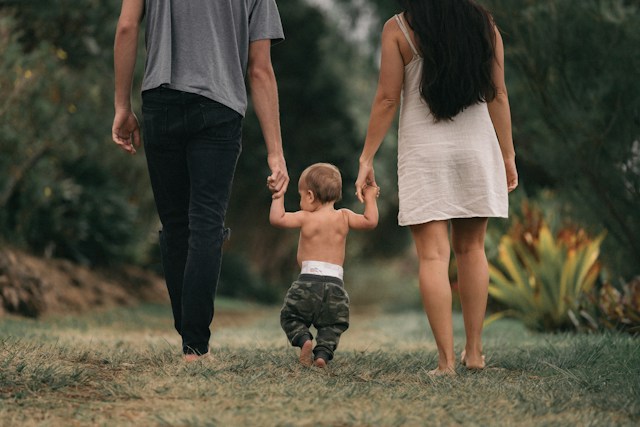
The Joy of First Steps
Few moments in early childhood rival the excitement of watching a baby take their first independent steps. Walking, however, is not a sudden achievement—it’s the result of months of gradual physical development, balance practice, and muscle strengthening. Each stage builds upon the last, creating a natural progression toward mobility
The Pre‑Walking Developmental Sequence
Before a baby can walk independently, they must develop core stability, leg strength, and coordination. These foundational skills emerge through a series of milestones:
| Milestone | Typical Age Range | Primary Skills Developed |
|---|---|---|
| Sitting Upright | 6+ months | Core strength, trunk control, bilateral body engagement |
| Crawling | 6–10 months | Cross‑body coordination, spatial awareness, shoulder stability |
| Pull‑to‑Stand | 9–12 months | Lower body strength, weight‑bearing leg stability |
| Cruising | 9–12 months | Lateral movement, single‑leg balance, weight shifting |
| Supported Walking | 10–14 months | Dynamic balance, forward momentum control |
| Independent Steps | 12–15 months | Full balance control, unassisted upright posture |
1. Sitting Upright
Around six months, babies begin sitting without support. This milestone develops trunk control and core strength. Reaching for toys while sitting enhances balance and hand‑eye coordination, laying the groundwork for mobility.
2. Crawling
Between 6 and 10 months, crawling introduces cross‑body coordination—using opposite arms and legs together. Whether belly‑crawling or on hands and knees, this stage strengthens the back, hips, and shoulders while teaching spatial awareness.
3. Pull‑to‑Stand
By 9 to 12 months, babies start pulling themselves up using furniture or caregivers. Their legs are often wide apart for stability, and early attempts may end in sudden drops back to sitting. This phase builds leg strength and confidence in upright posture.
4. Cruising
Cruising involves sideways steps while holding onto furniture. It teaches weight shifting and single‑leg balance. Over time, babies learn to bridge gaps between furniture, practicing lateral movement that prepares them for forward walking.
5. Supported Walking
At 10 to 14 months, babies begin walking forward with support—holding an adult’s hands or pushing a weighted push walker. Push walkers encourage independent balance practice, while hand‑holding often compensates for balance shifts.
6. Independent Walking
Most babies take their first steps between 12 and 15 months. Early walking is marked by a “high guard” posture—arms raised for balance—and a wide stance. Frequent falls are normal as they refine coordination and balance.
Supporting Safe Physical Development
Parents play a crucial role in creating safe environments that encourage natural progression:
- Barefoot Practice: Walking barefoot indoors strengthens foot muscles and improves sensory feedback.
- Encouraging Floor Time: Daily floor play helps babies transition naturally between sitting, crawling, and standing.
- Push Walkers vs. Seated Walkers: Pediatric experts recommend push walkers over seated mobile walkers, as they promote active balance and weight‑bearing.
When to Seek Guidance
Every child develops at their own pace, and variations are normal. However, if a baby shows no interest in weight‑bearing or mobility by 15 to 18 months, consulting a pediatrician or pediatric physical therapist can provide reassurance and tailored support.
Conclusion
Walking is more than a milestone—it’s a journey of strength, coordination, and confidence. By understanding each stage and supporting safe exploration, parents can celebrate every small achievement along the path to those unforgettable first steps.
Photo by Jakob Owens on Unsplash