

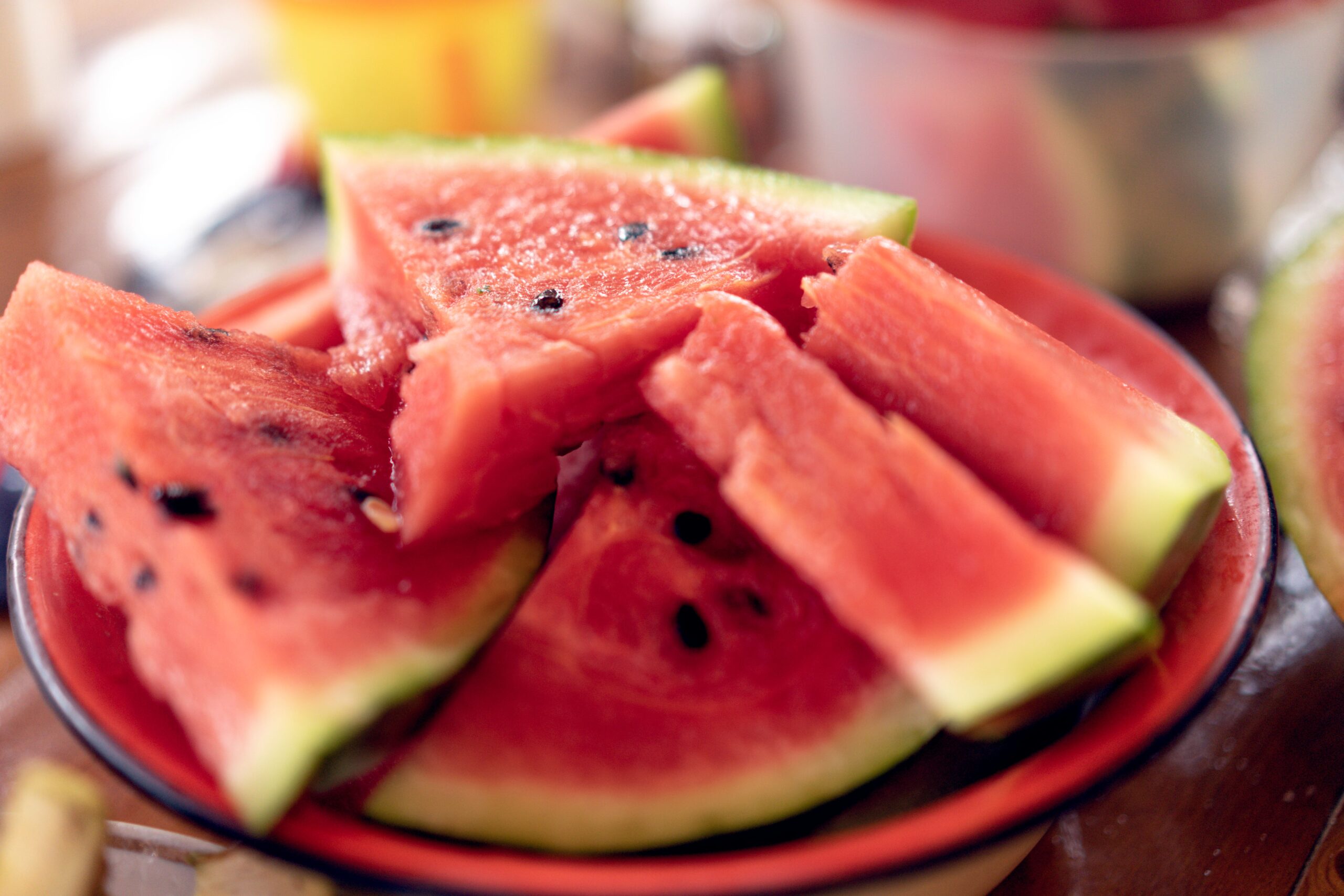
There is something wonderfully familiar about cutting open a watermelon on a hot day. The red flesh is juicy, sweet and refreshing, while the thick white-and-green layer underneath usually has one destination: the compost bin or trash.
But before throwing it away, there is a good reason to pause.
That pale portion of the watermelon is edible, and it contains L-citrulline, an amino acid that has attracted scientific interest because of its role in the body’s production of L-arginine and nitric oxide. Nitric oxide helps blood vessels relax, making citrulline particularly interesting to researchers studying circulation, blood pressure and physical performance.
That does not mean eating watermelon rind will treat high blood pressure or heart disease. For older adults taking medication for these conditions, prescribed treatment should never be replaced with a food experiment.
Still, the humble rind raises an interesting question: could something we routinely throw away have a useful place on the dinner table?
Why Watermelon Rind Deserves a Second Look
Watermelon is best known for its high water content, natural sweetness and lycopene-rich red flesh. But the fruit is not nutritionally identical from skin to center.
The pale rind contains fiber and L-citrulline, although the exact amount can vary depending on the variety, growing conditions and which part of the rind is measured.
Citrulline is especially interesting because the body can convert it into L-arginine, which is involved in producing nitric oxide.
And nitric oxide has an important job.
It helps signal the smooth muscles surrounding blood vessels to relax. This process, known as vasodilation, can influence blood flow and vascular function.
That is why researchers have investigated watermelon and citrulline in relation to cardiovascular health.
But there is an important distinction between understanding a biological pathway and proving that eating watermelon rind prevents or treats disease.
The evidence does not justify calling watermelon rind a treatment for hypertension.
For an older person managing blood pressure, the fundamentals still matter far more: regular medical checkups, prescribed medication when needed, physical activity appropriate for your health, adequate sleep and a balanced diet.
Could Citrulline Help Blood-Flow Function?
This is where the story becomes genuinely interesting.
When you consume L-citrulline, the body can use it to increase circulating L-arginine. L-arginine is a precursor for nitric oxide production.
Researchers have therefore studied citrulline supplementation and watermelon consumption to see whether they influence measures such as blood pressure, vascular function and exercise performance.
Some studies have reported potentially beneficial effects, but results are not uniform, and many studies involve concentrated extracts or supplements rather than ordinary servings of watermelon rind.
That distinction matters.
Eating the rind is not equivalent to taking a measured citrulline supplement used in a clinical study.
The amount of citrulline you consume from a particular piece of watermelon can vary considerably.
So rather than thinking of watermelon rind as a secret blood-pressure remedy, it is more sensible to view it as another edible part of a nutritious fruit that can contribute to dietary variety.
A Particularly Interesting Food for Older Adults
As we grow older, nutrition can become surprisingly complicated.
Appetite may change. Some people eat smaller meals. Others find cooking more difficult or gradually rely on convenient packaged foods.
At the same time, maintaining adequate fiber, fluids, fruits and vegetables becomes increasingly important.
Watermelon can contribute to fluid intake because it contains a large amount of water. The edible rind can also add texture and fiber when prepared appropriately.
For older adults, however, preparation matters.
A tough piece of raw rind can be difficult to chew, particularly for anyone with dental problems, dentures or swallowing difficulties.
Cooking it until tender is therefore a much better approach than simply biting into the raw peel.
Don’t Confuse the Rind With the Outer Skin
There are actually several layers to a watermelon.
The familiar red flesh sits inside. Around it is the pale white-green rind. On the outside is the tougher dark-green skin.
If you want to experiment with the edible rind, the firm white portion underneath the outer green skin is the part generally used in recipes.
Wash the watermelon thoroughly before cutting it, and use a clean knife and cutting board.
You can then trim away the hard exterior and keep the lighter-colored flesh.
Four Simple Ways to Use It
You don’t need an elaborate health recipe.
1. Cook It Like a Vegetable
Cut the rind into small pieces and add it to a stir-fry with vegetables, garlic and ginger.
Cooking softens its texture and makes its mild flavor much more appealing.
2. Add It to a Curry
Watermelon rind works surprisingly well in dishes where zucchini, squash or other mild vegetables would normally be used.
For older adults, cooking it thoroughly can make it easier to chew.
3. Make a Simple Pickle
Thinly sliced rind can be prepared as a refrigerator pickle using vinegar, water and seasonings.
If you need to limit sodium because of a medical condition, be cautious with salty pickle recipes and choose a lower-sodium preparation.
4. Blend Small Amounts Into Food
The mild flavor means finely chopped rind can be incorporated into smoothies or other recipes.
However, anyone with swallowing difficulties should follow the texture recommendations provided by their healthcare professional or speech-language pathologist.
What About Blood Pressure?
This is perhaps the most important part of the story.
High blood pressure is extremely common among older adults, and it can quietly increase the risk of stroke, heart disease and kidney problems.
That makes every food claiming to “lower blood pressure” worth examining carefully.
Watermelon and its citrulline content are scientifically interesting, but they should not be presented as a replacement for blood-pressure medication or medical care.
If your doctor has prescribed medication, continue taking it as directed.
And if you regularly measure your blood pressure at home, keep a record and discuss unusual readings with your healthcare professional rather than trying to correct them with food alone.
One More Reason Not to Waste It
There is another appealing feature to watermelon rind: food waste.
We routinely buy an entire fruit and eat only the most familiar portion.
Finding ways to use edible parts that would otherwise be discarded can make groceries go further and encourage more creative home cooking.
That does not mean every food scrap needs to be rescued. Some parts are tough, unpleasant or unsuitable for eating.
But watermelon rind is different: it is edible and has a legitimate culinary history.
The Takeaway
The next time you cut into a watermelon, don’t automatically think of the white rind as garbage.
It contains L-citrulline and fiber, can be cooked in several ways and offers an interesting opportunity to make more use of a fruit that already has a place in a healthy diet.
But keep the health claims realistic.
Watermelon rind is not a cure for high blood pressure, and it should never replace prescribed treatment. Its real appeal is simpler: it is an edible, often-overlooked part of a familiar fruit that may offer useful nutrients while helping reduce food waste.
Sometimes the most interesting discoveries in nutrition aren’t hidden in an expensive supplement bottle.
Sometimes they’re sitting right there on the cutting board—waiting for us to stop throwing them away.
Photo by Atlantic Ambience: https://www.pexels.com/photo/sliced-watermelon-in-close-up-photography-12932797/