

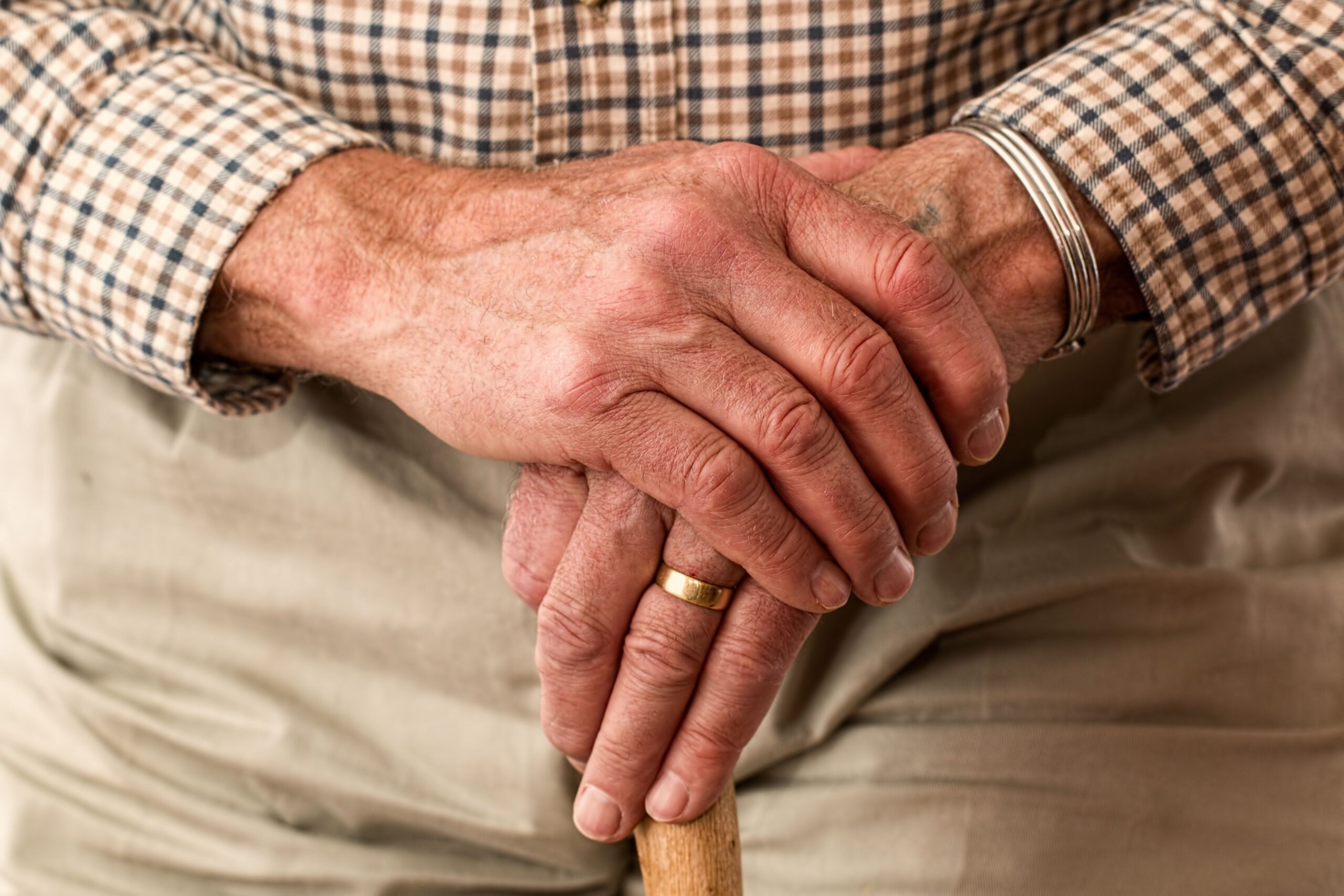
Parkinson’s disease is often pictured as a shaking hand.
But for many older adults, the story may begin much more quietly.
Perhaps one arm no longer swings naturally while walking. Maybe getting out of a chair takes a little longer than it used to. Handwriting becomes smaller. A shoulder feels unusually stiff. Family members may notice that your face seems less expressive or that your steps have become shorter.
None of these signs automatically means Parkinson’s disease. They can have many causes, especially as we age.
But when several changes appear together—particularly on one side of the body—they deserve attention.
Parkinson’s is a progressive neurological disorder affecting movement, but it can also influence sleep, mood, digestion, thinking and other aspects of daily life. Recognizing its broader picture can help people seek medical evaluation earlier and understand that Parkinson’s is far more than a tremor.
Why Does Parkinson’s Change the Way We Move?
Deep inside the brain lies a region called the substantia nigra. It contains nerve cells that produce dopamine, a chemical messenger involved in controlling smooth, coordinated movement.
In Parkinson’s disease, these dopamine-producing cells gradually become damaged.
As dopamine signaling declines, the brain has increasing difficulty regulating movement. Actions that once happened automatically can begin to feel slower or more effortful.
While this visualization concerns cell division rather than Parkinson’s specifically, the key point for understanding Parkinson’s is that the condition involves loss of specialized nerve cells, not simply a problem with the muscles themselves.
This distinction matters. A person with Parkinson’s may have perfectly healthy muscles but still struggle to initiate or coordinate movement because the brain’s movement-control circuits are no longer communicating normally.
The Tremor Is Only One Piece of the Puzzle
The classic Parkinson’s tremor usually occurs when a limb is relaxed rather than when someone is deliberately using it.
It may begin in one hand and can look like a subtle rhythmic movement of the fingers.
However, not everyone with Parkinson’s develops a prominent tremor.
Other movement changes can be equally important.
Slowness of Movement
Doctors call this bradykinesia.
Simple activities may gradually take longer. Walking can become slower, steps may become shorter and turning around may require more deliberate effort.
A person might notice difficulty getting dressed, using utensils or rising from a chair.
Muscle Stiffness
Rigidity can make the arms, legs, neck or shoulders feel unusually tight.
Some people describe an aching or uncomfortable sensation rather than obvious stiffness.
Changes in Balance
Balance problems can develop as Parkinson’s progresses.
This is particularly important for older adults because falls can lead to fractures, hospitalization and loss of independence.
Smaller Handwriting
A surprisingly useful clue is micrographia, meaning handwriting becomes smaller than it once was.
You may notice that the first few words look normal but gradually become noticeably smaller as you continue writing.
Parkinson’s Doesn’t Always Look Like the Textbook Picture
One reason Parkinson’s can be difficult to recognize is that its symptoms vary considerably.
Some people experience a pronounced tremor. Others primarily experience stiffness and slowness.
There can also be symptoms that have little to do with movement.
Sleep disturbances, constipation, reduced sense of smell, depression, anxiety and changes in blood pressure can occur in Parkinson’s and related neurological conditions.
These symptoms are not proof of Parkinson’s on their own. But when they accompany progressive movement changes, they become more meaningful to a doctor evaluating the bigger picture.
What Happens After a Parkinson’s Diagnosis?
There is currently no simple blood test that confirms Parkinson’s disease.
Diagnosis is generally based on a person’s medical history, symptoms and neurological examination. Doctors may sometimes use imaging or other tests to investigate alternative explanations.
The good news is that treatment has come a long way.
Levodopa Remains an Important Treatment
Levodopa is converted into dopamine inside the brain and remains one of the most effective medicines for improving Parkinson’s movement symptoms.
It is commonly combined with carbidopa, which helps more levodopa reach the brain.
Treatment is individualized. The right medication and dose depend on symptoms, age, other medical conditions and how the person responds.
Physical Therapy Can Be More Important Than Many People Realize
Movement should not automatically be avoided because Parkinson’s makes movement difficult.
Appropriately designed physical activity can help maintain strength, mobility, balance and independence.
A physical therapist familiar with Parkinson’s can work on walking, turning, balance, posture and larger movements.
Activities such as walking, cycling, dancing and strength exercises may also form part of a personalized exercise program, depending on someone’s abilities and medical situation.
Why Falls Deserve Special Attention in Older Adults
For an older person living with Parkinson’s, preventing falls can be just as important as controlling tremor.
A home that once felt completely safe may contain new hazards.
Loose rugs, poor lighting, cluttered walkways and difficult-to-reach objects can become problems when balance or movement changes.
Simple modifications can make a meaningful difference.
Good lighting, secure handrails, appropriate footwear and clear walking paths can help reduce unnecessary risks.
A clinician or occupational therapist can provide individualized advice when balance becomes an issue.
When Should You Talk to a Doctor?
A single shaky hand after too much caffeine is usually not a reason to assume Parkinson’s.
But persistent or progressive changes deserve evaluation.
Consider speaking with a healthcare professional if you notice:
- A recurring tremor while a hand or limb is resting
- Increasing stiffness without an obvious explanation
- Movement becoming noticeably slower
- Smaller or increasingly cramped handwriting
- Shorter, shuffling steps
- Reduced arm movement on one side
- Increasing difficulty turning or getting out of a chair
- New or worsening balance problems
Early evaluation doesn’t necessarily mean you will receive a Parkinson’s diagnosis.
It simply gives your doctor an opportunity to determine what is actually happening.
Looking Beyond the Tremor
Parkinson’s can sound frightening because it is a progressive neurological condition.
But a diagnosis does not erase a person’s independence, personality or future.
Modern Parkinson’s care can involve neurologists, physical therapists, occupational therapists, speech-language specialists and other professionals working together.
Medication can improve movement. Exercise can support mobility and physical function. Rehabilitation can help people adapt to changing abilities.
For some people with significant medication-related fluctuations or movement symptoms that remain difficult to control, advanced treatments such as deep brain stimulation may also be considered.
The goal isn’t simply to make someone stop shaking.
It is to help them keep doing the things that make life feel like their own.
A Small Change Can Be Worth Investigating
Perhaps the most important lesson is this: Parkinson’s doesn’t always announce itself dramatically.
Sometimes it begins with something almost forgettable—a hand that behaves differently, a slower walk, a stiff shoulder or handwriting that seems strangely smaller.
Those changes can have many explanations.
But if they persist or gradually worsen, don’t simply write them off as “getting older.”
A conversation with a healthcare professional can provide clarity, whether the eventual explanation is Parkinson’s or something entirely different.
The earlier a change is understood, the sooner the right support can begin.
Photo by Pixabay: https://www.pexels.com/photo/person-holding-rod-33786/