

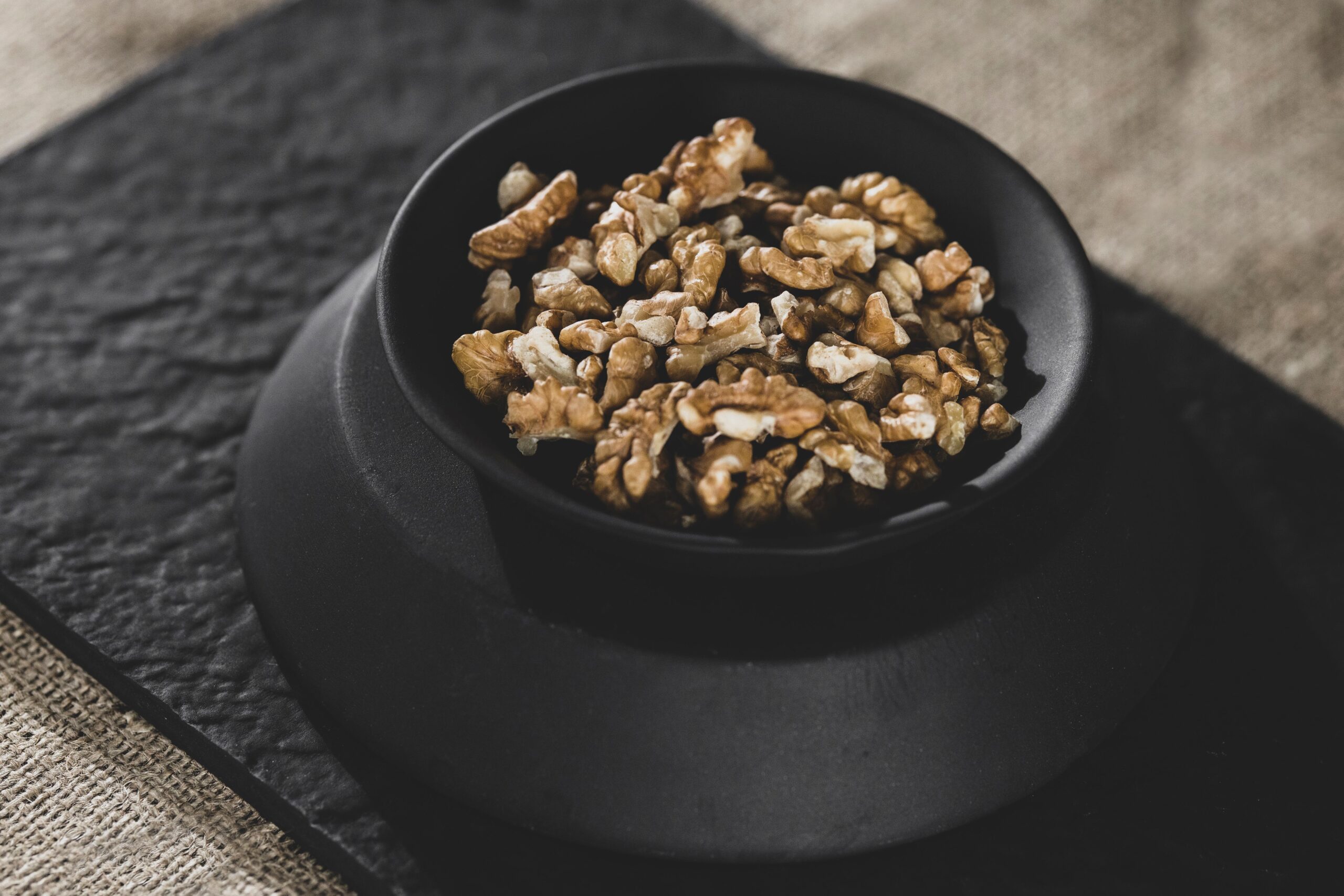
For years, walnuts have earned their reputation as a heart-friendly food because they provide unsaturated fats, plant omega-3 fatty acid (ALA), fiber and a range of plant compounds.
That remains the strongest reason to include them in a balanced diet.
But researchers are now interested in another possibility: what happens after walnut compounds reach the gut?
Some polyphenols found in foods can be transformed by intestinal bacteria into substances called urolithins. One of them, urolithin A, has attracted considerable scientific attention because laboratory and early human studies suggest that it may influence mitochondrial quality control.
That sounds impressive—but there is an important distinction.
Eating walnuts does not mean you automatically receive a dose of urolithin A.
Your gut microbes have to transform certain dietary compounds first, and people differ considerably in how efficiently that happens.
Your gut bacteria are part of the story
Walnuts contain ellagitannins and related polyphenols. These compounds are not simply absorbed intact and carried directly to your muscles.
Instead, some reach the large intestine, where gut microorganisms can break them down into smaller metabolites.
Among these metabolites are urolithins.
Researchers have identified substantial differences between individuals in the types and amounts of urolithins they produce. This variation is one reason scientists are cautious about promising that a particular food will produce identical effects in everyone.
So two people can eat similar diets and end up with different metabolic responses.
That is not necessarily a sign that one person’s gut is “better.”
It is simply another example of how personal biology influences nutrition.
What exactly is mitophagy?
The word sounds complicated, but the basic idea is surprisingly simple.
Mitophagy is the cell’s quality-control process for damaged or unwanted mitochondria.
Mitochondria are often described as the cell’s powerhouses because they help produce ATP, the energy currency used by cells.
Like any biological machinery, mitochondria can become damaged.
Cells therefore need ways to identify malfunctioning mitochondria, break them down and recycle their components.
Mitophagy is part of that housekeeping system.
Urolithin A has become interesting because laboratory research suggests it can stimulate pathways involved in mitochondrial quality control. Human studies have also found changes in mitochondrial-related biomarkers after urolithin A supplementation.
But this is where the distinction between promising biology and proven health outcomes becomes important.
What have human studies actually shown?
Early human research is encouraging, particularly in relation to muscle health.
A first-in-human trial in healthy older adults found that urolithin A was well tolerated over four weeks and produced changes in molecular markers associated with mitochondrial and cellular health.
A later systematic review of five human studies involving 250 healthy participants found evidence of some improvements in muscle strength and endurance, along with changes in inflammatory and mitochondrial-related markers.
However, the review also found important limitations.
Urolithin A did not consistently improve measures such as body composition, cardiovascular outcomes or overall physical function, and researchers emphasized the need for larger and longer studies.
That means it is premature to describe urolithin A as an anti-aging treatment or claim that it can extend human lifespan.
The science is interesting.
It is simply not finished.
So should older adults eat walnuts?
For a completely different reason, walnuts can already fit very comfortably into a heart-conscious eating pattern.
A large two-year study involving healthy adults aged 63 to 79 found that adding walnuts to the diet modestly lowered LDL cholesterol and reduced the number of LDL particles.
And current American Heart Association dietary guidance continues to emphasize nuts, seeds, vegetables, fruits, whole grains and other minimally processed foods as components of a heart-healthy eating pattern.
So you do not need to eat walnuts because you are trying to “activate mitophagy.”
There is already a much simpler reason.
They are a nutrient-dense whole food that can replace less nutritious snack choices.
The bigger lesson may be your whole diet
One of the most interesting aspects of the urolithin story is that it moves nutrition away from the idea of a single “superfood.”
Your digestive system is an ecosystem.
The foods you eat provide nutrients and plant compounds. Your gut microorganisms transform some of those compounds. Your body then responds to the resulting metabolites.
That means the overall dietary pattern may matter more than one food.
A varied diet containing vegetables, fruits, whole grains, legumes, nuts and seeds provides many different types of fiber and plant compounds. Current cardiovascular guidance similarly emphasizes dietary variety and minimally processed foods rather than relying on one supposedly miraculous ingredient.
For older adults, this broader approach is particularly practical.
You do not need an expensive “longevity” routine to support healthy aging.
What about urolithin A supplements?
This is where consumers should be particularly careful.
Urolithin A is now being investigated as a standalone supplement, but supplementation is not equivalent to eating walnuts.
A supplement provides the compound directly, bypassing the microbial conversion step.
Human trials have found generally favorable short-term safety and some promising muscle-related findings, but researchers still describe the evidence as preliminary. Longer studies are needed to determine whether these biological changes translate into meaningful reductions in disease, disability or age-related decline.
It is therefore better to think of urolithin A as an emerging area of research, not an established anti-aging therapy.
The most useful takeaway
There is something genuinely fascinating happening between your dinner plate and your cells.
A walnut contains plant compounds.
Your gut microbes can transform some of those compounds.
One resulting metabolite, urolithin A, can influence biological pathways involved in mitochondrial quality control.
And researchers are investigating whether that process might eventually become useful for supporting healthy aging.
But we are not yet at the point where a handful of walnuts can be called a cellular rejuvenation treatment.
For now, the sensible message is much simpler: keep walnuts in perspective.
Enjoy them as part of a varied, heart-healthy diet rather than expecting them to perform a miracle inside your cells.
The most promising longevity strategy may still be the least glamorous one: nutritious food, regular physical activity, adequate sleep, social connection and appropriate medical care.
Sometimes the most exciting discoveries in medicine do not replace those basics.
They help us understand why those basics matter.
Photo by Engin Akyurt: https://www.pexels.com/photo/close-up-shot-of-walnuts-in-a-bowl-6155275/