

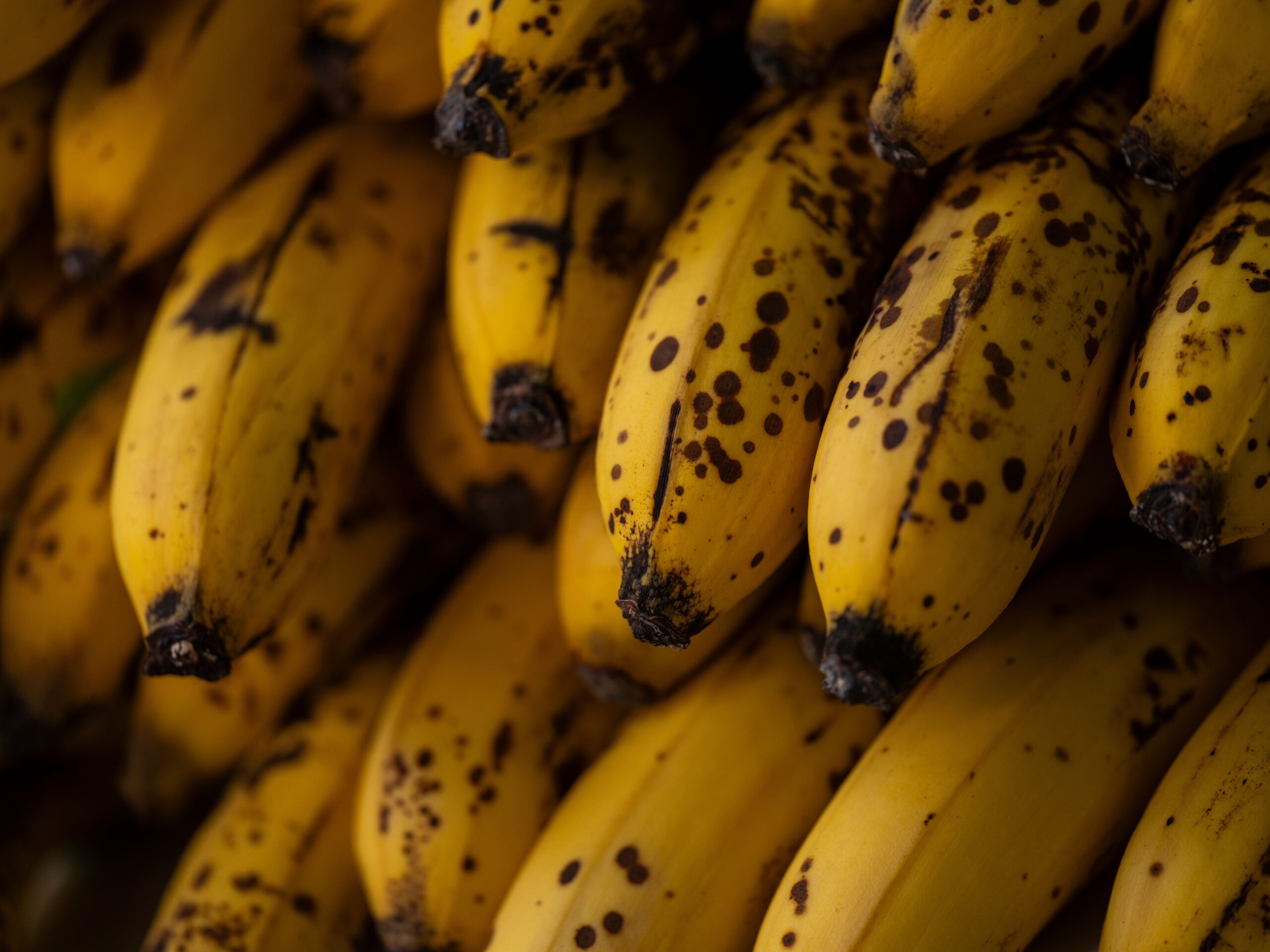
A banana with a few brown spots can look like it has reached the end of its useful life. For many people, that means one thing: time for the trash—or perhaps banana bread.
But ripening is not the same as spoiling.
As a banana changes from green to yellow and eventually develops brown spots, its chemistry changes too. Starches gradually break down into simpler sugars, the texture becomes softer, and the fruit becomes noticeably sweeter. Some antioxidant compounds also change during ripening.
That doesn’t mean an overripe banana is a nutritional “superfood.” In fact, whether a greener or riper banana is the better choice depends partly on what you’re looking for from your food.
What Actually Happens as a Banana Ripens?
A banana is a living fruit even after it has been harvested. Natural enzymes continue to alter its carbohydrates, cell walls and pigments as it matures.
One of the biggest changes involves starch.
Green bananas contain substantial amounts of resistant starch, a carbohydrate that isn’t completely digested in the small intestine. Some resistant starch reaches the colon, where gut microbes can ferment it.
As ripening progresses, enzymes break down much of this starch into smaller sugars. That’s why a ripe banana tastes sweeter and feels softer than a green one.
The result is a simple but important nutritional trade-off: a greener banana generally provides more resistant starch, while a fully ripe banana provides more readily available carbohydrate.
Neither is automatically “better.”
Green, Yellow or Spotted: Does It Matter?
The stage of ripeness can influence how your body handles the carbohydrate in the fruit.
Green bananas
Greener bananas tend to contain more resistant starch and are less sweet. Because resistant starch behaves partly like dietary fiber, green bananas may be useful as part of a diet focused on fiber and gut health.
However, some people find underripe bananas harder to digest and less pleasant to eat.
Yellow bananas
A firm yellow banana sits somewhere in the middle. It has undergone considerable starch-to-sugar conversion but still provides fiber, potassium, vitamin B6 and other nutrients.
For everyday eating, this is simply a convenient stage: naturally sweet, portable and easy to digest.
Brown-spotted bananas
As bananas become softer and sweeter, more of their starch has been converted into sugars.
That makes them particularly useful in foods where sweetness and moisture are desirable—such as oatmeal, smoothies or homemade banana bread.
But the increase in sweetness doesn’t mean that brown-spotted bananas contain dramatically more calories than green ones. The fruit is still fundamentally the same food; its carbohydrate composition has changed.
What About the Antioxidant Claims?
This is where online health claims can become exaggerated.
Research has found that antioxidant compounds in bananas change during ripening. Some studies have reported increases in antioxidant activity at particular stages of ripening.
But that does not mean that a banana covered in brown spots suddenly becomes a powerful disease-fighting food.
Antioxidant activity measured in a laboratory is not the same thing as a proven health effect in humans.
The bigger picture is much simpler: bananas are nutritious fruits, and eating them at different stages of ripeness can provide slightly different nutritional characteristics.
One Nutrient That Doesn’t Disappear: Potassium
Whether your banana is green, yellow or heavily spotted, it remains a source of potassium.
Potassium is an essential mineral involved in nerve signaling, muscle contraction and fluid balance. Adequate potassium intake is also associated with healthy blood pressure when it forms part of an overall balanced diet.
Bananas aren’t the only source. Potatoes, beans, lentils, leafy greens, yogurt and several other foods can also contribute substantial potassium.
The important point is that ripening doesn’t turn a banana from an ordinary fruit into a fundamentally different food.
Are Overripe Bananas Better for Your Gut?
This depends on what you mean by “gut health.”
Green bananas contain more resistant starch, which can reach the colon and serve as a substrate for certain gut microbes.
As the banana ripens, resistant starch decreases as more starch is converted into sugars.
So if you’re specifically interested in resistant starch, a less-ripe banana may provide more than a very ripe one.
On the other hand, ripe bananas are softer and often easier to eat and digest.
There isn’t a single ripeness stage that is universally best for everyone’s digestive system.
What About Blood Sugar?
Ripeness can matter here, too.
Because ripe bananas contain more readily available sugars and less resistant starch than green bananas, they may produce a somewhat greater blood-glucose response.
But the overall effect depends on the portion, the rest of the meal and the individual.
For people managing diabetes or another condition affecting blood glucose, it is more useful to consider the entire dietary pattern than to label bananas as “good” or “bad.”
Eating a banana alongside foods containing protein, fat or additional fiber can also change how quickly carbohydrates are absorbed.
Don’t Confuse Ripening With Spoiling
This distinction is important.
Brown spots, softness and a darker peel can simply indicate that a banana is ripe or very ripe. They don’t automatically mean the fruit is unsafe.
However, signs such as visible mold, unusual fermentation, leaking liquid or a genuinely rotten smell are different. When food shows clear signs of spoilage, it should be discarded.
A bruised or brown banana isn’t necessarily a spoiled banana.
A Better Way to Use Your Ripest Bananas
If you prefer firmer fruit but have a few bananas becoming too soft, you have plenty of options.
Blend them: Frozen ripe banana can add sweetness and creaminess to a smoothie.
Add them to oatmeal: Mashed banana can naturally sweeten breakfast without requiring large amounts of added sugar.
Bake with them: Their moisture and sweetness make ripe bananas useful in muffins, pancakes and banana bread.
Freeze them: Peel ripe bananas, slice them and freeze them for later use.
The key is not to treat an overripe banana as a miracle ingredient. It’s simply a useful food that has changed as it matured.
The Bigger Lesson About Food Waste
There is also a practical health issue hiding behind the banana debate: food waste.
Perfect-looking produce isn’t necessarily more nutritious than produce that has begun to soften. Learning how foods naturally change can help households use more of what they buy rather than throwing it away prematurely.
A green banana and a brown-spotted banana aren’t competitors. They’re different stages of the same fruit.
So the next time you see those familiar dark spots, don’t automatically reach for the trash.
The banana may not be past its prime—it may simply be ready for a different purpose.
Photo by Engin Akyurt: https://www.pexels.com/photo/close-up-of-bunch-of-ripe-spotted-bananas-33653885/