

Sneezing, itchy eyes, runny nose, and that foggy feeling — seasonal allergies can drain your energy and steal the joy from spring and summer days. Many people look for gentler options beyond daily antihistamines that sometimes bring drowsiness or other side effects. One plant compound that’s gaining attention is quercetin, a flavonoid found in everyday foods that may help calm histamine responses and support easier breathing.
Quercetin acts as a natural mast cell stabilizer. Mast cells release histamine when they encounter pollen or other allergens, triggering inflammation and classic allergy symptoms. By helping to moderate this release and reduce inflammatory signals, quercetin offers a nourishing way to support your immune system’s balance during peak allergy times.
Research, including human studies and preclinical reviews, suggests it can ease symptoms like sneezing, nasal discomfort, eye irritation, and even improve sleep quality for some people with mild to moderate allergies. It also shows antioxidant and anti-inflammatory properties that may help overall immune resilience.
Why Quercetin Fits a Nourishing Approach
Unlike quick-fix medications, quercetin works best when built up gradually through diet and consistent habits. It supports the body’s natural ability to modulate immune responses, reduce oxidative stress, and promote calmer airways — all without the common sedative effects of some conventional options.
It pairs especially well with other anti-inflammatory foods and lifestyle practices, creating a holistic foundation for feeling clearer and more energized.
Delicious Food Sources to Increase Quercetin Naturally
Boost your intake with these whole-food options (aim to include them regularly, especially in the weeks leading up to allergy season):
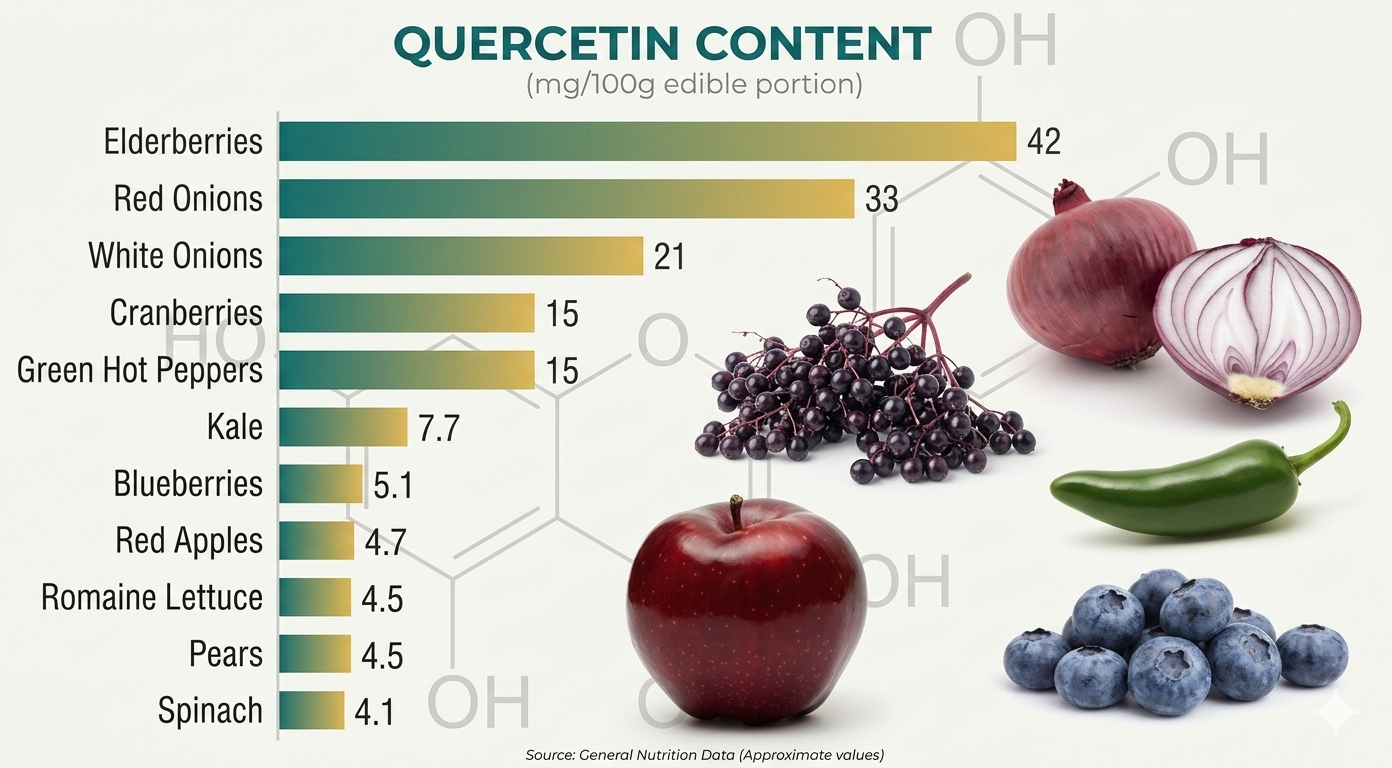
- Onions and shallots — Red or yellow varieties are particularly rich; add them raw to salads or lightly cooked in meals.
- Apples — Especially with the skin on for maximum benefit.
- Berries — Blueberries, cranberries, and elderberries offer quercetin along with extra antioxidants.
- Citrus fruits — Oranges, grapefruits, and lemons.
- Leafy greens and cruciferous vegetables — Broccoli, kale, and capers (a top source).
- Green tea and herbs — Enjoy as soothing daily teas.
Eating a colorful, plant-rich diet not only provides quercetin but also delivers fiber and other nutrients that support gut health — an important part of immune balance.
Practical Ways to Support Allergy Relief Naturally
- Build habits early: Start increasing quercetin-rich foods 4–6 weeks before your typical allergy season for better cumulative effects.
- Enhance absorption: Some people pair quercetin sources with bromelain (found in pineapple) or vitamin C-rich foods, as these may improve how the body uses it.
- Daily nourishment tips: Stay well hydrated, enjoy warm herbal teas (ginger, peppermint, or nettle), and include anti-inflammatory spices like turmeric.
- Gentle movement and rest: Short walks in nature (when pollen is lower), gentle yoga, or breathwork can help clear sinuses and reduce stress, which often worsens allergy symptoms.
- Supplement consideration: If diet alone isn’t enough, quercetin supplements (typically 500–1000 mg per day, often split into doses) are commonly used, sometimes combined with bromelain. Always choose high-quality options and discuss with your healthcare provider first, especially if you have health conditions or take medications.
Most evidence shows it’s generally well-tolerated from food sources, and supplements appear safe for short-term use in healthy adults at moderate doses.
When to Seek Additional Support
Quercetin can be a helpful part of your toolkit for mild symptoms, but it’s not a replacement for severe allergies or asthma. Consult a doctor if symptoms interfere with daily life, worsen suddenly, or include breathing difficulties. They can help rule out other issues and guide personalized testing or treatments.
Combining natural approaches with any prescribed care often gives the best results.
Embracing a Calmer Allergy Season
Allergies don’t have to overshadow your days. By nourishing your body with quercetin-rich whole foods, supporting gentle daily habits, and listening to your unique needs, you can foster greater resilience and enjoy the seasons more fully.
At HealandNourish, we believe true wellness comes from working with nature’s gifts and your body’s innate wisdom — one nourishing choice at a time.
Struggling with seasonal allergies? Try adding more onions or berries to your meals this week and share how it feels in the comments. Forward this to a friend dealing with hay fever — and subscribe for more natural ways to support immune balance and vibrant health.