

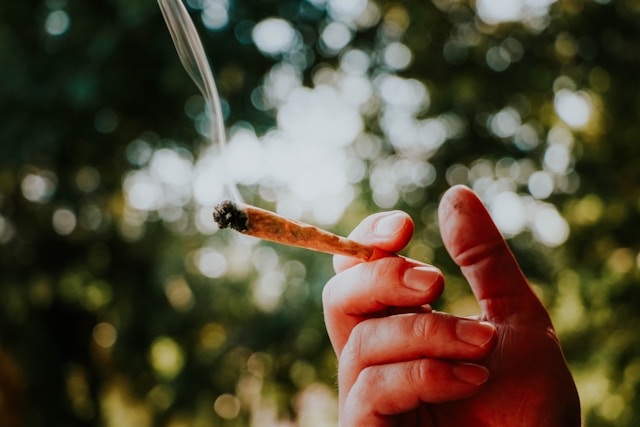
For decades, America’s public health conversations revolved around two familiar habits.
The cigarette that started the morning.
The alcoholic drink that ended the day.
Entire generations grew up believing these were the country’s defining substances. Government campaigns, warning labels, television advertisements, and school health classes all focused on reducing smoking and excessive drinking.
But a quiet transformation has taken place.
Without many people noticing, a completely different daily habit has moved to the forefront of American life.
According to the 2025 National Survey on Drug Use and Health (NSDUH), daily or near-daily cannabis use has officially surpassed both daily cigarette smoking and daily alcohol consumption in the United States—marking one of the most significant behavioral shifts in modern American public health.
The numbers reveal a reality that few predicted only a decade ago.
More than 21 million Americans now report using cannabis on at least 20 days each month, exceeding the number of daily tobacco smokers and regular alcohol drinkers.
The shift isn’t simply about legalization.
It’s about frequency.
And frequency changes everything.
A Quiet Revolution Hidden in Plain Sight
Cannabis has steadily moved from the margins of society into everyday life.
For years, most public discussions centered on whether marijuana should be legalized.
Today, the conversation has evolved.
Legalization is no longer the biggest story.
Daily use is.
Health researchers now find themselves studying something very different from occasional recreational consumption.
Instead of weekend use, millions of Americans have incorporated cannabis into their daily routines—before work, after work, before sleep, or throughout the day.
That represents an entirely new public health landscape.
According to federal survey estimates:
- Cannabis (daily/near daily): 21.4 million users
- Cigarettes (daily): 19.9 million users
- Alcohol (daily): 17.2 million users
While alcohol remains the country’s most commonly consumed substance overall, cannabis has become the most common substance used every single day.
That distinction matters.
How Did America Get Here?
Experts say this change didn’t happen overnight.
Instead, two major trends collided over the past twenty years.
The first was the dramatic decline in cigarette smoking.
Public health campaigns successfully reduced tobacco use through taxation, education, smoke-free laws, and widespread awareness about cancer and cardiovascular disease.
Smoking gradually became less socially acceptable.
At the same time, cannabis experienced the opposite trajectory.
State after state legalized medical marijuana.
Then recreational marijuana.
Dispensaries expanded.
Commercial products multiplied.
Public opinion shifted.
What was once considered taboo became increasingly normalized.
Today, cannabis products are available in forms that barely resemble traditional marijuana.
Consumers now choose from:
- Gummies
- Beverages
- Oils
- Capsules
- Tinctures
- Vaporizers
- Low-dose wellness products
- High-potency concentrates
The result has been a dramatic increase not only in access—but in routine use.
Daily Use Changes the Health Conversation
Doctors emphasize that using any substance occasionally is very different from using it almost every day.
Frequency changes how the body adapts.
THC—the primary psychoactive compound in cannabis—interacts with receptors throughout the brain and nervous system.
With repeated exposure, these receptors gradually become less sensitive.
This process, commonly called tolerance, means users often require larger amounts over time to achieve similar effects.
Some individuals also develop dependence.
Researchers now recognize Cannabis Use Disorder (CUD) as a legitimate medical condition.
Symptoms may include:
- Difficulty reducing use
- Cravings
- Withdrawal symptoms
- Continued use despite negative consequences
Not everyone who uses cannabis daily develops dependence.
But the risk increases as frequency rises.
What About Brain Health?
Scientists continue to study cannabis extensively, and many questions remain.
However, several areas are becoming clearer.
Daily high-potency cannabis use has been associated in research with:
- Reduced short-term memory
- Slower information processing
- Difficulty concentrating
- Impaired executive function
- Reduced motivation in some individuals
These effects appear especially important for teenagers and young adults whose brains continue developing into their mid-twenties.
Researchers caution that age, genetics, dosage, THC concentration, and frequency all influence outcomes.
There is no single experience that applies to everyone.
Natural Doesn’t Always Mean Risk-Free
One of the biggest misconceptions surrounding cannabis is that because it comes from a plant, it cannot cause harm.
Health professionals say that assumption oversimplifies a much more complicated picture.
Modern cannabis products are often significantly stronger than those available decades ago.
Many concentrates contain THC levels several times higher than traditional cannabis flower.
That increased potency may influence:
- Tolerance development
- Anxiety in susceptible individuals
- Cognitive side effects
- Risk of dependence
As with many substances, dosage matters.
Smoking Still Carries Risks
Although cannabis differs substantially from tobacco, smoking remains smoking.
Combustion produces heat, particulates, and respiratory irritants.
People who regularly smoke cannabis may experience:
- Chronic cough
- Airway irritation
- Increased mucus production
- Bronchial inflammation
Alternative delivery methods such as tinctures, edibles, or vaporized products may reduce some respiratory exposure, though each comes with its own considerations.
Health experts recommend consumers understand the differences rather than assuming all methods carry equal risk.
Could Cannabis Replace More Dangerous Habits?
Some researchers point out an important possibility.
If certain adults substitute cannabis for heavy alcohol consumption or cigarette smoking, overall health outcomes may improve in some cases.
Alcohol contributes to:
- Liver disease
- Multiple cancers
- Heart damage
- Fatal overdoses
Tobacco remains one of the leading preventable causes of death worldwide.
Some public health experts believe replacing either habit with lower-risk alternatives could produce measurable benefits.
Others argue more research is needed before drawing broad conclusions.
The evidence continues evolving.
The New Era of Harm Reduction
Modern public health no longer approaches cannabis the same way it did decades ago.
Rather than focusing solely on prohibition, many physicians emphasize informed decision-making.
If someone chooses to use cannabis regularly, experts recommend reducing unnecessary risks.
Suggestions commonly include:
Know your potency. High-THC products increase tolerance more quickly.
Avoid mixing substances. Combining cannabis with alcohol can amplify impairment.
Take occasional breaks. Temporary pauses may reduce tolerance.
Pay attention to mental health. Using cannabis to cope with anxiety, depression, or chronic stress may signal underlying issues worth discussing with a healthcare professional.
Choose safer delivery methods. Non-combustible options may reduce respiratory irritation.
A Turning Point for American Health
The 2025 federal survey represents more than a collection of statistics.
It reflects a profound cultural transformation.
America’s relationship with recreational substances has fundamentally changed.
The question is no longer whether cannabis is becoming mainstream.
It already has.
The more important question is how individuals, healthcare providers, researchers, and policymakers respond to this new reality.
Understanding the benefits, limitations, and potential risks of daily cannabis use will likely become one of the defining public health conversations of the next decade.
Daily cannabis use has quietly surpassed both cigarette smoking and daily alcohol consumption in the United States—a milestone few would have imagined only years ago.
For millions of Americans, cannabis has become part of everyday life rather than an occasional recreational activity.
That shift doesn’t automatically mean the trend is either entirely positive or entirely negative.
What it does mean is that informed choices matter more than ever.
As science continues to uncover how frequent cannabis use affects the brain, body, and long-term health, one thing is clear: understanding the evidence—not assumptions—will help people make healthier decisions in an era where cannabis is becoming as routine for many Americans as coffee once was.