

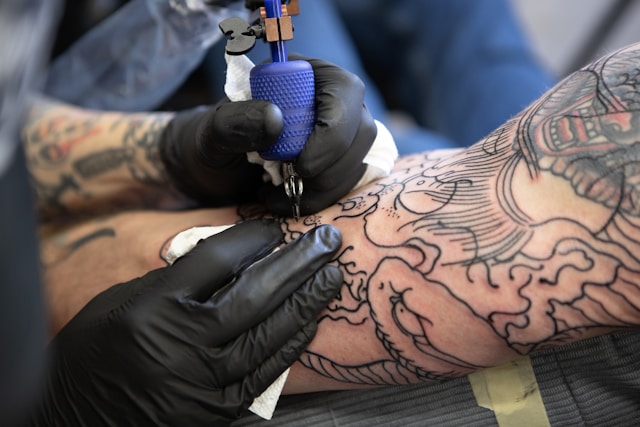
Tattoos are often viewed as permanent artwork on the skin, but beneath the surface there’s an interesting biological process taking place. Rather than simply sitting in place, tattoo ink interacts continuously with the body’s natural immune system.
Researchers have learned that the long-lasting appearance of tattoos is the result of how certain immune cells respond to ink particles over time.
How Tattoo Ink Stays in the Skin
When a tattoo is applied, the needle deposits ink beneath the outer layer of skin into the dermis, a deeper layer that does not naturally shed as quickly as the surface.
Because the ink is placed below the constantly renewing outer skin layer, the design remains visible for many years.
As with any small skin injury, the body’s healing process begins almost immediately after tattooing.
The Role of Immune Cells
Part of the healing response involves specialized immune cells called macrophages.
Macrophages help the body remove damaged tissue, bacteria, and other foreign materials. When tattoo ink is introduced into the skin, many of these cells surround and absorb tiny pigment particles.
Unlike many substances the body naturally clears away, tattoo pigments are designed to be chemically stable. As a result, many ink particles remain within these immune cells instead of being completely broken down.
This helps keep the tattoo visible beneath the skin.
Why Tattoos Can Last Decades
Macrophages do not live forever. As older cells naturally wear out, new immune cells replace them.
During this process:
- Older macrophages release stored ink particles.
- Nearby immune cells absorb those particles.
- The pigment remains in the same general location within the skin.
Scientists believe this ongoing cycle helps explain why many tattoos retain their appearance for decades, although gradual fading can still occur due to aging, sun exposure, and other environmental factors.
How Laser Tattoo Removal Works
Laser tattoo removal takes advantage of this natural immune process.
Instead of removing ink directly, specialized medical lasers break larger pigment particles into much smaller fragments.
Once the particles become small enough, the body’s immune system can gradually transport and eliminate more of the pigment over multiple treatment sessions.
Because different ink colors respond differently to laser wavelengths, complete removal often requires several appointments.
A tattoo is more than ink beneath the skin—it’s the result of a long-term interaction between tattoo pigments and the body’s immune system.
As researchers continue studying skin biology and immune responses, scientists are gaining a better understanding of why tattoos last so long and how modern removal techniques work. This growing knowledge has also helped improve tattoo care, removal methods, and skin health research.
Photo by benjamin lehman on Unsplash