

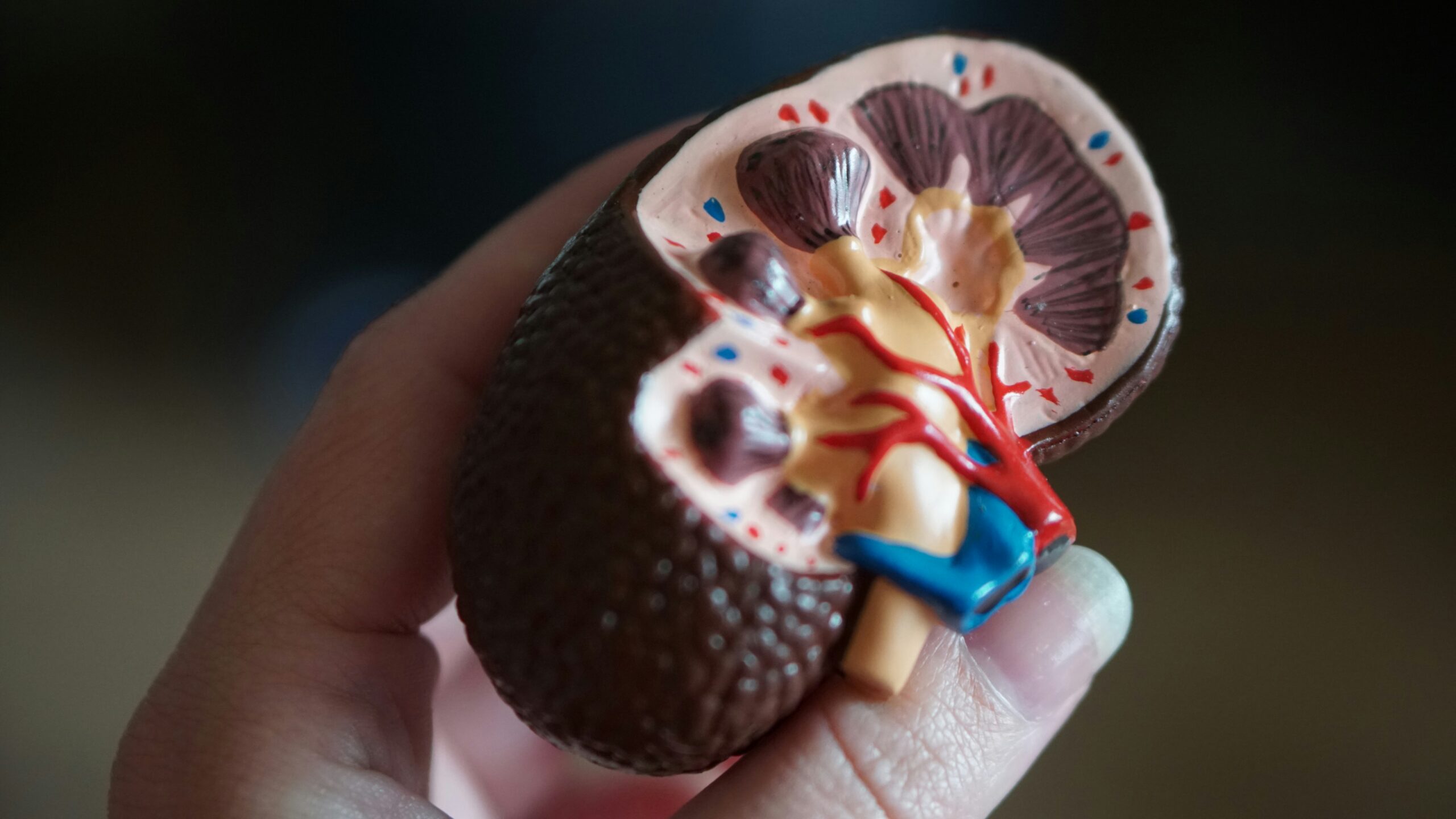
For people living with advanced kidney disease, dialysis can become a major part of everyday life. Treatment helps remove waste and excess fluid from the blood, but it cannot fully replace everything healthy kidneys do. A transplant can offer another option, although finding a suitable donor kidney may take time.
That is why scientists are exploring a different possibility: growing kidney-like tissue from stem cells and teaching it to perform some of the kidney’s essential functions.
Research into lab-grown kidney tissue has made meaningful progress. Scientists have created miniature, three-dimensional structures called kidney organoids that contain cells resembling those found in real kidneys. In animal experiments, some transplanted organoids have developed connections with the host’s blood vessels and demonstrated signs of filtration.
It is an encouraging step in regenerative medicine, but an important distinction remains: these structures are not complete, transplant-ready kidneys, and they cannot currently replace dialysis or a donor transplant.
Why Growing a Kidney Is So Difficult
Kidneys do far more than remove waste. They help regulate fluid levels, balance electrolytes, control acid-base levels and support blood pressure regulation. They also produce hormones involved in red blood cell production and help the body maintain healthy bones.
Each kidney contains roughly one million microscopic filtering units called nephrons. Each nephron includes a glomerulus, where blood filtration begins, and a series of tubules that recover water and essential substances before the remaining waste leaves the body as urine.
Recreating this arrangement in a laboratory is a significant challenge. The different cell types must develop in the right places, connect with a functioning blood supply and work together in a carefully coordinated system.
A collection of kidney-like cells may look promising under a microscope, but appearance alone does not prove that it can perform the work of a healthy organ.
How Stem Cells Are Becoming Kidney-Like Tissue
Stem cells can develop into different specialised cell types under the right conditions. Researchers use carefully controlled combinations of growth signals to guide pluripotent stem cells towards kidney cell lineages.
These cells can then organise into three-dimensional structures that resemble parts of a developing kidney.
Scientists call these structures kidney organoids. They can contain cells resembling podocytes, which help form the kidney’s filtration barrier, along with tubular cells involved in processing filtered fluid.
One major obstacle has been the blood supply. Without enough oxygen and nutrients, growing tissue cannot mature properly. Researchers have therefore explored ways to encourage blood vessels to develop within organoids or connect with them after transplantation.
The US National Institute of Diabetes and Digestive and Kidney Diseases has described research showing that transplanted stem-cell-derived kidney organoids can recruit blood vessels from mice and develop features associated with kidney filtration. Other experiments have investigated how flowing fluid through kidney organoids grown on specialised chips can encourage tissue organisation and vascular development.
These findings help scientists understand what kidney tissue needs to develop and function. They do not, however, establish that the tissue can provide enough kidney function to sustain a person.
The Biggest Challenge: Making the Tissue Work Like a Real Kidney
A functioning kidney depends on more than filtration alone. It must also reclaim useful substances, regulate the body’s fluid and mineral balance, and direct urine safely out of the organ.
Current kidney organoids remain limited in several important ways.
They are not mature enough. Many organoids resemble developing kidney tissue rather than a fully developed adult kidney. Their cell types and functions do not yet reproduce the complexity of a natural organ.
Their blood supply needs improvement. Connecting with blood vessels is an important advance, but researchers must establish reliable, appropriately organised circulation throughout the tissue.
Urine drainage remains a major obstacle. In transplanted organoid experiments, filtered fluid can collect inside the tissue because the structures do not have a complete drainage system connected to the bladder. Without a way to carry fluid away, filtration alone cannot deliver the benefits of a working kidney.
Safety and consistency matter. Any future treatment would need to produce tissue reliably, limit unwanted cell growth and demonstrate that it works safely over time. Using a patient’s own cells might reduce some immune-related concerns, but it would not automatically eliminate every risk.
A 2025 review in Kidney International highlighted these barriers, including incomplete development, integration with the body’s circulation and the lack of an effective route for filtered fluid to leave the tissue.
What Could This Research Mean for Patients?
Although a transplantable kidney remains a long-term goal, organoid research could have useful applications well before that point.
Better ways to study kidney disease
Scientists can use kidney organoids to investigate how inherited disorders and other forms of kidney damage develop. Patient-derived cells may help researchers examine disease-related changes in a more personalised laboratory model.
More informative drug testing
Some medicines can damage the kidneys. Kidney-like tissue may help researchers investigate how potential treatments affect human kidney cells, identify signs of toxicity and improve early-stage drug testing. These models complement existing research methods rather than replacing the need for clinical safety testing.
A possible foundation for future therapies
Over time, researchers hope to improve the maturity, blood supply and organisation of engineered kidney tissue. These advances could contribute to new treatment approaches, although whether organoids can eventually replace enough kidney function for clinical use remains uncertain.
For now, people with kidney failure should continue to rely on established care, including dialysis and transplantation when appropriate. No lab-grown kidney organoid is currently an approved replacement for these treatments.
Protecting Kidney Health Today Still Matters
Regenerative medicine may open new doors, but protecting kidney function remains important. High blood pressure and diabetes are major risk factors for chronic kidney disease, which can develop without obvious symptoms in its early stages.
Practical steps include monitoring blood pressure and blood glucose when advised, attending recommended health checks, and discussing medicines with a healthcare professional. Frequent or prolonged use of certain pain relievers, including nonsteroidal anti-inflammatory drugs (NSAIDs), can harm the kidneys in some circumstances, particularly in people with existing kidney disease or dehydration.
Fluid needs also vary. People with advanced kidney disease may need individualised fluid guidance, so drinking more water is not always the right advice for everyone.
A Promising Step, Not a Cure—Yet
The idea of growing kidney tissue that can perform real biological work is no longer just science fiction. Researchers have demonstrated that stem-cell-derived organoids can develop important kidney-like features and show signs of filtration under experimental conditions.
But a complete kidney must do much more than produce a small amount of filtered fluid. It must manage complex biological processes continuously and safely, with a working blood supply and a reliable route for urine to leave the body.
That gap between a promising laboratory model and a usable medical treatment is substantial. Continued research will be needed to determine whether it can be bridged.
For people affected by kidney disease, the significance of this work lies not in a promise of an immediate cure, but in the possibility that today’s experiments could help build better tools for understanding kidney damage and developing treatments in the years ahead.
Photo by Robina Weermeijer on Unsplash