

After a workout, a long day at your desk, or hours spent on your feet, your body may feel stiff and tired. While high-tech recovery tools and cold plunges often get attention, a simple five-minute routine involving gentle movement, relaxed breathing, and comfortable positioning may be an easier way to wind down.
Some wellness articles call this approach “Zone 0 recovery.” However, the term is not a standardized exercise-science category, and there is limited evidence that a specific five-minute routine can accelerate muscle repair or remove metabolic waste.
The good news? You do not need expensive equipment to build a useful recovery habit. A few gentle movements can help you transition from activity to rest, while regular sleep, appropriate nutrition, hydration, and sensible training remain essential for recovery.
What Is Zone 0 Recovery?
“Zone 0” is sometimes used informally to describe very low-intensity activity or relaxation. Unlike moderate or vigorous exercise, this approach focuses on movements that feel easy and do not noticeably increase your breathing effort.
A gentle walk, relaxed breathing, or a comfortable resting position may fit this idea. The goal is not to push your limits or complete another workout. It is simply to give yourself a few minutes to relax and move comfortably.
It is worth distinguishing this informal wellness term from established training zones used in exercise physiology. There is no universally accepted Zone 0 protocol with a specific duration or proven muscle-recovery effect.
Why Gentle Movement May Help After Exercise
Your body uses several systems to transport fluids and support recovery. The cardiovascular system circulates blood through the pumping action of the heart, while the lymphatic system helps return fluid from tissues to the bloodstream and supports immune function.
Unlike the heart, the lymphatic system does not have one central pump. Lymph movement is supported by factors including skeletal muscle contractions, breathing, and pressure changes within the body.
This is one reason ordinary movement matters. After sitting or standing in one position for a long time, changing positions and walking briefly can help you feel less stiff and more comfortable.
Research on post-exercise recovery techniques suggests that some forms of active recovery may reduce perceived muscle soreness, although results vary by method and study. That does not mean every gentle movement speeds up tissue repair or produces the same benefits.
The practical takeaway is simple: light activity can be a useful addition to recovery, but it does not replace rest when your body needs it.
Try This Simple 5-Minute Recovery Routine
You can use this routine after an ordinary workout or a long period of sitting. Keep every movement comfortable, and stop if you experience pain, dizziness, or unusual discomfort.
Minute 1–2: Take a Gentle Walk
Walk slowly around your home, office, or another safe area. Let your arms move naturally, keep your steps relaxed, and breathe comfortably.
If you have just finished an intense workout, a brief, easy cool-down may help you transition gradually to rest. If you have been sitting for hours, the walk provides a chance to change position and move your joints.
You should be able to speak comfortably throughout. This is not the time to turn your recovery routine into another demanding workout.
Minute 3: Practice Relaxed Diaphragmatic Breathing
Sit comfortably or lie on your back with your knees bent.
- Breathe in gently through your nose for about four seconds, if comfortable.
- Allow your abdomen to expand naturally.
- Exhale slowly for around six seconds, without forcing the breath.
- Repeat for about one minute.
The timing is flexible. If counting makes you uncomfortable or leaves you short of breath, return to your normal breathing pattern.
Slow, comfortable breathing can serve as a relaxation exercise. However, no particular four-second inhale and six-second exhale pattern has been proven to accelerate muscle recovery instantly.
Minutes 4–5: Rest With Your Legs Elevated, If Comfortable
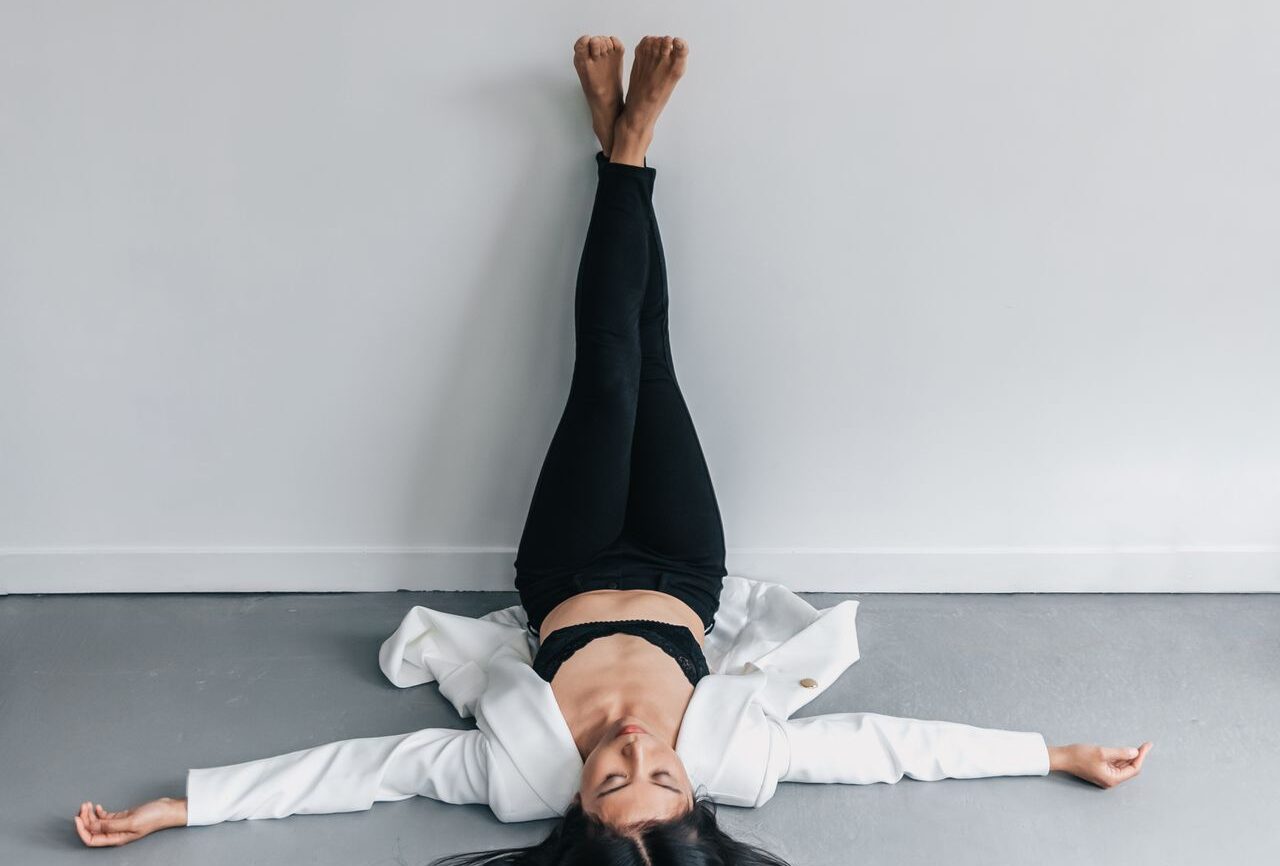
Lie on your back near a wall and place your legs against it, keeping your knees slightly bent if that feels better. Alternatively, rest your calves on a chair or a stack of pillows.
This position may feel soothing after a day spent standing or sitting. Elevating the legs can also help some people with mild lower-leg swelling by supporting fluid return.
Keep the position comfortable rather than forcing your legs straight or pushing your hips close to the wall. If the pose causes tingling, pain, dizziness, or pressure, change position or stop.
Legs-up-the-wall is not suitable for everyone. People with glaucoma, certain heart or kidney conditions, or uncontrolled high blood pressure should seek medical guidance before trying inversion poses. You can also skip this step and simply rest in a comfortable position.
For more information, see the Cleveland Clinic’s guide to the legs-up-the-wall pose.
Does a Five-Minute Routine Speed Up Muscle Recovery?
A short routine may help you feel more relaxed, but it is important to distinguish feeling better from recovering muscle tissue faster.
Exercise can produce temporary fatigue and delayed-onset muscle soreness, commonly called DOMS. This soreness often develops after unfamiliar or particularly demanding activity and may become more noticeable during the following day or two.
Recovery depends on several factors, including the intensity of the workout, training experience, sleep, nutrition, and the time allowed between demanding sessions.
A systematic review of post-exercise recovery methods found that some techniques, including active recovery and massage, may reduce perceived muscle soreness. However, outcomes differed across interventions, and the results do not establish that a particular five-minute routine will speed muscle repair.
For that reason, treat this routine as a convenient relaxation and movement habit rather than a guaranteed shortcut to recovery.
Four Habits That Matter for Muscle Recovery
A brief recovery routine can complement the habits that support your body between workouts.
1. Get enough sleep. Consistent, sufficient sleep supports normal recovery and helps you maintain energy and performance. If you regularly feel exhausted, review your sleep schedule before adding more recovery gadgets or techniques.
2. Eat enough protein and overall food. Protein supplies amino acids used to maintain and repair muscle tissue. Your total energy intake and balanced meals also matter, particularly if you exercise regularly.
3. Stay hydrated. Drink fluids regularly and replace additional losses when exercise or hot weather causes substantial sweating. Individual needs vary, so a rigid water target is not appropriate for everyone.
4. Adjust your training load. Increasing workout intensity gradually and allowing time between demanding sessions can help you avoid repeatedly pushing tired muscles beyond their current capacity. Recovery days can include gentle activity or complete rest, depending on how you feel.
When Muscle Pain Needs More Than Rest
Ordinary post-workout soreness usually improves with time. Severe or unusual symptoms should not automatically be attributed to normal recovery.
Seek prompt medical assessment if you develop severe muscle pain or swelling, marked weakness, or dark, tea-colored urine after intense exercise. These can be warning signs of a serious condition, including rhabdomyolysis.
Persistent swelling, unexplained pain, or symptoms that keep getting worse also deserve medical attention.
The Bottom Line
You do not need an elaborate recovery setup to take a short break after exercise or a demanding day. A few minutes of gentle walking, relaxed breathing, and comfortable rest may help you unwind and ease the feeling of stiffness.
But “Zone 0” is an informal label, not a proven five-minute muscle-repair protocol. For meaningful recovery, focus on the basics: appropriate training, enough sleep, balanced nutrition, hydration, and adequate rest.
Use the five-minute routine as an easy habit that fits your day—not as a promise that soreness, inflammation, or muscle damage will disappear.